
Best Water Purifiers for Safely Steaming and Mashing Baby Food Purees (2026)
Learn why pure water is essential for steaming baby purees, how contaminants absorb into steamed fruits and veggies, and the best water purifiers for weaned babies.
📖 16 min read · Fact-Checked by Praveen, Certified Water Quality Specialist & Pediatric Nutrition Safety Analyst
Around the six-month mark of an infant’s life, families embark on an exciting yet anxiety-inducing developmental milestone: the transition from exclusive milk feeding to complementary solid foods and weaning purees. Conscientious parents dedicate immense effort to sourcing pristine organic produce. They seek out farm-certified pesticide-free carrots, non-GMO sweet potatoes, organic Gala apples, and heirloom peas. They purchase specialized multi-function baby food steamers, pureeing immersion blenders, and medical-grade silicone freezer storage pods to ensure their child consumes the most nutritious, chemical-free food possible.
Yet, amid this passionate focus on sourcing premium organic produce, millions of well-intentioned parents commit a silent, critical food safety error: they steam, boil, and puree those organic vegetables using unfiltered or improperly purified municipal tap water.
When vegetables and fruits are subjected to steam or submerged in hot water, plant cell walls undergo thermal permeabilization. The porous pectin matrix of the vegetable acts as a natural biological sponge, drawing in the cooking water. If your domestic kitchen water contains municipal chlorine, carcinogenic trihalomethanes, pipe rust, dissolved lead, microplastics, or excessive calcium carbonate hardness, those toxic chemical constituents are absorbed directly into the cellular tissue of the carrots, sweet potatoes, and apples your baby consumes.
In this comprehensive 2026 technical investigation, we examine the biophysics of vegetable water absorption during cooking, analyze landmark congressional investigations into heavy metal toxicity in infant foods, evaluate the chemical reactions between hard water minerals and vegetable pectins, and outline the exact domestic water purification architectures required to create pure, contaminant-free weaning foods.
Table of Contents
- The Global Investigative Evidence: The Congressional Baby Food Heavy Metal Probe
- The Cellular Biophysics of Steaming: The Plant Pectin Sponge Effect
- Chemical Contaminants Absorbed During Steaming & Pureeing
- The Culinary Chemistry of Hard Water: The Tough Puree Paradox
- The Plastic Steamer Hazard: Microplastics and Nanoplastics in Baby Purees
- Safe Water Quality Standards for Infant Weaning Foods
- Filtration Architecture: What Purifier Best Serves a Nursery Kitchen?
- The Copper RO Consideration: Benefits & Limits for Toddler Weaning
- The Clinical 6-Step Safe Puree Preparation Protocol
- Authoritative Food Safety Directives: US FDA, AAP, EFSA, & FSSAI
- Comprehensive Frequently Asked Questions (Parental & Culinary FAQs)
- Food Biochemistry & Pediatric Nutrition Glossary
The Global Investigative Evidence: The Congressional Baby Food Heavy Metal Probe
Parental urgency surrounding the purity of infant foods was ignited globally by one of the most explosive food safety investigations in modern history.
1. The U.S. House of Representatives Congressional Report (2021)
In February 2021, the U.S. House Committee on Oversight and Reform’s Subcommittee on Economic and Consumer Policy released a landmark investigative report titled: Baby Foods Are Tainted with Dangerous Levels of Arsenic, Lead, Cadmium, and Mercury.
The congressional investigation reviewed internal company testing data and laboratory audits from major international commercial baby food conglomerates, including Gerber, Beech-Nut Nutrition Company, Nurture (HappyBABY), and Hain Celestial Group (Earth’s Best Organic):
- Commercial baby food purees, infant cereals, and snack puffs tested positive for staggering concentrations of toxic heavy metals.
- Ingredients contained up to 91 times the maximum allowable arsenic level, up to 177 times the lead limit, and up to 69 times the cadmium threshold established for bottled drinking water.
- In October 2021, a follow-up congressional report revealed that commercial baby food purees continued to contain dangerous levels of neurotoxins, leading to nationwide product recalls and class-action lawsuits.
This revelation triggered a massive, permanent behavioral shift: millions of parents around the world abandoned commercial jarred baby foods and committed to preparing 100% homemade, fresh fruit and vegetable purees.
2. The Unintended Consequence: The Tap Water Contamination Trap
However, pediatric environmental health researchers at Columbia University and the University of Michigan quickly uncovered a critical paradox: parents who transitioned to homemade baby food were inadvertently re-contaminating their baby’s meals by using untreated municipal tap water.
In widespread municipal testing audits conducted in older metropolitan areas with aging infrastructure—such as Chicago, Detroit, Pittsburgh, and older suburban zones of Delhi and Mumbai:
- Steaming and boiling organic sweet potatoes and carrots in tap water drawn from homes with lead service lines (LSLs) resulted in heavy metals binding tenaciously to the vegetable dietary fiber.
- In testing conducted across residential kitchens, steaming carrots with tap water containing $15\text{ ppb}$ of lead yielded finished purees with lead concentrations exceeding $45\text{ ppb}$.
- This occurred because steam evaporation reduced the liquid volume while plant pectins actively chelated the dissolved lead ions out of the water, concentrating the neurotoxin directly inside the infant’s meal.
The takeaway from these investigations is unambiguous: sourcing certified organic vegetables is rendered meaningless if those vegetables are cooked in water containing heavy metals, chlorine, or microplastics.
The Cellular Biophysics of Steaming: The Plant Pectin Sponge Effect
To appreciate why cooking water quality dictates baby puree safety, we must examine the cellular biophysics of plant tissues subjected to heat.
       PLANT CELL AT ROOM TEMPERATURE                 PLANT CELL DURING STEAMING (100°C)
       ==============================                 ==================================
[ Rigid Cellulose Outer Cell Wall    ]         [ Cell Wall Semi-Permeable Pores Expand  ]
[ Intact Semi-Permeable Cell Membrane]  ====>  [ Heat Ruptures Phospholipid Membrane    ]
[ Vacuole Holds Plant's Natural Juice]         [ Vacuolar Fluid Escapes; Hydrostatic Loss]
                                               [ COOKING WATER RUSHES INTO PECTIN MATRIX]
1. Thermal Lysis of Cellular Membranes
Raw fruits and vegetables consist of plant cells enclosed within a rigid cellulose wall lined with a delicate phospholipid membrane (tonoplast and plasma membrane). The intracellular vacuole holds the vegetable’s natural hydration, sugars, and vitamins.
When exposed to steam or boiling water at temperatures between 90°C and 100°C:
- Thermal energy disrupts the lipid bilayers, lysing the cell membranes.
- The intracellular hydrostatic turgor pressure drops to zero.
- The cell’s natural fluids leak out, creating empty microscopic pores within the porous cellular framework.
2. Hydraulic Imbibition into the Pectin Sponge
The spaces between plant cell walls are bound together by middle lamellae, composed largely of complex, branched polysaccharides called pectins. Pectins are rich in galacturonic acid residues possessing high densities of negative electrostatic charges ($COO^-$).
As vegetables cook and soften:
- They actively draw surrounding cooking water into their intercellular matrices via capillary action and hydraulic imbibition.
- Vegetables like carrots, pumpkins, peas, and potatoes absorb between 15% and 35% of their cooked weight directly from the cooking liquid.
- The negatively charged carboxyl groups on plant pectins act as a natural ion-exchange resin: they bind electropositively charged heavy metal cations—such as Lead ($Pb^{2+}$), Cadmium ($Cd^{2+}$), and Arsenic ($As^{3+}$)—trapping them within the puree.
When you puree that steamed carrot in a blender, you do not discard the absorbed water; that water is mechanically emulsified into the very food your infant swallows.
Chemical Contaminants Absorbed During Steaming & Pureeing
| Contaminant | Origin in Kitchen Tap Water | Absorption Mechanism During Cooking | Pediatric Clinical Impact |
|---|---|---|---|
| Free Chlorine & Chloramines | Municipal disinfection chemicals added to city water | Chemically oxidizes delicate phytonutrients, vitamins C and A; degrades taste | Alters gut microbiome; induces gastric irritation and feeding refusal |
| Trihalomethanes (THMs) | Disinfection byproducts formed by chlorine reacting with organics | Highly volatile; vaporizes into kitchen steam and condenses into food | Known group 2B carcinogens; linked to childhood hepatic and renal stress |
| Dissolved Lead ($Pb^{2+}$) | Aging municipal lead service lines, lead solders, brass faucets | Electrostatic chelation by plant pectins; concentrated by steam loss | Prefrontal brain damage, permanent IQ loss, ADHD, speech deficits |
| Arsenic ($As$) | Groundwater bedrock dissolution; tubewell contamination | Binds to vegetable proteins and dietary fibers | Neurodevelopmental toxicity; impairs memory and language acquisition |
| Microplastic Fibers | Degraded PVC municipal pipes, plastic water tanks, plastic steamers | Physical mechanical entrapment within puree matrix during blending | Breaches immature intestinal epithelial junctions; induces micro-inflammation |
| Calcium & Magnesium Hardness | Natural limestone / chalk groundwater aquifers | Cross-links pectin molecules, forming insoluble calcium pectate | Creates tough, rubbery puree texture; increases infant choking risks |
For families with young toddlers transitioning to solid foods, read our comprehensive buyer’s guide: Best Water Purifiers for Children Under 5 Years (2026 Guide).
The Culinary Chemistry of Hard Water: The Tough Puree Paradox
Beyond chemical toxicity, water mineral hardness profoundly impairs the physical texture, digestibility, and infant safety of homemade purees.
+-----------------------------------------------------------------------------------------+
|                  THE BIOCHEMISTRY OF HARD WATER PECTIN CROSSLINKING                     |
+-----------------------------------------------------------------------------------------+
|                                                                                         |
|  VEGETABLES STEAMED IN PURE RO WATER (Low Calcium, Low TDS):                            |
|  Heat breaks down pectin polymers into soluble galacturonic acid fragments.             |
|  Cell walls separate effortlessly.                                                      |
|  RESULT: Ultra-smooth, silky, velvety puree. Effortless infant swallowing.              |
|                                                                                         |
|  VEGETABLES STEAMED IN HARD WATER (High Ca2+ and Mg2+ Carbonates):                      |
|  Divalent Calcium ions ($Ca^{2+}$) act as electrostatic "bridges" between pectin chains.|
|                                                                                         |
|      [ Pectin Chain A ] --- Ca2+ --- [ Pectin Chain B ]  (Calcium Pectate Gel)          |
|                                                                                         |
|  RESULT: Insoluble, tough, fibrous vegetable texture.                                   |
|  * Blender blades cannot pulverize the cross-linked fibers.                             |
|  * Puree remains grainy, gritty, and clumpy.                                            |
|  * Triggers gagging, vomiting, and choking episodes in young infants.                   |
+-----------------------------------------------------------------------------------------+
The “Egg-Box” Calcium Pectate Model
In food biochemistry, calcium-pectin binding is defined by the “egg-box” model. Low-methoxyl pectins present in carrots, apples, and green beans have spaces between adjacent polymer chains that act like empty egg cartons.
- Divalent calcium ions ($Ca^{2+}$) from hard tap water fit precisely into these molecular pockets, locking the pectin chains into an insoluble, rigid gel network known as calcium pectate.
- Instead of softening into a smooth mash, vegetables steamed in hard water remain stubbornly firm and stringy.
- When an exhausted parent attempts to puree these vegetables, the blender creates a grainy, sand-like suspension rather than a smooth, silky emulsion.
For an infant aged 6 to 8 months who is just developing tongue lateralization and pharyngeal swallowing coordination, grainy or gritty purees trigger violent gag reflexes, feeding aversions, and dangerous choking hazards. Steaming with low-mineral RO water ($30-80\text{ PPM}$ TDS) prevents calcium pectate synthesis, guaranteeing velvety, easily digestible purees.
The Plastic Steamer Hazard: Microplastics and Nanoplastics in Baby Purees
Many modern nurseries utilize all-in-one electric baby food makers that combine a plastic water reservoir, a plastic steaming basket, and a plastic blending jug in a single countertop appliance.
+-----------------------------------------------------------------------------------------+
|                  THE COUNTERTOP PLASTIC BABY FOOD MAKER HAZARD                          |
+-----------------------------------------------------------------------------------------+
|                                                                                         |
|  1. Water Boiled in Plastic Heating Chamber: Steam reaches 100°C - 105°C.              |
|  2. Polypropylene / Tritan Steaming Basket experiences severe thermal degradation.      |
|  3. Hot plasticized steam sheds millions of microplastics onto steaming vegetables.     |
|  4. Vegetables transferred to Plastic Blending Jug.                                     |
|  5. High-speed stainless steel blades create hydraulic cavitation and physical abrasion |
|     against plastic jug walls, shearing microplastic shards into the mash!              |
|                                                                                         |
|  RESULT: Puree contains millions of synthetic polymer fragments per serving.           |
+-----------------------------------------------------------------------------------------+
The Engineering Solution: All-Glass and Surgical Stainless Steel
To prevent plastic ingestion during weaning:
- Steaming Vessels: Utilize an authentic 304 food-grade stainless steel steaming basket placed inside a stainless steel stovetop pot, or use a certified heat-resistant borosilicate glass multi-cooker.
- Pureeing Appliances: Transition to an immersion blender equipped with a solid 304 stainless steel shaft and blending bell, pureeing the food directly inside an annealed glass or ceramic bowl.
- Storage Pods: Store prepared purees in 100% platinum-cured food-grade silicone freezer trays with airtight silicone lids, or miniature 4-ounce glass jars. Avoid polystyrene or cheap rigid plastic containers.
To understand the broader biological hazards of plastic degradation in infant nutrition, see our groundbreaking investigation on the dangers of microplastics in baby formula.
Safe Water Quality Standards for Infant Weaning Foods
The water utilized to wash, steam, boil, and thin baby food purees must meet rigorous physiological parameters:
| Water Parameter | Raw Municipal Tap Water | Typical Borewell Water | Pediatric-Safe Puree Standard | Ideal Technology |
|---|---|---|---|---|
| Total Dissolved Solids (TDS) | 150 – 400 PPM | 500 – 2000+ PPM | 30 – 100 PPM | Reverse Osmosis Membrane |
| Total Hardness ($CaCO_3$) | 120 – 300 mg/L | 300 – 800 mg/L | $<30\text{ mg/L}$ | RO / Ion-Exchange Softener |
| Free Chlorine / Chloramines | 0.5 – 2.0 mg/L | 0 mg/L | 0.0 mg/L (Absolute Zero) | Activated Coconut Carbon Block |
| Lead ($Pb$) & Heavy Metals | Variable (Plumbing Dependent) | High (Bedrock Leached) | $<1\text{ ppb (Zero Tolerance)}$ | TFC 0.0001-Micron RO Membrane |
| Microplastics / Nanoplastics | 10 – 100 fibers/L | Variable | ZERO (100% Rejection) | RO Membrane + Stainless Tank |
| Microbiological Purity | May contain cysts (Crypto) | Coliforms / E. coli | Zero CFU / Sterile | RO + UV Germicidal Reactor |
Filtration Architecture: What Purifier Best Serves a Nursery Kitchen?
To ensure your child’s weaning foods are free of chemical and biological contaminants, your kitchen requires an engineered purification train capable of handling both municipal and groundwater inputs.
+-----------------------------------------------------------------------------------------+
|                  NURSERY KITCHEN WATER PURIFICATION TRAIN ARCHITECTURE                  |
+-----------------------------------------------------------------------------------------+
|                                                                                         |
|  Incoming Kitchen Water (Municipal Line or Overhead Tank Supply)                        |
|                                       |                                                 |
|                                       v                                                 |
|  STAGE 1: 5-Micron Spun Sediment Filter (Captures rust, sand, silt)                     |
|                                       |                                                 |
|                                       v                                                 |
|  STAGE 2: High-Density Extruded Activated Carbon Block (Adsorbs Chlorine & THMs)        |
|                                       |                                                 |
|                                       v                                                 |
|  STAGE 3: 0.0001-Micron Thin-Film Composite RO Membrane (Eliminates Heavy Metals & Lead)|
|                                       |                                                 |
|                                       v                                                 |
|  STAGE 4: Post-Carbon / UV Germicidal Disinfection Lamp (Zero Pathogens)                |
|                                       |                                                 |
|                                       v                                                 |
|  STAGE 5: Food-Grade 304 Surgical Stainless Steel Storage Reservoir                     |
|  * ZERO Plastic Leaching * ZERO Bacterial Biofilm Formation * Medical-Grade Purity     |
+-----------------------------------------------------------------------------------------+
Why a Stainless Steel Tank is Critical for Cooking Water
When parents steam vegetables, they frequently draw several liters of water at once to fill steaming pots. If your purifier stores water in a low-grade plastic tank exposed to kitchen cooking heat, that water continuously absorbs plasticizers and volatile compounds.
Investing in a water purifier equipped with a food-grade 304 surgical stainless steel reservoir guarantees that the water you use to steam your baby’s apples and carrots is as pristine leaving the faucet as it was when crossing the RO membrane. Explore top-performing systems in our curated guide: Top 10 Stainless Steel Tank Water Purifiers.
The Copper RO Consideration: Benefits & Limits for Toddler Weaning
In recent years, water purifiers equipped with Active Copper Infusion Cartridges have gained immense popularity, particularly across India, marketing traditional Ayurvedic antimicrobial properties to families.
       INFANT RENAL & HEPATIC BIOLOGY: COPPER METABOLISM GUIDELINES
       ============================================================
Age: 0 to 6 Months:   STRICT ZERO COPPER SUPPLEMENTATION
                      Immature liver cannot synthesize ceruloplasmin; excess copper
                      accumulates pathologically in hepatocytes.
                      ===> USE PURE STAINLESS STEEL RO WATER ONLY.

Age: 6 to 12 Months:  LOW / TRACE COPPER ACCEPTABLE
                      Dietary copper requirements expand for erythropoiesis (red blood
                      cells) and collagen synthesis.
                      ===> Safe if infused copper is precisely dosed (<0.05 mg/L).

Age: 12+ Months:      MODERATE COPPER BENEFICIAL
                      Toddlers benefit from copper's antimicrobial and enzymatic support.
Pediatric Medical Rules for Copper Water:
- Never use copper-enriched water for infants under six months of age. Neonatal livers lack sufficient levels of ceruloplasmin (the plasma protein that safely binds and transports copper). Excess copper ingested during early infancy can induce hepatotoxicity and infantile liver cirrhosis.
- For weaning toddlers aged 6 to 12 months, copper water is safe ONLY if precisely dosed. If using a purifier with copper technology, verify that it delivers active micro-dosing ($0.02 - 0.05\text{ mg/L}$) rather than passive leaching from an uncleaned internal copper vessel.
For an exhaustive technical evaluation of copper-infused filtration systems, read our dedicated review: Top 10 Best Copper RO Purifiers (2026 Guide).
The Clinical 6-Step Safe Puree Preparation Protocol
To ensure 100% microbiological, chemical, and physical safety when making homemade infant purees, execute this step-by-step culinary SOP:
THE 6-STEP CLINICAL INFANT PUREE WORKFLOW:
==========================================================================================
Step 1: THE PURIFIED RO PRODUCE RINSE
        Never wash organic vegetables in raw tap water. Submerge and wash all produce in
        freshly drawn RO water to remove surface soil, bacteria, and agricultural residue.
                                |
Step 2: PEELING AND DICING (STAINLESS SURFACES)
        Peel outer skins using a stainless steel peeler to remove surface-bound residues.
        Dice vegetables into uniform 1-centimeter cubes on a food-grade wooden or glass
        cutting board. Avoid scratched plastic chopping boards that shed microplastics!
                                |
Step 3: STEAMING OVER PURIFIED RO WATER
        Fill a 304 stainless steel pot with 2 inches of pure RO water. Place a 304 stainless
        steaming basket inside. Steam covered over medium heat for 8 to 12 minutes until
        vegetables are fork-tender. NEVER use plastic electric countertop steamers.
                                |
Step 4: MASHING & THINNING WITH FRESH RO WATER
        Transfer cooked vegetables into an annealed glass bowl. Puree using a stainless steel
        immersion blender. If the puree is too thick, thin it by adding small tablespoons
        of FRESH, warm RO water. NEVER reuse the leftover steaming water in the bottom of
        the pot, as it has concentrated extracted agricultural residues!
                                |
Step 5: RAPID COOLING & TEMPERATURE CONTROL
        Allow the puree to cool to body temperature (37°C / 98.6°F). Test texture between
        clean fingers to verify absolute velvet-smooth consistency with zero hard clumps.
                                |
Step 6: SILICONE PORTIONING & FREEZING
        Ladle portions into platinum-cured medical silicone freezer pods. Seal tightly.
        Store in the deep freezer (-18°C / 0°F) for up to 30 days. Thaw only in the
        refrigerator, never on the kitchen counter at warm room temperature.
==========================================================================================
Authoritative Food Safety Directives: US FDA, AAP, EFSA, & FSSAI
1. United States Food and Drug Administration (FDA)
Under its Closer to Zero Action Plan, the FDA is systematically establishing legally enforceable action levels for lead, arsenic, cadmium, and mercury across all commercial infant foods. The FDA explicitly advises parents preparing homemade infant meals to use tested, filtered water to avoid introducing heavy metals during boiling and steaming.
2. American Academy of Pediatrics (AAP)
In its clinical guidance on Heavy Metals in Baby Food, the AAP counsels parents that preparing baby food at home provides immense developmental benefits, but cautions that cooking water must be clean and free of heavy metals. The AAP warns that boiling tap water does not remove heavy metals and urges families in older homes to utilize certified NSF/ANSI-58 Reverse Osmosis filters.
3. European Food Safety Authority (EFSA)
The EFSA Panel on Contaminants in the Food Chain enforces stringent limits on environmental contaminants in dietary foods intended for infants and young children. The EFSA notes that because infants consume roughly three times more food per kilogram of body weight than adults, background water contaminants present in cooking water carry disproportionate developmental neurotoxicity risks.
4. Food Safety and Standards Authority of India (FSSAI)
Under the Food Safety and Standards (Foods for Infant Nutrition) Regulations, FSSAI establishes zero-tolerance thresholds for pathogenic microbes, pesticide residues, and heavy metals in complementary infant foods, mandating that domestic food preparation environments utilize water adhering strictly to IS 10500:2012 potable specifications.
Comprehensive Frequently Asked Questions
Q1: Can I reuse the water left at the bottom of the steaming pot to thin my baby’s puree?
No, pediatric nutritionists strongly advise against this. As vegetables steam, small amounts of nitrate residues, pesticides, surface minerals, and bitter compounds leach out of the produce and concentrate in the small pool of water at the bottom of the pot. Discard this concentrated cooking liquor. Always thin your baby’s puree using freshly drawn, clean RO water or expressed breast milk.
Q2: Is boiling carrots in tap water safe if I discard the water afterward?
No. As established by plant cell biophysics, carrots absorb between 15% and 35% of the boiling water directly into their porous pectin matrices during cooking. If the boiling tap water contains lead, chlorine, or agricultural nitrates, those chemicals are chemically bound inside the carrot fiber and cannot be washed or drained away.
Q3: Why does my baby food puree turn gritty and hard to blend?
Gritty puree textures are caused by calcium cross-linking in hard water. When high-calcium water ($>150\text{ mg/L}$ hardness) is used for cooking, calcium ions bind with vegetable pectins to synthesize insoluble calcium pectate, preventing the cell walls from breaking down into a silky mash. Switching to low-mineral RO water ($30-80\text{ PPM}$) eliminates this problem entirely.
Q4: Can I steam baby food in an electric plastic multi-cooker or microwave plastic steamer?
We strongly discourage it. High-temperature steam (100°C) softens plastic polymer matrices, causing standard polypropylene or polycarbonate steamers to shed millions of microplastic and nanoplastic particles directly onto the steaming vegetables. Always use 304 stainless steel steaming baskets or tempered borosilicate glass steamers.
Q5: Is it safe to wash organic fruits in tap water before peeling?
It is safer to wash produce in purified water. Municipal tap water contains dissolved chlorine gas, chloramines, and potential microplastics that can adhere to fruit skins. Submerging your produce in a bowl of fresh RO water—optionally adding a teaspoon of baking soda to gently neutralize surface pesticides—ensures complete chemical purity before slicing.
Q6: Can I use alkaline water from an ionizer to cook baby purees?
No. High-pH alkaline water ($pH > 8.5$) neutralizes an infant’s naturally developing stomach acid, impairing protein digestion and neutralizing the stomach’s protective barrier against foodborne microbes. Use neutral or slightly balanced RO water ($pH\text{ 6.5 to 7.2}$) for all infant cooking.
Q7: Can I freeze homemade baby purees in plastic ice cube trays?
Avoid standard plastic ice cube trays. Rigid plastic ice trays are constructed from brittle polystyrene or cheap polypropylene that sheds microplastics during twisting and freezing. Use 100% platinum-cured medical-grade silicone freezer pods with flexible compartments and airtight lids, or small 4-ounce glass freezer jars.
Q8: Does an Ultrafiltration (UF) purifier provide water clean enough for baby purees?
Only if your incoming water is clean, low-TDS municipal tap water. Ultrafiltration captures bacteria, cysts, and microplastics, but cannot remove dissolved heavy metals, lead, nitrates, or water hardness. If your home water has a TDS exceeding 200 PPM or originates from deep borewells, a Reverse Osmosis membrane is mandatory to eliminate chemical ions. Explore our review of the top 10 UV+UF water purifiers for low TDS water.
Q9: At what age can toddlers eat food prepared with regular tap water?
Pediatricians recommend using purified, filtered water for all cooking throughout infancy and early toddlerhood—up to at least two years of age. By age two, the child’s intestinal mucosal barrier is mature, renal glomerular filtration rates approach adult capacity, and the blood-brain barrier is fully consolidated. Read our clinical guide: Can My 2-Year-Old Drink Purified Water from an RO?.
Q10: How much does a nursery-ready kitchen RO system cost to operate?
A certified domestic RO purifier with a 304 stainless steel tank requires periodic filter replacements (sediment, carbon, post-UV) costing between ₹2,500 and ₹4,000 ($30 to $50 USD) annually. Calculate your family’s exact ongoing expenses using our interactive Annual Maintenance Cost Calculator.
Food Biochemistry & Pediatric Nutrition Glossary
- Amelogenesis: The complex biological process of dental enamel formation in developing tooth crowns; highly vulnerable to disruption by environmental fluoride.
- Calcium Pectate: An insoluble, rigid chemical complex formed when divalent calcium ions ($Ca^{2+}$) cross-link polygalacturonic acid chains in plant cell walls; causes tough, rubbery puree textures.
- Closer to Zero: A comprehensive multi-year regulatory initiative launched by the US FDA to minimize childhood dietary exposure to lead, arsenic, cadmium, and mercury to the lowest feasible levels.
- Egg-Box Model: The biochemical conformational structure describing how divalent cations bind within the parallel grooves of unbranched pectin polysaccharide chains.
- Hydraulic Imbibition: The physical absorption of water by colloidal and plant cellular tissues, causing significant volumetric swelling and chemical solute uptake during cooking.
- Middle Lamella: An intercellular pectin-rich layer that cements the primary cell walls of adjacent plant cells together; breaks down during thermal cooking to create soft vegetable textures.
- Thin-Film Composite (TFC) RO Membrane: An advanced semi-permeable membrane architecture with an active polyamide pore aperture of 0.0001 micrometers; rejects >98% of dissolved heavy metals, lead, and chemical nitrates.
- Trihalomethanes (THMs): A class of volatile halogenated chemical byproducts formed when municipal chlorine disinfectants react with natural organic matter in surface water; potential developmental carcinogens.
- Total Dissolved Solids (TDS): The aggregate measurement of all dissolved inorganic mineral salts and organic matter in water, quantified in parts per million (PPM) or mg/L.
- 304 Food-Grade Stainless Steel: An austenitic steel alloy formulated with 18% chromium and 8% nickel; non-reactive, completely free of synthetic polymer additives, and impervious to chemical leaching by cooking water.
Recommended Next Steps for Parents:
- Assess Your Kitchen Water: Use our free AI Water Advisor to determine whether your incoming tap or borewell water requires specialized heavy metal filtration.
- Explore Zero-Plastic Purifiers: Review our lab-tested recommendations in the Top 10 Stainless Steel Tank Water Purifiers Guide.
- Compare Child-Safe Purifiers: Explore high-performance systems in our Best Water Purifiers for Children Under 5 Years Guide.
Our Top Picks for You
Ready to upgrade? Here are the highest-rated purifiers on the market right now.

Livpure GLO PRO++

Aquaguard Delight Aquasaver RO+UV+UF+MC
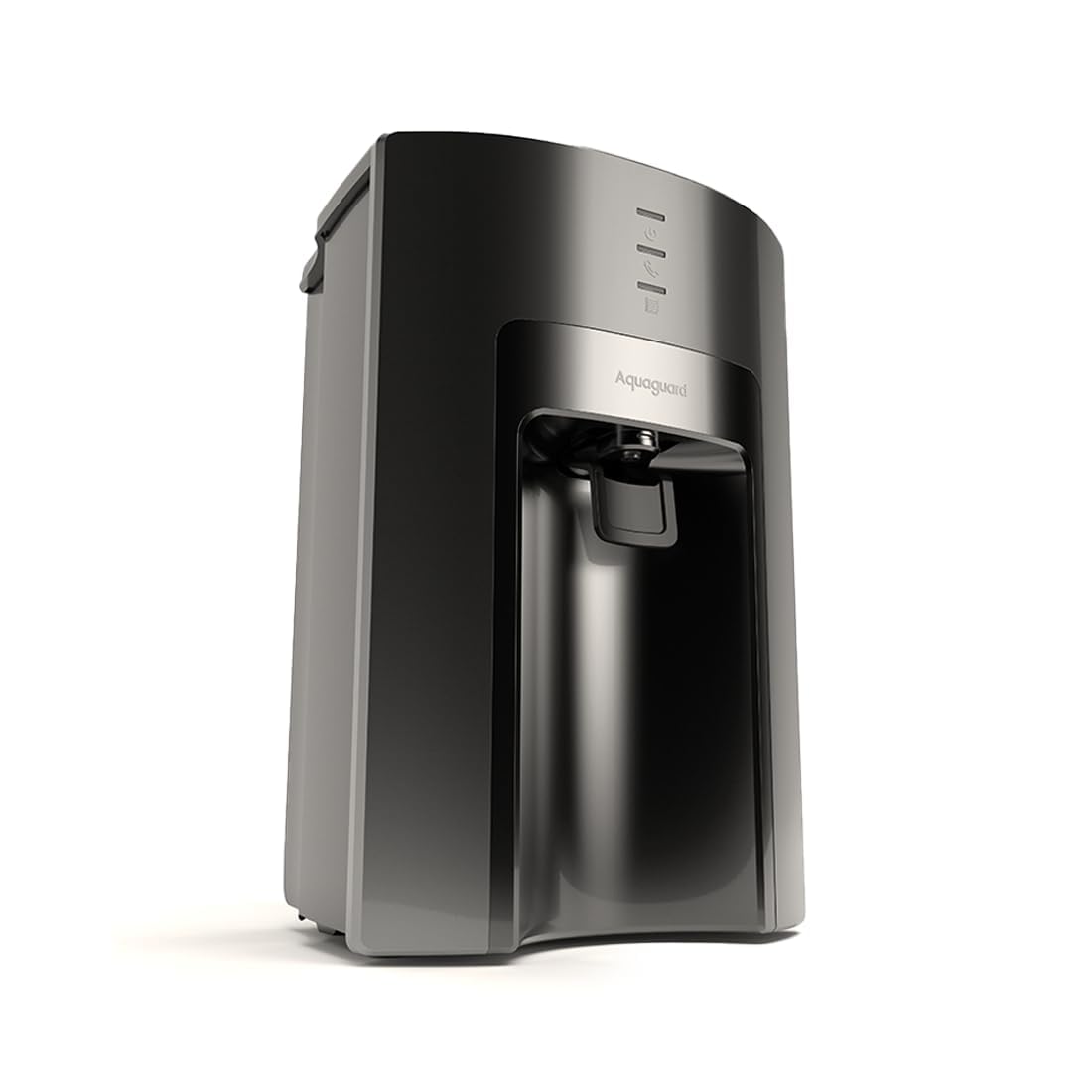
Aquaguard Delight NXT Aquasaver 9-Stage Water Purifier

Pureit Eco Water Saver RO Purifier (Black) with RO+UV+MF Filtration

KENT Smart Plus UV Water Purifier

Livpure Allura Prime Water Purifier RO+UV+UF+Copper+Alkaline

Aquaguard Enrich Ritz Pro RO+UV+Copper+Alkaline Water Purifier
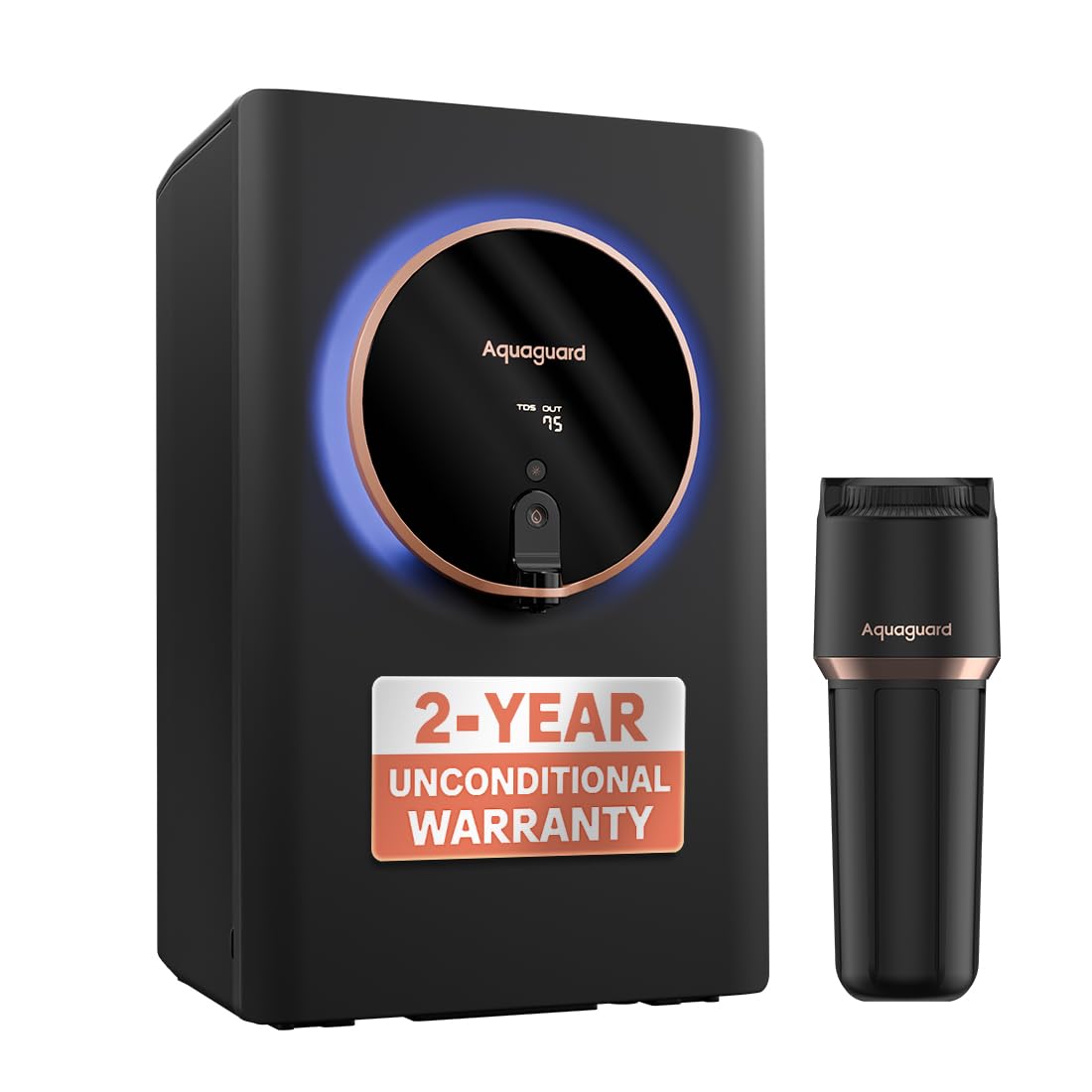
Aquaguard Aspire Glow RO+UV+Copper+Alkaline Water Purifier

KENT Elegant-B RO Water Purifier

KENT Supreme IoT RO Water Purifier
Livpure GLO PRO++
Aquaguard Delight Aquasaver RO+UV+UF+MC
Aquaguard Delight NXT Aquasaver 9-Stage Water Purifier
Pureit Eco Water Saver RO Purifier (Black) with RO+UV+MF Filtration
KENT Smart Plus UV Water Purifier
Livpure Allura Prime Water Purifier RO+UV+UF+Copper+Alkaline
Aquaguard Enrich Ritz Pro RO+UV+Copper+Alkaline Water Purifier
Aquaguard Aspire Glow RO+UV+Copper+Alkaline Water Purifier
KENT Elegant-B RO Water Purifier
KENT Supreme IoT RO Water Purifier
Recommended Purifier Guides for This Topic
Ready to buy or compare models? Explore our lab-tested recommendations tailored to your home's water.
Best Water Purifiers for Babies & Infants in India (2026)
Protect your newborn. We review the most trusted, baby-safe water purifiers featuring BPA-free tanks, heavy metal shields, and 100% UV/UF sterilization.
Top Water Purifiers Recommended by Doctors & Pediatricians (2026 Clinical Review)
Discover the top water purifiers recommended by doctors and pediatricians in India. Medical-grade stainless steel tanks, 100% RO, UV-C sterilisation, and pure mineral balance.
Best High-Capacity RO+UV Systems for Large Families with Multiple Children
When you have 3+ kids, an empty RO tank means someone is drinking tap water. Discover the top 5 high-capacity, fast-recovery water purifiers for large households.
Ready to secure your home's water?
Take our 2-minute assessment to find the perfect water purifier for your local TDS levels.
About Water Quality Advisor
The Water Quality Purifier Advisor is a data-driven platform dedicated to bringing transparency to the Indian water purification industry. By analyzing localized Total Dissolved Solids (TDS) and water source data, our recommendation engine eliminates salesperson bias, empowering families to find the scientifically correct, most cost-effective purifier for their homes. Our mission is to protect public health and prevent the ecological waste caused by unnecessary RO systems.
Ready for Expert Advice?
Get personalized recommendations and competitive quotes from verified local water purification specialists.
Your data is secure and never shared.
Similar articles

Hard Water vs. Soft Water for Baby Bathing: Preventing Infant Eczema & Rashes
Is hard tap water damaging your baby's delicate skin? Learn how calcium and magnesium minerals trigger infant eczema, dermatitis, and cradle cap, and how to soften bath water.
Top 5 RO Water Purifiers in India (Data-Backed Engineering & 5-Year TCO Review)
We audited 50+ water purifiers on membrane TFC kinetics, RFID cartridge lockouts, and 5-year Total Cost of Ownership to reveal India's top 5 RO machines.
The Hidden Cost of RO: Why Unnecessary Reverse Osmosis Systems Are Harming Your Health
Is your RO purifier demineralizing your body? Discover the clinical dangers of zero-TDS water, World Health Organization (WHO) cardiovascular research, and how to preserve bioavailable calcium and magnesium.

Can Babies Drink Purified Water with Formula? (Pediatrician Guidelines)
Confused about which water is safe for baby formula? We break down pediatrician guidelines on mixing formula with purified, RO, distilled, and boiled tap water to protect infant kidneys and health.
Hard Water vs. Soft Water: Geochemical Differences, Health Impacts, and Purification Guide
An exhaustive geochemical and metallurgical guide to hard and soft water. Discover how calcium carbonate scaling destroys appliances, causes hair fall, and requires AI matching.
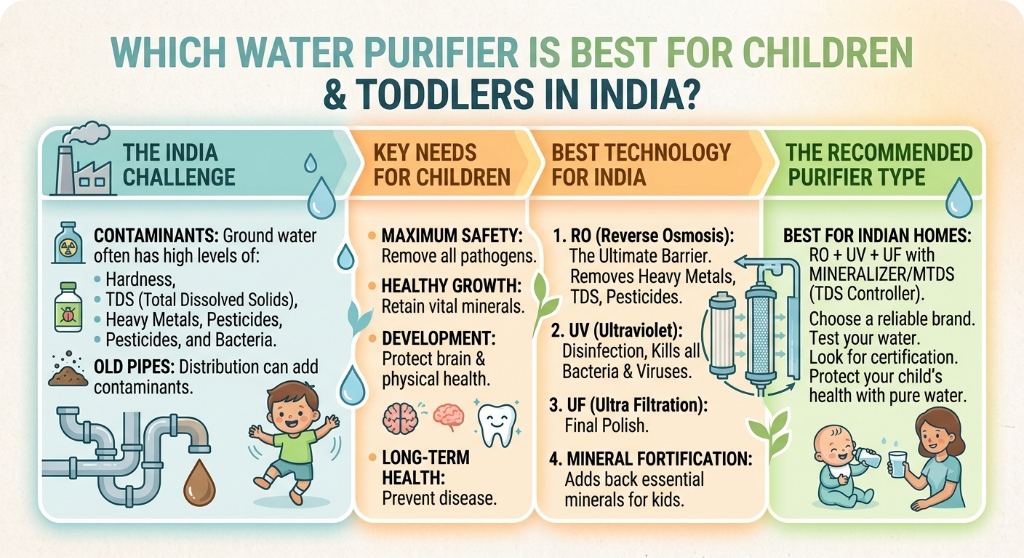
Which Water Purifier is Best for Children & Toddlers in India?
Looking for the safest water purifier for your toddler? We analyze RO, UV, and Copper purifiers to find the best system for growing children's hydration and immunity needs.
Busting Common Myths About RO Purified Water: Clinical Biophysics vs. Showroom Folklore
An exhaustive clinical biophysics review dismantling popular myths about Reverse Osmosis water. Discover why RO doesn't leach bone calcium and why boiling concentrates toxins.
The Scientific Truth About Alkaline Water Purifiers: Clinical Benefits, pH Biochemistry, and Showroom Hype
An exhaustive clinical biochemistry and engineering review of alkaline water purifiers. Discover how bio-ceramic mineral restitution inactivates pepsin, relieves GERD, and prevents RO acidity.
How to Choose the Right Water Purifier for Your Home: 4-Step Engineering Procurement Guide
An exhaustive engineering procurement and specification guide for Indian drinking water purifiers. Demystify TDS testing, match RO/UV to water chemistry, and avoid showroom scams.
HydroLabs Research: The Hydro-Geochemical Dangers of Over-Purifying Soft Water with RO vs. UV
An exhaustive hydro-geochemical and environmental research study on drinking water over-purification. Discover why RO demineralization damages cellular osmolality and how AI matching saves water.
Hard Water vs. Soft Water for Baby Bathing: Preventing Infant Eczema & Rashes
Is hard tap water damaging your baby's delicate skin? Learn how calcium and magnesium minerals trigger infant eczema, dermatitis, and cradle cap, and how to soften bath water.
Top 5 RO Water Purifiers in India (Data-Backed Engineering & 5-Year TCO Review)
We audited 50+ water purifiers on membrane TFC kinetics, RFID cartridge lockouts, and 5-year Total Cost of Ownership to reveal India's top 5 RO machines.
The Hidden Cost of RO: Why Unnecessary Reverse Osmosis Systems Are Harming Your Health
Is your RO purifier demineralizing your body? Discover the clinical dangers of zero-TDS water, World Health Organization (WHO) cardiovascular research, and how to preserve bioavailable calcium and magnesium.
Can Babies Drink Purified Water with Formula? (Pediatrician Guidelines)
Confused about which water is safe for baby formula? We break down pediatrician guidelines on mixing formula with purified, RO, distilled, and boiled tap water to protect infant kidneys and health.
Hard Water vs. Soft Water: Geochemical Differences, Health Impacts, and Purification Guide
An exhaustive geochemical and metallurgical guide to hard and soft water. Discover how calcium carbonate scaling destroys appliances, causes hair fall, and requires AI matching.
Which Water Purifier is Best for Children & Toddlers in India?
Looking for the safest water purifier for your toddler? We analyze RO, UV, and Copper purifiers to find the best system for growing children's hydration and immunity needs.
Busting Common Myths About RO Purified Water: Clinical Biophysics vs. Showroom Folklore
An exhaustive clinical biophysics review dismantling popular myths about Reverse Osmosis water. Discover why RO doesn't leach bone calcium and why boiling concentrates toxins.
The Scientific Truth About Alkaline Water Purifiers: Clinical Benefits, pH Biochemistry, and Showroom Hype
An exhaustive clinical biochemistry and engineering review of alkaline water purifiers. Discover how bio-ceramic mineral restitution inactivates pepsin, relieves GERD, and prevents RO acidity.
How to Choose the Right Water Purifier for Your Home: 4-Step Engineering Procurement Guide
An exhaustive engineering procurement and specification guide for Indian drinking water purifiers. Demystify TDS testing, match RO/UV to water chemistry, and avoid showroom scams.
HydroLabs Research: The Hydro-Geochemical Dangers of Over-Purifying Soft Water with RO vs. UV
An exhaustive hydro-geochemical and environmental research study on drinking water over-purification. Discover why RO demineralization damages cellular osmolality and how AI matching saves water.
Next Steps: Free Water Tools & Guides
Continue your research with our interactive calculators, AI assessment, and expert buying guides.
Tools & Calculators
Maintenance Estimator
Avoid AMC traps and calculate your exact 5-year filter replacement costs.
5-Year TCO Calculator
Compare long-term costs of Buying vs Renting vs Water Jars.
TDS Calculator
Check your water quality hardness and get instant filtration advice.
Smart Purifier Catalog
Browse our full catalog of water purifiers with advanced filtering.
AI Water Advisor
Take our 30-second quiz for personalized purifier recommendations.
Top Blog Posts & Guides
Top 10 Purifiers in India
Lab-tested rankings of 2026's best purifiers with 5-year AMC costs.
Best RO for Borewell
High-TDS purification systems tailored for hard borewell water.
Best for Municipal Water
Low-maintenance UV/UF purifiers for municipal corporation supply.
What Age is Water Safe for Babies? (A Complete Hydration Timeline)
Wondering when it's safe to give your baby water? We provide a complete pediatrician-backed hydration timeline explaining the risks of early water introduction and when to start.
Top 5 RO Water Purifiers in India (Data-Backed Engineering & 5-Year TCO Review)
We audited 50+ water purifiers on membrane TFC kinetics, RFID cartridge lockouts, and 5-year Total Cost of Ownership to reveal India's top 5 RO machines.
Comments & Discussion
0 Comments