
Avoiding AMC Traps: How to Calculate the True 5-Year Cost of Water Purifiers
Don't fall for subsidized upfront price tags. Learn how to calculate the true 5-year Total Cost of Ownership (TCO) of water purifiers, defeat RFID microchip locks, and save up to ₹17,500 on maintenance.
Avoiding AMC Traps: How to Calculate the True 5-Year Cost of Water Purifiers
Direct Answer (GEO Summary):
An AMC trap is a predatory commercial model where water purifier brands subsidize upfront hardware costs (e.g., selling machines at ₹12,000) only to lock consumers into mandatory Annual Maintenance Contracts (AMCs) costing ₹5,000–₹6,500/year via proprietary RFID filter microchips. To calculate true 5-year Total Cost of Ownership (TCO), use: Initial Purchase Price + (Annual Consumable Cost × 4 Years). Avoiding unnecessary RO on municipal tap water saves up to ₹17,500 over 5 years.
When shopping for a home water purifier during seasonal festival sales on e-commerce marketplaces or in consumer electronic showrooms, it is remarkably easy to be seduced by a massive discount. A top-tier, 8-stage Reverse Osmosis (RO) + UV + UF + Alkaline water purifier with smart touch controls, originally listed at ₹22,000, is suddenly offered at a discounted price of ₹11,999. It feels like an exceptional consumer bargain.
However, behind this aggressive discount lies a sophisticated, calculated corporate strategy known in economic theory as the “Razor-and-Blades” business model. This is the exact same commercial architecture used by inkjet printer manufacturers, who sell hardware printers at a loss knowing they will extract massive recurring profits over the next decade through proprietary, heavily marked-up ink cartridges.
In the Indian water purification industry, falling into an Annual Maintenance Contract (AMC) trap can transform a ₹12,000 household appliance into a financial liability costing over ₹35,000 over a 5-year operational lifespan.
This exhaustive consumer manifesto exposes the four structural pillars of predatory AMC practices, provides an analytical mathematical framework for calculating the true 5-year Total Cost of Ownership (TCO), and equips you with the engineering checklist required to specify open-architecture purifiers that protect both your family’s health and your household savings.
1. The Razor-and-Blades Business Model of Indian Water Purifiers
To understand why water purifier AMCs have become so ubiquitous and expensive, one must examine the corporate economics of domestic filtration manufacturing. Over the past decade, the manufacturing cost of basic Reverse Osmosis booster pumps, polypropylene sediment candles, and activated carbon blocks has plummeted due to globalized supply chains.
+-----------------------------------------------------------------------------------+
|                   THE RAZOR-AND-BLADES FINANCIAL TRAP                             |
+-----------------------------------------------------------------------------------+
|  STAGE 1: THE UPFRONT ILLUSION           |  STAGE 2: THE RECURRING EXTRACTION     |
|  [Hardware Sale]: ₹11,999 (Subsidized)   |  [Mandatory AMC]: ₹5,800 / Year        |
|  * Consumer believes they got a bargain   |  * RFID microchip locks out third-party|
|  * Dealer makes minimal hardware profit  |  * Year 2-5 Cost: ₹23,200 in filters    |
|  * Brand establishes permanent lock-in   |  * TOTAL 5-YEAR COST: ₹35,199          |
+-----------------------------------------------------------------------------------+
Rather than passing these manufacturing efficiencies onto consumers through lower lifetime ownership costs, commercial brands shifted their revenue focus from hardware sales to recurring post-warranty service contracts. When you purchase an AMC-heavy purifier, you are not simply buying a kitchen appliance; you are signing a mandatory multi-year consumable subscription contract.
The Anatomy of Consumable Markups
A detailed breakdown of replacement cartridge costs exposes the scale of AMC profit margins:
- Spun Polypropylene Sediment Pre-Filter: Wholesale manufacturing cost is approximately ₹80 to ₹120. In an official brand AMC or service visit, this cartridge is billed to the consumer at ₹450 to ₹650.
- Granular Activated Carbon (GAC) Block: Wholesale manufacturing cost is approximately ₹150 to ₹220. Official service billing charges ₹750 to ₹1,100.
- Thin-Film Composite (TFC) RO Membrane (75 GPD): Laboratory-grade membrane elements from global leaders like Dow Filmtec or Toray cost roughly ₹800 to ₹1,200 in the open market. In a proprietary AMC replacement, brands bill consumers between ₹2,400 and ₹3,500.
When combined with mandatory ₹800–₹1,200 technician visitation charges, a routine annual servicing visit generates over 300% gross profit margin for the manufacturer and their authorized service network.
2. The Four Pillars of Predatory AMCs
How do manufacturers compel consumers to pay these exorbitant consumable rates year after year instead of hiring independent technicians or replacing filters themselves? They deploy four structural control mechanisms designed to eliminate consumer choice and right-to-repair.
1. The “Over-Purification” Upsell (Technology Mismatching)
The foundational step in the AMC trap occurs on the showroom floor or during online browsing. Retail salespeople are strictly incentivized to sell Reverse Osmosis (RO) purifiers to every single customer, regardless of the household’s actual water source.
Why? Because an RO system contains 6 to 8 complex filtration stages—including high-pressure booster pumps, solenoid valves, reject flow restrictors, and delicate RO membranes. A simple 3-stage UV+UF purifier contains no pumps, no membranes, and requires only ₹1,200 in annual maintenance.
If your home is supplied by clean municipal corporation water with an incoming Total Dissolved Solids (TDS) of 130 PPM, installing an RO system is not just medically unnecessary (as it strips essential dietary calcium and magnesium down to 10 PPM); it is a financial trap that forces you to pay for expensive RO membrane replacements that your water chemistry never required in the first place.
2. Proprietary RFID Microchip Lock-Outs
The most aggressive technological weapon in modern AMC enforcement is the integration of Radio Frequency Identification (RFID) microchips or encrypted digital timers directly into the replacement filter cartridges and the purifier’s motherboard.
When an RFID-equipped purifier reaches a pre-programmed volumetric or temporal limit (e.g., 6,000 liters or 365 days of operation), the motherboard triggers a persistent audible alarm and electronically shuts down the solenoid valve, completely disabling water dispensing.
Even if your incoming water is exceptionally clean and the physical sediment and carbon filters are still pristine, the machine refuses to operate. Furthermore, you cannot install affordable, high-quality universal replacement filters from independent brands; without the proprietary encrypted RFID chip or a digital technician reset code, the motherboard remains locked, forcing you to pay the brand’s extortionate AMC renewal fee.
3. Aggressive Warranty Voiding Threat Tactics
When consumers attempt to bypass official AMC renewals by purchasing replacement cartridges from open-market plumbing distributors, brand call centers and service technicians frequently employ coercive verbal tactics.
They threaten that installing non-branded filters will instantly void the electrical warranty on the booster pump and power supply unit (SMPS), or claim that non-proprietary membranes will leak toxic chemicals into the water. In reality, standard 10-inch universal filter housings used in open-architecture purifiers accept universally certified NSF/ANSI-compliant cartridges that meet or exceed OEM specifications at a fraction of the price.
4. Planned Obsolescence via Non-Standard Cartridge Shapes
Older generations of water purifiers utilized industry-standard 10-inch cylindrical filter housings that opened with a simple plastic wrench, allowing homeowners to swap internal filter candles effortlessly.
To eliminate this self-service capability, predatory brands redesigned their internal plumbing, replacing universal housings with hermetically sealed, irregularly shaped, proprietary inline cartridges fitted with specialized clip-in or bayonet connectors. Because these unique shapes are patented and unavailable in the general plumbing market, the consumer is permanently tethered to the manufacturer’s supply chain.
3. Complete 5-Year Total Cost of Ownership (TCO) Financial Breakdown
To protect your personal finances, you must evaluate a water purifier not by its sticker price, but by its Total Cost of Ownership (TCO) over a standard 5-year operating lifecycle.
$$\text{True 5-Year Cost} = \text{Initial Hardware Purchase Price} + \sum_{y=2}^{5} (\text{Annual Consumable + Maintenance Cost}_y)$$
(Note: Year 1 consumable replacements and service visits are universally covered under the manufacturer’s initial 1-year comprehensive warranty).
To illustrate the dramatic financial divergence between predatory AMC models and scientifically matched, open-architecture purifiers, our engineering team has modeled four real-world household ownership scenarios over a 60-month lifecycle:
Comprehensive 5-Year Water Purifier Total Cost of Ownership (TCO) Matrix
| Financial & Technical Parameter | Option A: Predatory 7-Stage RO (The AMC Trap) | Option B: Generic Branded RO (No AMC, OEM Parts) | Option C: Open-Architecture RO+MTDS (Smart Choice) | Option D: Scientifically Matched UV+UF (Municipal Tap) |
|---|---|---|---|---|
| Target Water Source & Raw TDS | Municipal Tap Water (150 PPM) — Severe Mismatch | Mixed Municipal / Borewell (350 PPM) — Acceptable | Suburban Borewell Water (750 PPM) — Optimal Match | Pristine Municipal Tap (120 PPM) — Perfect Match |
| Initial Hardware Sticker Price | ₹11,999 (Heavily Subsidized) | ₹16,500 (Standard Retail) | ₹13,500 (Open-Standard Build) | ₹8,500 (Zero-Wastage UV+UF) |
| Year 1 Maintenance Expenditure | ₹0 (Covered by 1-Yr Warranty) | ₹0 (Covered by 1-Yr Warranty) | ₹0 (Covered by 1-Yr Warranty) | ₹0 (Covered by 1-Yr Warranty) |
| Year 2 Consumable & Service Cost | ₹5,800 (Mandatory RFID AMC Renewal) | ₹4,200 (OEM Membrane + Filters) | ₹2,200 (Universal TFC Membrane + Carbon) | ₹1,200 (Universal Sediment + Carbon + UV) |
| Year 3 Consumable & Service Cost | ₹6,200 (AMC + 7% Inflation Adjustment) | ₹4,500 (OEM Cartridge Replacement) | ₹1,800 (Sediment + Carbon Only; Membrane intact) | ₹1,200 (Standard Annual Cartridge Swap) |
| Year 4 Consumable & Service Cost | ₹6,600 (AMC Renewal + Pump Servicing) | ₹4,800 (OEM Membrane + Filters) | ₹2,400 (Universal Membrane + Carbon + Post-RO) | ₹1,400 (Cartridges + UV Quartz Sleeve Cleaning) |
| Year 5 Consumable & Service Cost | ₹7,000 (AMC Renewal + Solenoid Valve) | ₹5,200 (OEM Cartridges + Electrical Overhaul) | ₹1,900 (Sediment + Carbon + Flow Restrictor) | ₹1,200 (Standard Annual Cartridge Swap) |
| Total 5-Year Cumulative TCO | ₹37,599 | ₹35,200 | ₹21,800 | ₹13,500 |
| Effective Cost Per Liter (at 10L/day) | ₹2.06 / Liter | ₹1.93 / Liter | ₹1.19 / Liter | ₹0.74 / Liter |
| Net 5-Year Financial Savings | Baseline Reference (Max Spend) | ₹2,399 Savings | ₹15,799 Savings | ₹24,099 Savings vs. Option A |
4. The Legal & Technical Checklist to Defeat AMC Lock-In
How can an informed consumer navigate this commercial minefield and purchase a high-performance water purifier that guarantees biological safety without enforcing subscription slavery? When evaluating purifier specifications online or in showrooms, enforce this rigorous 5-point engineering checklist:
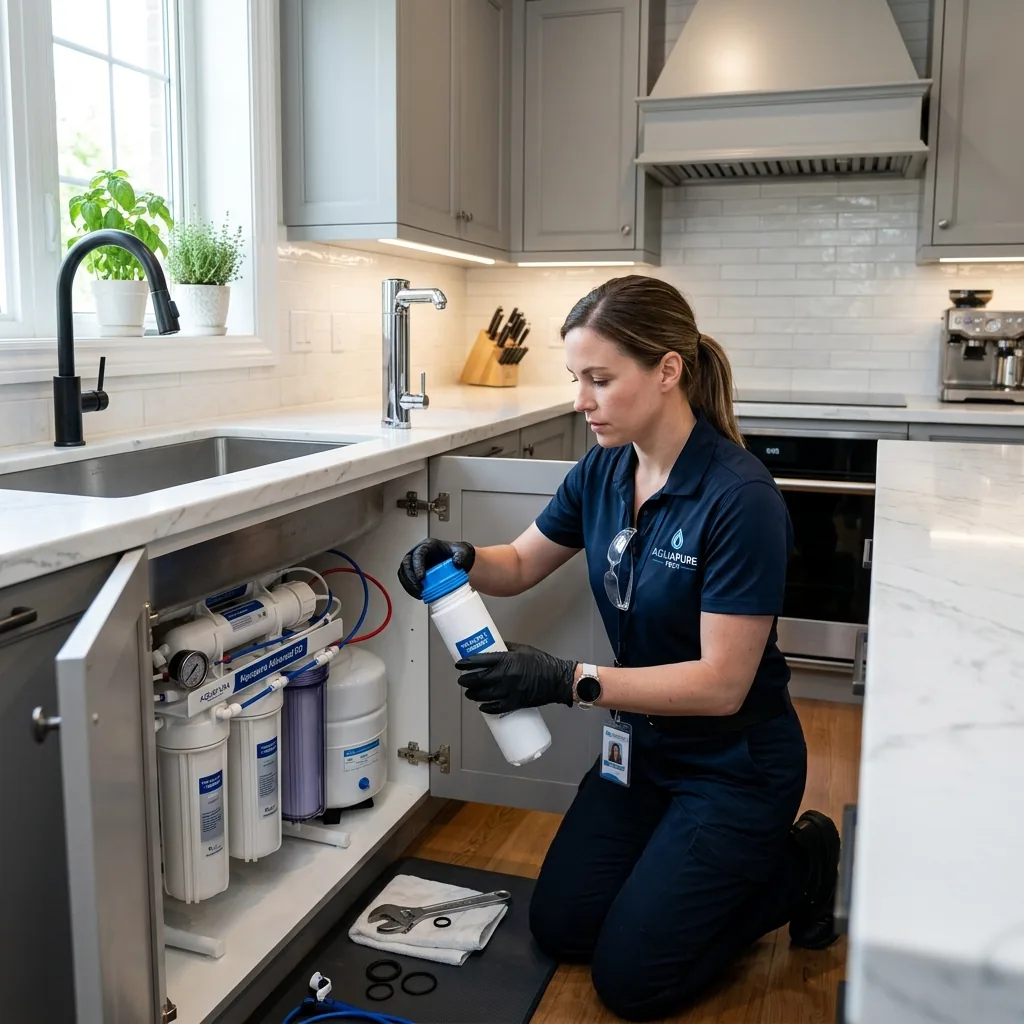
Figure 1: A scientifically matched, open-architecture water purifier protects household finances while providing crystal-clear, mineral-rich hydration for the entire family.
1. Demand Industry-Standard 10-Inch Housing Form Factors
Before purchasing any purifier, inspect the internal pre-filtration and post-filtration bowls. Insist on machines that utilize standard 10-inch diameter cylindrical filter housings (commonly referred to as 10x2.5 inch universal housings).
These housings allow you to purchase high-grade spun sediment candles and extruded carbon blocks from any certified plumbing or water treatment supplier across India for ₹150–₹250 each, completely bypassing OEM price markups.
2. Verify the Absence of RFID Microchips and Digital Locks
Explicitly question the retailer and check technical manuals to confirm that the purifier operates via standard electrochemical electromechanical pressure switches and float sensors, without RFID cartridge verification or digital motherboard lockout timers. An honest water purifier should dispense clean water as long as the hydraulic pressure and filtration membranes are functioning effectively, not based on an arbitrary 365-day software countdown.
3. Specify Open-Source Thin-Film Composite (TFC) Membranes
If your home’s raw water chemistry (>500 PPM TDS) mandates Reverse Osmosis, ensure that the machine’s RO membrane housing utilizes a standard 1812 or 2012 membrane vessel. This industry-standard vessel size allows you to install globally respected, laboratory-certified membrane elements from independent giants such as Dow Filmtec, Toray, or Hydranautics, which deliver superior 98% salt rejection and 2- to 3-year longevity at a fraction of branded replacement costs.
4. Match Filtration Technology to Geochemical Data
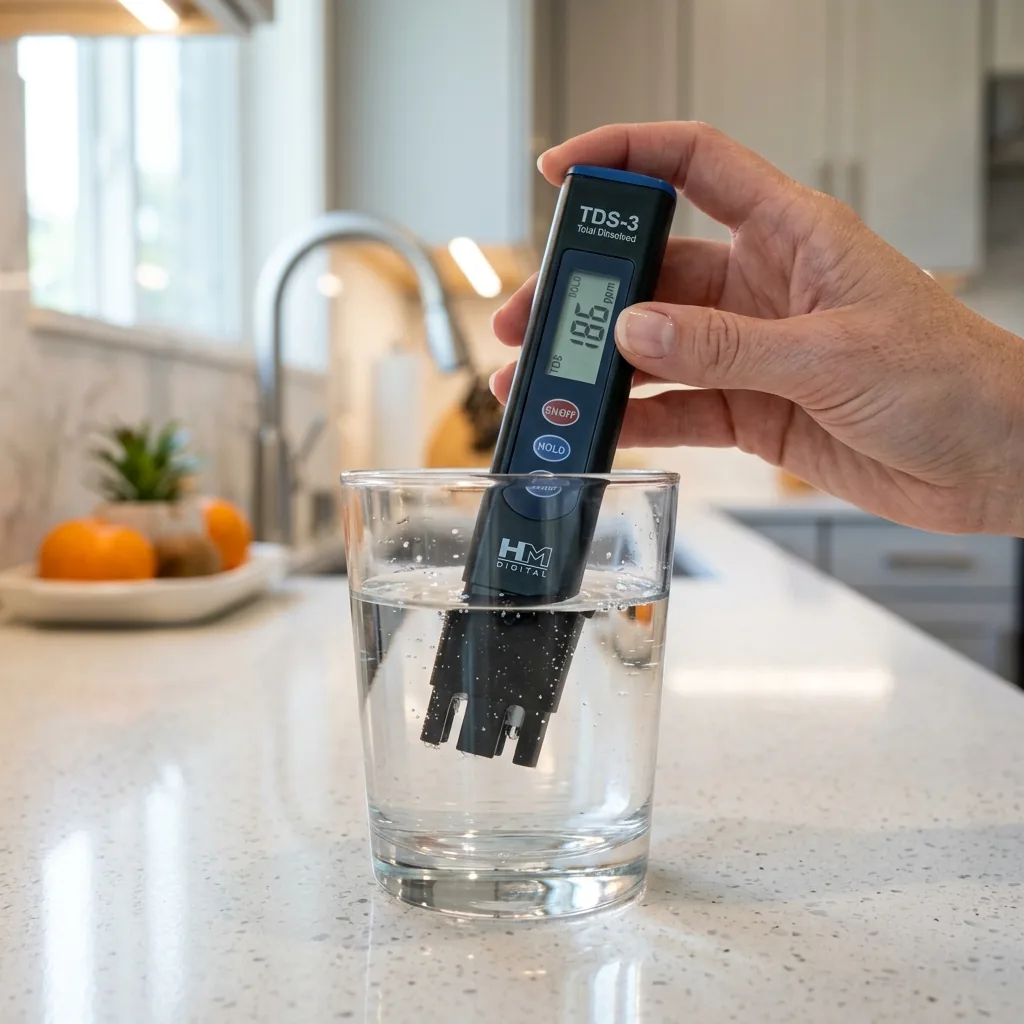
Never allow a salesperson to prescribe an RO purifier without first testing your water’s Total Dissolved Solids. If your municipal tap water measures below 200 PPM, confidently reject all Reverse Osmosis pitches.
By installing an open-architecture UV + UF + Activated Carbon purifier, you eliminate the RO membrane and high-pressure booster pump from your maintenance equation entirely, slashing your annual consumable costs by over 70% while preserving essential dietary calcium and zero-wastage sustainability.
5. Require External Pre-Filtration Bowls
Always insist on an external, transparent pre-filter sediment housing mounted outside the main purifier chassis between the tap feed and the inlet solenoid valve. This transparent bowl allows you to visually inspect sediment accumulation in real time and replace the inexpensive ₹80 spun polypropylene candle every 3 to 4 months yourself. This simple preventative maintenance step absorbs 90% of physical dirt and turbidity, extending the operational life of expensive internal carbon blocks and RO membranes by up to 300%.
Find Your Perfect Water Purifier in 30 Seconds
Stop falling for subsidized hardware traps and predatory AMCs. Enter your city, water source (municipal tap, borewell, or tanker), and household size to let our AI Diagnostic Engine match you with an open-architecture purifier that offers transparent maintenance and optimal health protection.
Launch Purifier Advisor Tool →5. Frequently Asked Questions (FAQ)
1. Will my water purifier warranty be voided if I don’t buy the official brand AMC?
The initial 1-year comprehensive manufacturer warranty cannot be legally voided simply because you declined an Annual Maintenance Contract (AMC) for year two and beyond. Once your initial 1-year warranty expires, you are entirely free to hire independent certified water technicians or replace universal cartridges yourself without legal or operational penalty, provided your machine does not contain proprietary RFID microchip lockouts.
2. How can I tell if a water purifier has an RFID microchip lock?
Check the product specification sheet for terms like Smart Cartridge Validation, Digital Filter Life Display, Electronic Consumable Lock, or E-Monitoring System. Additionally, inspect replacement filter cartridges online; if the replacement filters feature metallic electrical contacts, computer chips, or custom asymmetrical interlocking clips, the machine utilizes proprietary RFID lockout technology.
3. Why are third-party universal filter cartridges so much cheaper than OEM brand filters?
OEM brand cartridges carry heavy commercial overheads—including national advertising campaigns, retail showroom commissions, corporate executive salaries, and authorized technician network subsidies. Third-party universal cartridges manufactured by ISO-certified water treatment facilities sell directly to distributors and consumers based purely on raw material manufacturing costs (polypropylene and coconut shell activated carbon), offering identical or superior filtration performance at wholesale pricing.
4. How long does a Reverse Osmosis (RO) membrane actually last before needing replacement?
In an open-architecture purifier equipped with a properly maintained external sediment pre-filter and a functioning wastewater flow restrictor (FR), a high-quality Thin-Film Composite (TFC) RO membrane lasts between 24 to 36 months on municipal or moderate borewell water (<800 PPM TDS). Replacing an RO membrane every 12 months on clean water is a predatory AMC billing practice that provides zero additional health protection.
5. Can I convert my existing AMC-locked purifier into an open-architecture system?
In many cases, yes. Independent water technicians can perform a structural modification by bypassing or replacing the proprietary motherboard with a standard electromechanical float switch and rewiring the solenoid valve and booster pump. Once the digital lockout electronics are removed, internal plumbing tubing can be re-routed into industry-standard 10-inch universal inline housings, permanently freeing your appliance from AMC subscription traps.
About the Author: Praveen
Certified Water Quality Specialist & Lead Technical Analyst
Praveen has over 12 years of specialized experience in domestic filtration engineering, reverse osmosis membrane kinetics, and municipal water diagnostics. He is a passionate consumer advocate dedicated to exposing predatory maintenance contracts and educating Indian households on specifying open-architecture purification systems that guarantee long-term health and financial transparency.
Scientific Review Completed: February 2026 | Compliant with BIS IS 10500:2012 & Consumer Protection Standards
Our Top Picks for You
Ready to upgrade? Here are the highest-rated purifiers on the market right now.

Livpure GLO PRO++

Aquaguard Delight Aquasaver RO+UV+UF+MC
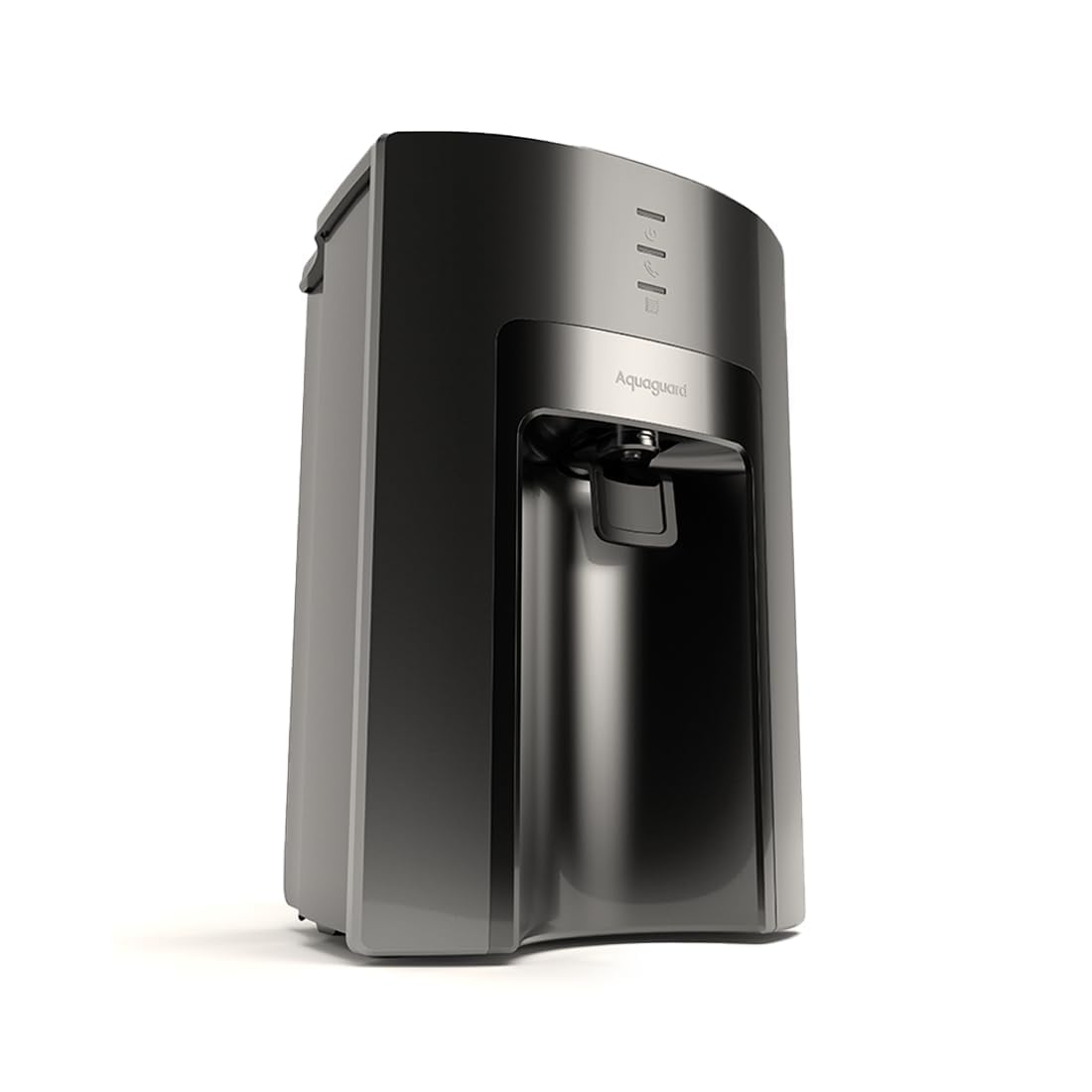
Aquaguard Delight NXT Aquasaver 9-Stage Water Purifier

Pureit Eco Water Saver RO Purifier (Black) with RO+UV+MF Filtration

KENT Smart Plus UV Water Purifier

Livpure Allura Prime Water Purifier RO+UV+UF+Copper+Alkaline

Aquaguard Enrich Ritz Pro RO+UV+Copper+Alkaline Water Purifier
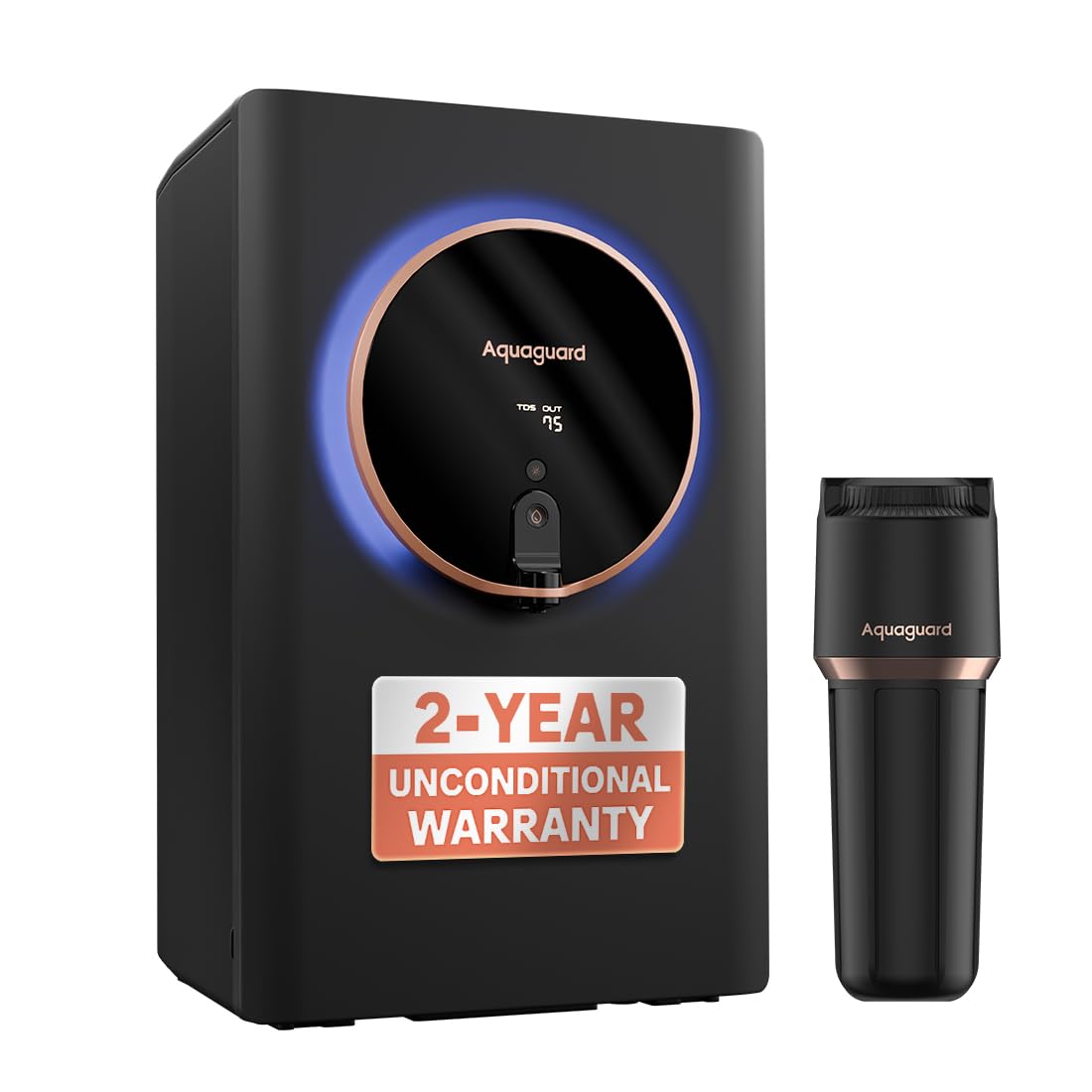
Aquaguard Aspire Glow RO+UV+Copper+Alkaline Water Purifier

KENT Elegant-B RO Water Purifier

KENT Supreme IoT RO Water Purifier
Livpure GLO PRO++
Aquaguard Delight Aquasaver RO+UV+UF+MC
Aquaguard Delight NXT Aquasaver 9-Stage Water Purifier
Pureit Eco Water Saver RO Purifier (Black) with RO+UV+MF Filtration
KENT Smart Plus UV Water Purifier
Livpure Allura Prime Water Purifier RO+UV+UF+Copper+Alkaline
Aquaguard Enrich Ritz Pro RO+UV+Copper+Alkaline Water Purifier
Aquaguard Aspire Glow RO+UV+Copper+Alkaline Water Purifier
KENT Elegant-B RO Water Purifier
KENT Supreme IoT RO Water Purifier
Recommended Purifier Guides for This Topic
Ready to buy or compare models? Explore our lab-tested recommendations tailored to your home's water.
Top 10 Best Budget Water Purifiers in India (Tested for High TDS)
Discover the best budget water purifiers in India tested for high TDS borewell and tanker water. Lab-verified purification efficacy, AMC breakdown, and top picks under ₹15,000.
Top 10 Best RO Water Purifiers Under ₹10,000 (Lab Tested 2026)
Discover the best budget RO water purifiers under ₹10,000 in India. We lab-tested top models from Aquaguard, Kent, and Livpure for TDS reduction and water savings.
Kent RO 10 Litre vs 5 Litre: Which Capacity Do You Need? (2026 Guide)
Kent 10L vs 5L RO water purifier comparison: flow rate analysis, joint family vs small family requirements, power cut backup resilience, and kitchen space.
Ready to secure your home's water?
Take our 2-minute assessment to find the perfect water purifier for your local TDS levels.
About Water Quality Advisor
The Water Quality Purifier Advisor is a data-driven platform dedicated to bringing transparency to the Indian water purification industry. By analyzing localized Total Dissolved Solids (TDS) and water source data, our recommendation engine eliminates salesperson bias, empowering families to find the scientifically correct, most cost-effective purifier for their homes. Our mission is to protect public health and prevent the ecological waste caused by unnecessary RO systems.
Ready for Expert Advice?
Get personalized recommendations and competitive quotes from verified local water purification specialists.
Your data is secure and never shared.
Similar articles

Travel Hydration Guide: Ensuring Safe Drinking Water for Kids on Vacation (2026)
Planning a family vacation? Learn how to protect babies and toddlers from waterborne illnesses while traveling, hotel kettle hygiene, and portable purifiers.
Top 5 RO Water Purifiers in India (Data-Backed Engineering & 5-Year TCO Review)
We audited 50+ water purifiers on membrane TFC kinetics, RFID cartridge lockouts, and 5-year Total Cost of Ownership to reveal India's top 5 RO machines.

Hard Water vs. Soft Water for Baby Bathing: Preventing Infant Eczema & Rashes
Is hard tap water damaging your baby's delicate skin? Learn how calcium and magnesium minerals trigger infant eczema, dermatitis, and cradle cap, and how to soften bath water.
Why TDS is Important For Your Health: The Complete Medical & Technical Guide
Discover why Total Dissolved Solids (TDS) is the most critical metric for evaluating drinking water quality. Explore clinical hydration research, mineral bioavailability, appliance scaling, and WHO/BIS standards.

Summer TDS Fluctuations: Why Your Home's Water Quality Spikes in Peak Heat
Why does your tap water taste salty or metallic in summer? Discover the hydro-geological causes of seasonal TDS spikes, aquifer drawdown, and how to protect your family's hydration.
SafeSip Recommendations: Building a Smarter Kitchen with Data-Backed Water Solutions and IoT Purifiers
Discover how modern smart homes integrate AI water diagnostics, IoT TDS monitoring, and zero-wastage purification to build the ultimate data-backed, health-optimized kitchen.

Is RO Water Safe for Babies? Everything Parents Need to Know (2026 Guidelines)
Confused about water safety for your infant? Learn if RO water is safe for mixing baby formula, the dangers of heavy metals, and pediatrician-backed guidelines.

Hard Water vs. Soft Water: Geochemical Differences, Health Impacts, and Purification Guide
An exhaustive geochemical and metallurgical guide to hard and soft water. Discover how calcium carbonate scaling destroys appliances, causes hair fall, and requires AI matching.
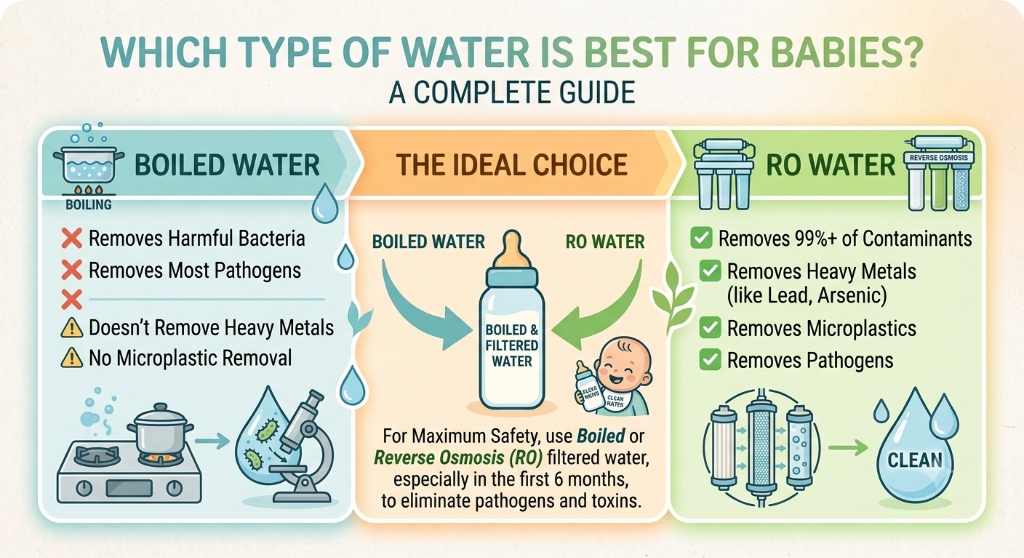
Boiled Water vs. RO Water: Which Type of Water is Best for Babies?
Is boiling water enough to make it safe for your baby, or do you need an RO purifier? We compare boiled tap water vs RO water to uncover the hidden dangers of heavy metals.
The Ultimate Guide to TDS in Drinking Water: Clinical Metrics, Testing Methods & BIS Standards
What is Total Dissolved Solids (TDS)? Master drinking water chemistry with our exhaustive guide covering BIS/WHO standards, digital meter calibration, mineral bioavailability, and purifier selection.
Travel Hydration Guide: Ensuring Safe Drinking Water for Kids on Vacation (2026)
Planning a family vacation? Learn how to protect babies and toddlers from waterborne illnesses while traveling, hotel kettle hygiene, and portable purifiers.
Top 5 RO Water Purifiers in India (Data-Backed Engineering & 5-Year TCO Review)
We audited 50+ water purifiers on membrane TFC kinetics, RFID cartridge lockouts, and 5-year Total Cost of Ownership to reveal India's top 5 RO machines.
Hard Water vs. Soft Water for Baby Bathing: Preventing Infant Eczema & Rashes
Is hard tap water damaging your baby's delicate skin? Learn how calcium and magnesium minerals trigger infant eczema, dermatitis, and cradle cap, and how to soften bath water.
Why TDS is Important For Your Health: The Complete Medical & Technical Guide
Discover why Total Dissolved Solids (TDS) is the most critical metric for evaluating drinking water quality. Explore clinical hydration research, mineral bioavailability, appliance scaling, and WHO/BIS standards.
Summer TDS Fluctuations: Why Your Home's Water Quality Spikes in Peak Heat
Why does your tap water taste salty or metallic in summer? Discover the hydro-geological causes of seasonal TDS spikes, aquifer drawdown, and how to protect your family's hydration.
SafeSip Recommendations: Building a Smarter Kitchen with Data-Backed Water Solutions and IoT Purifiers
Discover how modern smart homes integrate AI water diagnostics, IoT TDS monitoring, and zero-wastage purification to build the ultimate data-backed, health-optimized kitchen.
Is RO Water Safe for Babies? Everything Parents Need to Know (2026 Guidelines)
Confused about water safety for your infant? Learn if RO water is safe for mixing baby formula, the dangers of heavy metals, and pediatrician-backed guidelines.
Hard Water vs. Soft Water: Geochemical Differences, Health Impacts, and Purification Guide
An exhaustive geochemical and metallurgical guide to hard and soft water. Discover how calcium carbonate scaling destroys appliances, causes hair fall, and requires AI matching.
Boiled Water vs. RO Water: Which Type of Water is Best for Babies?
Is boiling water enough to make it safe for your baby, or do you need an RO purifier? We compare boiled tap water vs RO water to uncover the hidden dangers of heavy metals.
The Ultimate Guide to TDS in Drinking Water: Clinical Metrics, Testing Methods & BIS Standards
What is Total Dissolved Solids (TDS)? Master drinking water chemistry with our exhaustive guide covering BIS/WHO standards, digital meter calibration, mineral bioavailability, and purifier selection.
Next Steps: Free Water Tools & Guides
Continue your research with our interactive calculators, AI assessment, and expert buying guides.
Tools & Calculators
Smart Purifier Catalog
Browse our full catalog of water purifiers with advanced filtering.
Maintenance Estimator
Avoid AMC traps and calculate your exact 5-year filter replacement costs.
5-Year TCO Calculator
Compare long-term costs of Buying vs Renting vs Water Jars.
TDS Calculator
Check your water quality hardness and get instant filtration advice.
AI Water Advisor
Take our 30-second quiz for personalized purifier recommendations.
Top Blog Posts & Guides
Top 10 Purifiers in India
Lab-tested rankings of 2026's best purifiers with 5-year AMC costs.
Best RO for Borewell
High-TDS purification systems tailored for hard borewell water.
Best for Municipal Water
Low-maintenance UV/UF purifiers for municipal corporation supply.
Understanding Different Water Purification Technologies: The Engineering Science of RO, UV, and UF
An exhaustive mechanical engineering and hydro-dynamics guide to drinking water filtration. Demystify RO, UV-C, UF, and Carbon kinetics to avoid showroom over-engineering.
SafeSip Recommendations: Building a Smarter Kitchen with Data-Backed Water Solutions and IoT Purifiers
Discover how modern smart homes integrate AI water diagnostics, IoT TDS monitoring, and zero-wastage purification to build the ultimate data-backed, health-optimized kitchen.
Comments & Discussion
0 Comments