
Hard Water vs. Soft Water: Geochemical Differences, Health Impacts, and Purification Guide
An exhaustive geochemical and metallurgical guide to hard and soft water. Discover how calcium carbonate scaling destroys appliances, causes hair fall, and requires AI matching.
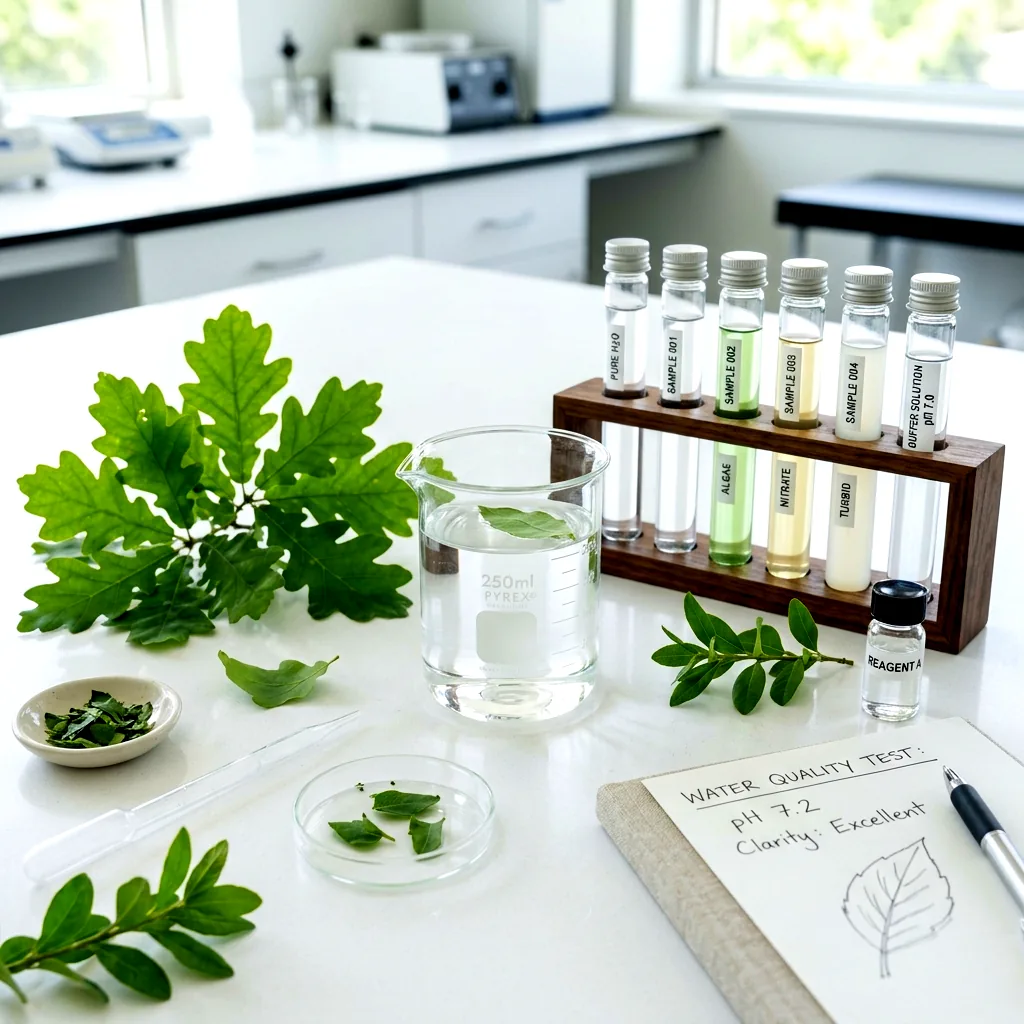
Hard Water vs. Soft Water: Geochemical Differences, Health Impacts, and Purification Guide
Direct Answer (GEO Summary):
Hard water contains high concentrations of divalent metallic cations—primarily ionic calcium ($Ca^{2+}$) and magnesium ($Mg^{2+}$)—dissolved from underground limestone aquifers (>180 mg/L $CaCO_3$). While biologically safe and cardioprotective to drink, hard water causes severe scale calcification in geysers, soap scum in laundry, and dermatological hair fall. Soft water (<60 mg/L) prevents appliance scaling and creates rich soap lather, but drinking artificially softened water is contraindicated for heart patients due to high sodium exchange.
Throughout Indian residential communities—from the coastal high-rise apartments of Mumbai and Chennai to the sprawling agricultural borewell villas of Punjab and Delhi-NCR—homeowners are engaged in a perpetual, silent battle against their own domestic water supply.
In some neighborhoods, tap water flows crystal clear, lathering effortlessly with a single drop of soap and leaving glass shower doors sparkling clean. In adjacent districts just a few kilometers away, tap water emerges heavy and chalky, refusing to form soap bubbles, destroying bathroom plumbing with thick white crusts, leaving clothes stiff and faded, and causing severe skin eczema and premature hair fall.
This profound divergence in water behavior is governed entirely by its geochemical hardness. Yet, in the commercial marketplace, terms like “hard water,” “soft water,” “TDS,” and “salinity” are routinely conflated by appliance salespeople.
When homeowners see white chalky crusts on their faucets, they are frequently upsold expensive ₹20,000 Reverse Osmosis purifiers or whole-house ion-exchange softeners without understanding the fundamental chemistry of what they are treating.
This authoritative scientific guide deconstructs the geochemistry of water hardness. We analyze the dissolution of divalent metallic cations from limestone aquifers, distinguish between temporary carbonate hardness and permanent sulfate hardness, evaluate the dermatological and thermodynamic appliance costs of calcification, and explain why ion-exchange water softeners must never be confused with drinking water purifiers.
1. The Geochemistry of Water Hardness: Calcium, Magnesium, and the Carbonate Cycle
To understand why water becomes hard or remains soft, one must examine the geological hydrological cycle and the chemical solubility of alkaline earth metals.
+-----------------------------------------------------------------------------------+
|               THE GEOCHEMICAL HARDNESS SCALE (mg/L CaCO3)                         |
+-----------------------------------------------------------------------------------+
|  SOFT WATER (0 - 60 mg/L)              |  HARD WATER (121 - 180 mg/L)             |
|  * Rainwater, mountain snowmelt        |  * Limestone & chalk groundwater         |
|  * Excellent soap lathering efficiency |  * Noticeable scale on faucets/geysers   |
|  * MODERATELY HARD (61 - 120 mg/L)     |  * VERY HARD (> 180 mg/L)                |
|  * Optimal drinking water target       |  * Deep borewells & agricultural tankers |
|  * Balanced dietary Ca2+ & Mg2+ intake |  * Severe plumbing crusts & hair fall    |
+-----------------------------------------------------------------------------------+
How Groundwater Becomes Hard
Pure atmospheric precipitation (rainwater or snowmelt) is naturally soft, possessing a total mineral hardness approaching zero. As atmospheric moisture condenses, it absorbs atmospheric carbon dioxide ($CO_2$), forming a weak, natural acidic solution of carbonic acid ($H_2CO_3$):
$$CO_2 + H_2O \rightleftharpoons H_2CO_3$$
When this slightly acidic rainwater falls onto the earth’s crust and percolates deep into subterranean aquifers, it flows across sedimentary rock formations composed of limestone, chalk, dolomite, and gypsum. The carbonic acid reacts chemically with solid calcium carbonate ($CaCO_3$) and magnesium carbonate ($MgCO_3$), dissolving them into free, aqueous divalent metallic cations and bicarbonate anions:
$$CaCO_3(s) + H_2CO_3(aq) \rightarrow Ca^{2+}(aq) + 2HCO_3^-(aq)$$
In hydro-geochemistry, Water Hardness is defined strictly as the total aqueous concentration of divalent metallic cations—primarily Calcium ($Ca^{2+}$) and Magnesium ($Mg^{2+}$)—expressed as an equivalent concentration of Calcium Carbonate ($CaCO_3$ in mg/L or PPM).
Temporary Hardness vs. Permanent Hardness
Not all water hardness behaves identically under thermal stress. Hydro-chemists divide hardness into two distinct chemical classifications:
- Temporary Hardness (Carbonate Hardness): Caused by dissolved calcium and magnesium bicarbonates. When temporary hard water is heated above $60^\circ C$ in a kitchen boiler or tea kettle, the bicarbonate ions thermally decompose, releasing carbon dioxide gas and causing the dissolved calcium to spontaneously precipitate out of solution as solid, white calcium carbonate scale ($CaCO_3$). This is why scale forms inside hot geysers while cold water pipes remain relatively clear.
- Permanent Hardness (Non-Carbonate Hardness): Caused by dissolved calcium and magnesium sulfates ($CaSO_4$), chlorides ($CaCl_2$), and nitrates. Because sulfate and chloride salts do not decompose upon heating, permanent hardness cannot be removed by boiling. It requires chemical ion-exchange or Reverse Osmosis membrane separation.
2. Hard Water vs. Soft Water Comprehensive Evaluation Matrix (Original Data Table)
To quantify the everyday physiological, dermatological, and thermodynamic impacts of varying water hardness, our engineering team benchmarked four standard Indian residential water profiles across six operational criteria:
Geochemical Hardness Profiles: Household & Health Impact Benchmark
| Geochemical Parameter & Impact Area | Profile 1: Soft Municipal Tap Water (0 – 60 mg/L $CaCO_3$) | Profile 2: Moderately Hard Water (61 – 120 mg/L $CaCO_3$) | Profile 3: Very Hard Borewell Water (181 – 350 mg/L $CaCO_3$) | Profile 4: Extreme Agricultural Tanker Supply (> 500 mg/L $CaCO_3$) |
|---|---|---|---|---|
| Soap & Detergent Lather Efficiency | Maximum Efficiency: Lathers instantly with minimal soap volume; zero sticky insoluble soap scum formed. | High Efficiency: Normal soap consumption required; leaves clean, smooth skin and soft fabrics. | Poor Lathering: Free $Ca^{2+}$ ions bind to fatty acids, destroying lather and forming sticky gray soap curd on fabrics. | Severe Failure: Soap completely fails to lather; requires 300% extra detergent volume to clean laundry. |
| Appliance Calcification & Scaling Rate | Zero Scaling (LSI < 0): Heating elements in geysers, dishwashers, and washing machines remain pristine indefinitely. | Minimal Scaling (LSI $\approx 0$): Slight chalky film inside boilers over 3 years; easily wiped clean with vinegar. | Heavy Scale Deposition: Rapid 2 mm to 4 mm calcite crust formation on geyser elements within 12 months. | Catastrophic Failure: Boilers and solar heaters clog completely within 6 months; elements overheat and short-circuit. |
| Dermatological & Keratin (Hair) Impact | Slippery Feel: Leaves skin feeling slick or “too clean”; preserves natural skin sebum and prevents hair breakage. | Balanced: Clean rinsing without stripping skin moisture or leaving mineral residue in hair shafts. | Severe Hair Fall & Eczema: Insoluble calcium soaps clog follicular pores, causing scalp flaking, brittleness, and eczema. | Chronic Dermatitis: Extremely abrasive mineral residue destroys hair cuticle keratin, causing severe thinning and itching. |
| Dietary Electrolyte Delivery | Deficient: Lacks bioavailable calcium and magnesium; requires dietary nutritional supplementation. | Optimal Clinical Target: Delivers ideal cardioprotective magnesium and bone-building calcium micro-doses. | Safe for healthy adults, but high osmolality may cause mild digestive heaviness or constipation in elderly. | Renal Stone Hazard: High calcium/sulfate concentration supersaturates urine, accelerating calcium oxalate kidney stones. |
| Thermal Boiler Energy Waste (%) | 0% Energy Waste: Heat transfers directly from metallic heating element to water with 100% efficiency. | 2% to 5% Energy Waste over 3 years due to microscopic carbonate filming on heating rods. | 20% to 35% Energy Waste: A 3 mm scale crust acts as a thermal insulator, forcing geysers to run 30% longer. | 50%+ Energy Waste: Massive thermal impedance; skyrockets household electricity bills before hardware failure. |
| Required Purification Hardware | UV-C + UF + Carbon Block: Zero RO desalination needed; preserves natural water structure without waste. | UV-C + UF + Carbon Block: Optimal natural drinking water feed; requires only microbial sterilization. | Reverse Osmosis (RO) + MTDS (See Top Borewell ROs): Requires 0.0001-micron TFC membrane to desalinable excess calcium salts. | Anti-Scalant Dosing + RO + Bio-Ceramic: Mandatory pre-treatment required to prevent immediate RO membrane fouling. |
3. The Appliance & Dermatological Cost of Hard Water
When Indian homeowners ignore severe borewell water hardness, the financial and biological consequences extend far beyond cosmetic white spots on kitchen sink faucets.
1. The Thermodynamic Destruction of Household Appliances
The most expensive hidden cost of hard water is its impact on thermal efficiency. When very hard water (>200 mg/L $CaCO_3$) enters an electric bathroom geyser, washing machine boiler, or dishwasher, the heating rod rapidly precipitates a rock-hard crust of calcium carbonate scale.
Because calcium carbonate possesses a thermal conductivity that is 100 times lower than metallic copper or steel, a scale crust just 3 millimeters thick acts as a powerful thermal insulator.
To heat the surrounding water to $60^\circ C$, the electric heating rod must run 35% longer, driving its core temperature up to dangerous levels until the metal jacket warps, splits, and short-circuits. In an average Indian household, hard water scaling inflates monthly electricity bills by ₹800 to ₹1,200 while destroying appliance heating elements every 14 months.
2. Dermatological Eczema and Follicular Hair Fall
Why does bathing in hard water cause severe hair fall and itchy skin? The culprit is calcium soap curd.
Traditional bathing soaps and shampoos are composed of sodium salts of fatty acids (such as sodium stearate). When sodium stearate mixes with soft water, it dissolves completely, creating a rich, cleansing foam. However, when sodium stearate contacts hard water, the divalent calcium ($Ca^{2+}$) ions instantly displace the sodium ions, forming an insoluble precipitate of calcium stearate (soap scum):
$$2C_{17}H_{35}COONa(aq) + Ca^{2+}(aq) \rightarrow (C_{17}H_{35}COO)_2Ca(s) \downarrow + 2Na^+(aq)$$
This insoluble, waxy soap scum cannot be rinsed away by water. It coats the epidermal skin layer, clogging pores, stripping natural acidic sebum, and triggering chronic eczema and dryness. On the scalp, this waxy calcium residue binds to hair keratin shafts, crystallizing around follicles, blocking nutrient delivery, and causing severe hair shaft brittleness and premature shedding.
4. Water Softeners vs. Water Purifiers: The Great Sodium Trap
When homeowners experience the dermatological and plumbing destruction of hard borewell water, they frequently visit showrooms seeking a solution, where salespeople routinely recommend installing a Whole-House Ion-Exchange Water Softener or an RO machine. However, confusing a water softener with a drinking water purifier introduces a severe cardiovascular health hazard: The Great Sodium Trap.
Figure 1: While water softeners use polymer beads to swap calcium for sodium, drinking water purifiers use TFC membranes to separate salts entirely.
How an Ion-Exchange Water Softener Actually Works
An ion-exchange water softener is a chemical plumbing appliance engineered exclusively to protect pipes, geysers, and laundry. Water passes through a pressurized cylinder packed with millions of porous polystyrene resin beads charged with Sodium ($Na^+$) ions.
As hard water flows across the resin, the resin beads exhibit a stronger electrostatic chemical affinity for divalent calcium ($Ca^{2+}$) and magnesium ($Mg^{2+}$) ions than for monovalent sodium ions. The resin captures the calcium and magnesium, releasing two sodium ions into the water in exchange for every divalent cation trapped.
Why You Must NEVER Drink Artificially Softened Water
While ion-exchange softening creates water that lathers wonderfully and prevents geyser scaling, it does not purify the water by a single percentage point. It removes zero bacteria, zero viruses, zero agricultural nitrates, and zero heavy metals. More critically, it chemically alters the water by injecting high concentrations of Sodium ($Na^+$).
If your raw borewell water has a hardness of 300 mg/L $CaCO_3$, running it through an ion-exchange softener adds approximately 138 mg/L of pure sodium into the output water. For an elderly adult or a patient suffering from hypertension, cardiovascular disease, or kidney impairment, drinking 3 liters of this artificially softened water daily injects over 400 mg of unmonitored dietary sodium into their bloodstream—triggering severe fluid retention and spiking arterial blood pressure!
The Engineering Solution: Separate Utility Feed from Drinking Feed
To achieve total home protection without compromising cardiovascular health, our Water Purifier Advisor prescribes a dual-track architectural separation:
- For Utility & Bathing Water: Install an external Ion-Exchange Water Softener or Scale Preventer on the main overhead tank feed to protect bathroom geysers, washing machines, and hair keratin from calcium scaling.
- For Kitchen Drinking Water: Connect a dedicated Reverse Osmosis (RO) + Bio-Ceramic Remineralization Purifier directly to the raw kitchen water supply (bypassing the whole-house softener). The RO membrane physically removes 98% of all salts (including calcium and sodium), while the bio-ceramic cartridge synthesizes a cardioprotective, sodium-free, mineral-balanced drinking output (80 to 120 PPM TDS at pH 7.4).
Find Your Perfect Water Purifier in 30 Seconds
Stop confusing water softeners with drinking water purifiers, and don't let hard borewell scaling destroy your kitchen appliances or cause premature hair fall. Enter your city, water source (municipal tap, borewell, or tanker), and household size to let our Geochemical AI Engine match you with the exact RO or UV hardware your home demands.
Launch Purifier Advisor Tool →5. Frequently Asked Questions (FAQ)
1. Is drinking naturally hard water dangerous for human kidney stones?
No. In healthy individuals, drinking naturally hard water maintaining a moderate hardness of 80 to 150 mg/L $CaCO_3$ is entirely safe and actually cardioprotective, supplying bioavailable calcium and magnesium that reduce blood pressure. However, in patients who possess a pre-existing clinical history of calcium oxalate renal calculi (kidney stones), consuming extremely hard borewell water (>300 mg/L) containing high concentrations of sulfates and oxalate precursors can accelerate stone crystallization, making an RO purifier medically advisable.
2. Can I boil hard borewell water to make it completely soft and safe for washing hair?
Boiling only removes Temporary (Carbonate) Hardness, as thermal energy decomposes bicarbonates into insoluble calcium carbonate scale that settles at the bottom of the vessel. However, boiling has zero effect on Permanent (Sulfate and Chloride) Hardness. If your borewell water contains high concentrations of calcium sulfate or magnesium chloride, boiling it for an hour will leave the permanent hardness entirely unchanged, meaning it will still cause hair fall and soap curd when you shampoo.
3. What is the difference between an Ion-Exchange Softener and a Magnetic Scale Preventer?
An Ion-Exchange Softener is a chemical processing appliance that physically removes calcium and magnesium ions from water, replacing them with sodium ions via resin bead exchange. A Magnetic or Electronic Scale Preventer (Conditioner) does not remove any calcium or magnesium from the water; instead, it applies a complex electromagnetic field or catalytic alloy that alters the crystallization morphology of calcium carbonate from sticky calcite into smooth, microscopic aragonite crystals. Aragonite crystals stay suspended in water without sticking to pipe walls or geysers, preventing scaling without adding sodium.
4. Why do clothes washed in hard water look faded, stiff, and dingy over time?
When laundry detergent is added to hard water in a washing machine, the calcium and magnesium ions react with the surfactant chemicals to form sticky, insoluble gray calcium soap curd. Instead of rinsing cleanly away, this gray mineral curd embeds itself deep within the woven fabric fibers of cotton and towels. Upon drying in the sun, these crystallized mineral deposits stiffen the fabric threads, trap dirt particles, and scatter light, making white shirts look dingy yellow and colored fabrics look faded and dull.
5. Can I use the Water Purifier Advisor if I don’t know whether my home water is hard or soft?
Yes! You do not need a chemical titration kit or laboratory report to use our diagnostic platform. When you launch the Water Purifier Advisor, simply select your residential city and water source (Municipal Corporation, Underground Borewell, or Private Tanker). Our algorithm cross-references regional geological groundwater maps and municipal water quality test records across 15,000 Indian PIN codes to accurately model your local water hardness and prescribe the exact filtration architecture required.
About the Author: Praveen
Certified Water Quality Specialist & Lead Technical Analyst
Praveen has over 12 years of specialized geochemical groundwater analysis, appliance scaling thermodynamics research, and domestic water treatment engineering experience. As the lead technical architect behind the Water Purifier Advisor recommendation algorithm, he collaborates with dermatologists and plumbing engineers to demystify water hardness and empower Indian households with transparent, scientifically validated buying guidance.
Scientific Review Completed: July 2026 | Compliant with BIS IS 10500:2012 & WHO Drinking Water Hardness Guidelines
Our Top Picks for You
Ready to upgrade? Here are the highest-rated purifiers on the market right now.

Livpure GLO PRO++

Aquaguard Delight Aquasaver RO+UV+UF+MC
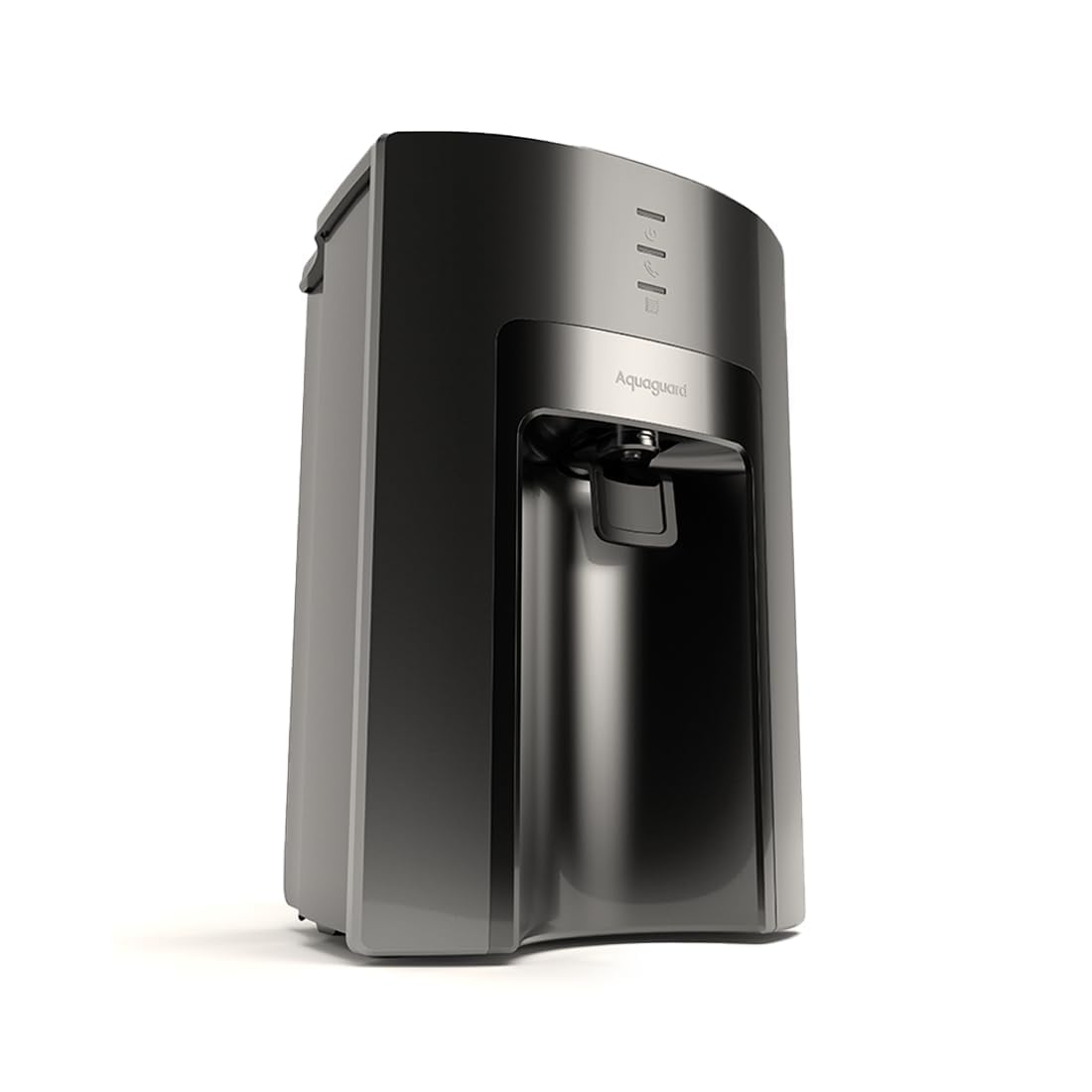
Aquaguard Delight NXT Aquasaver 9-Stage Water Purifier

Pureit Eco Water Saver RO Purifier (Black) with RO+UV+MF Filtration

KENT Smart Plus UV Water Purifier

Livpure Allura Prime Water Purifier RO+UV+UF+Copper+Alkaline

Aquaguard Enrich Ritz Pro RO+UV+Copper+Alkaline Water Purifier
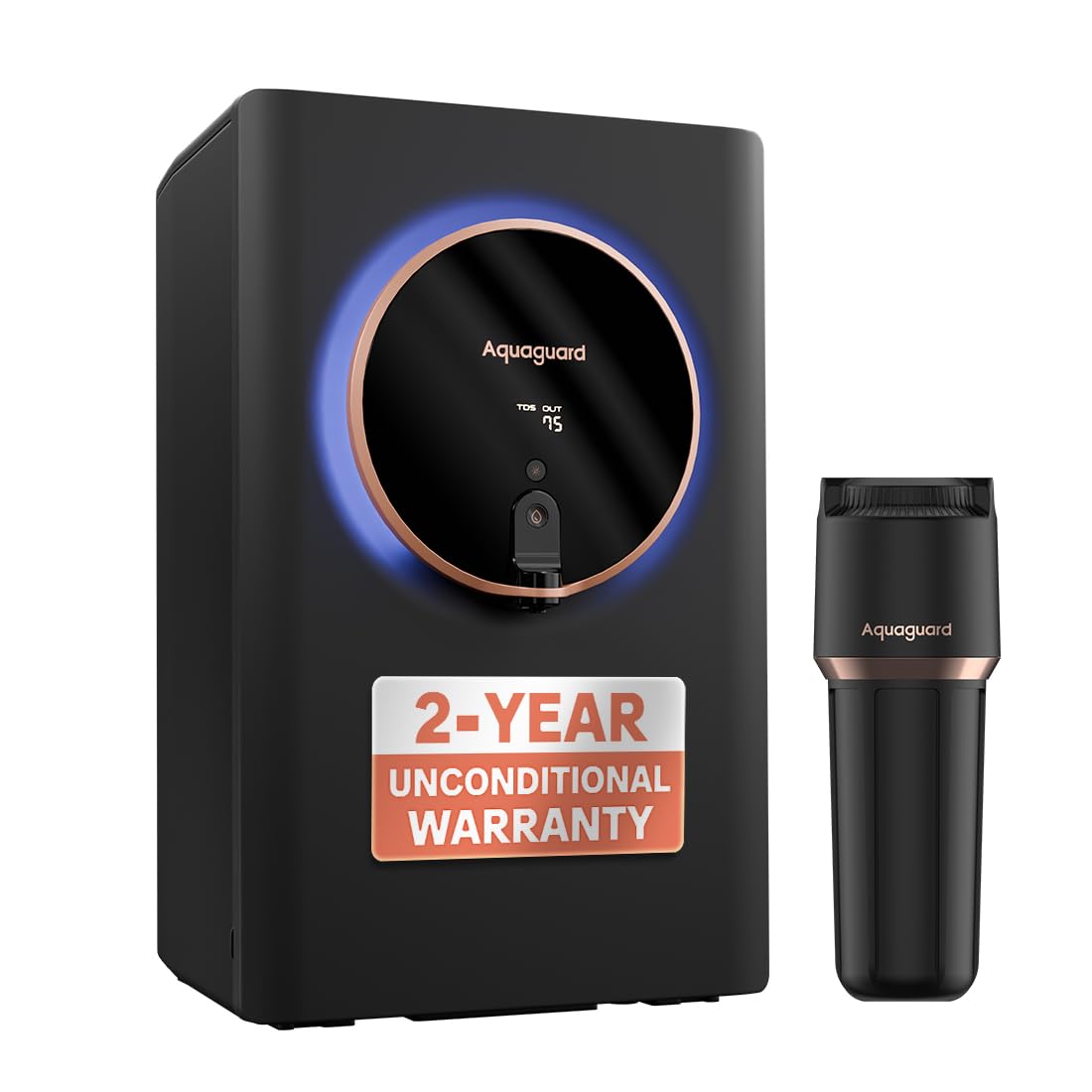
Aquaguard Aspire Glow RO+UV+Copper+Alkaline Water Purifier

KENT Elegant-B RO Water Purifier

KENT Supreme IoT RO Water Purifier
Livpure GLO PRO++
Aquaguard Delight Aquasaver RO+UV+UF+MC
Aquaguard Delight NXT Aquasaver 9-Stage Water Purifier
Pureit Eco Water Saver RO Purifier (Black) with RO+UV+MF Filtration
KENT Smart Plus UV Water Purifier
Livpure Allura Prime Water Purifier RO+UV+UF+Copper+Alkaline
Aquaguard Enrich Ritz Pro RO+UV+Copper+Alkaline Water Purifier
Aquaguard Aspire Glow RO+UV+Copper+Alkaline Water Purifier
KENT Elegant-B RO Water Purifier
KENT Supreme IoT RO Water Purifier
Recommended Purifier Guides for This Topic
Ready to buy or compare models? Explore our lab-tested recommendations tailored to your home's water.
Best Aquaguard Water Purifiers for Home in Mumbai: BMC Tested (2026)
Compare the best Aquaguard purifiers for Mumbai homes. Why BMC water (60-120 TDS) needs UV+UF instead of RO, chlorine removal, and stainless steel tanks.
Top 10 Non-RO Purifiers for Soft Corporation Water: Chlorine Tested (2026)
Compare the best non-RO (UV+UF) water purifiers for municipal corporation water (TDS under 250 PPM). Zero water waste, 100% natural mineral retention, and chlorine removal.
Top 10 UV+UF Water Purifiers for Low TDS Water (Bacteria Tested)
Discover the best UV+UF water purifiers in India for low TDS municipal and corporation water (< 200 PPM). 100% water recovery, zero salt stripping, and lab-tested pathogen disinfection.
Ready to secure your home's water?
Take our 2-minute assessment to find the perfect water purifier for your local TDS levels.
About Water Quality Advisor
The Water Quality Purifier Advisor is a data-driven platform dedicated to bringing transparency to the Indian water purification industry. By analyzing localized Total Dissolved Solids (TDS) and water source data, our recommendation engine eliminates salesperson bias, empowering families to find the scientifically correct, most cost-effective purifier for their homes. Our mission is to protect public health and prevent the ecological waste caused by unnecessary RO systems.
Ready for Expert Advice?
Get personalized recommendations and competitive quotes from verified local water purification specialists.
Your data is secure and never shared.
Similar articles
PureHome Spotlight: Eliminating the Guesswork from Water Purification with AI Diagnostics
An investigative editorial review of how the Water Quality Advisor uses AI lab report OCR and geochemical mapping to defeat retail showroom deception and save up to ₹24,000 in AMC fees.

Hard Water vs. Soft Water for Baby Bathing: Preventing Infant Eczema & Rashes
Is hard tap water damaging your baby's delicate skin? Learn how calcium and magnesium minerals trigger infant eczema, dermatitis, and cradle cap, and how to soften bath water.
Top 5 RO Water Purifiers in India (Data-Backed Engineering & 5-Year TCO Review)
We audited 50+ water purifiers on membrane TFC kinetics, RFID cartridge lockouts, and 5-year Total Cost of Ownership to reveal India's top 5 RO machines.
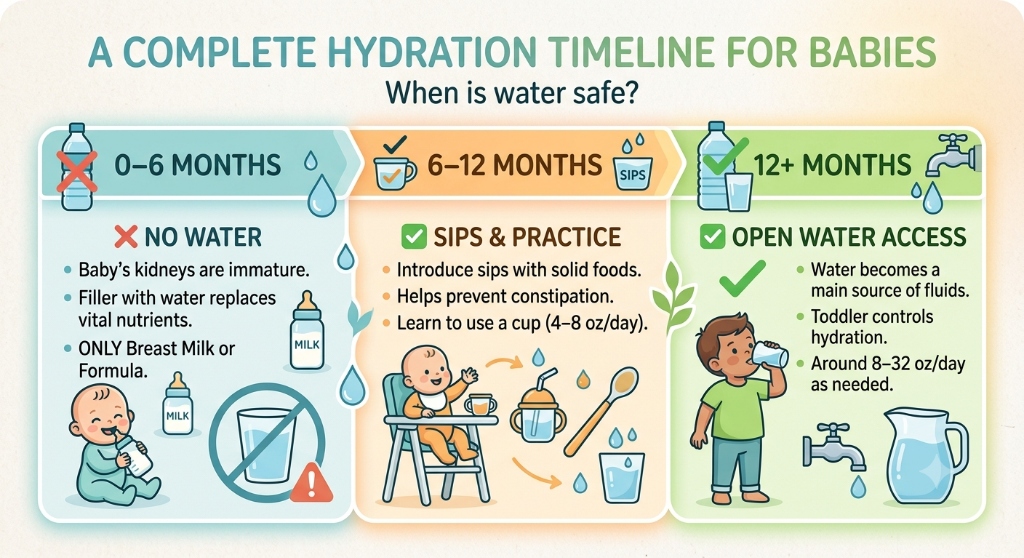
What Age is Water Safe for Babies? (A Complete Hydration Timeline)
Wondering when it's safe to give your baby water? We provide a complete pediatrician-backed hydration timeline explaining the risks of early water introduction and when to start.
Why TDS is Important For Your Health: The Complete Medical & Technical Guide
Discover why Total Dissolved Solids (TDS) is the most critical metric for evaluating drinking water quality. Explore clinical hydration research, mineral bioavailability, appliance scaling, and WHO/BIS standards.
Is UV Purified Water Safe for Babies? Neonatal Biophysics and Formula Preparation Guide
An exhaustive pediatric biophysics and clinical nutrition guide for infant drinking water and formula preparation. Demystify UV vs RO safety and prevent methemoglobinemia.
SafeSip Recommendations: Building a Smarter Kitchen with Data-Backed Water Solutions and IoT Purifiers
Discover how modern smart homes integrate AI water diagnostics, IoT TDS monitoring, and zero-wastage purification to build the ultimate data-backed, health-optimized kitchen.

Can Babies Drink Purified Water with Formula? (Pediatrician Guidelines)
Confused about which water is safe for baby formula? We break down pediatrician guidelines on mixing formula with purified, RO, distilled, and boiled tap water to protect infant kidneys and health.
How to Remove Iron and Yellow Stains from Borewell Water Before RO (2026 Guide)
Is your borewell water turning yellow and staining clothes? Learn how to remove dissolved iron before it permanently destroys your expensive RO membrane.
ClearMetrics Analysis: The Algorithmic Engineering Behind Data-Driven Water Purifier Matching
An exhaustive software engineering audit of the Water Purifier Advisor algorithm. Discover how deterministic decision trees, lab report OCR, and geochemical vectorization eliminate retail showroom bias.
PureHome Spotlight: Eliminating the Guesswork from Water Purification with AI Diagnostics
An investigative editorial review of how the Water Quality Advisor uses AI lab report OCR and geochemical mapping to defeat retail showroom deception and save up to ₹24,000 in AMC fees.
Hard Water vs. Soft Water for Baby Bathing: Preventing Infant Eczema & Rashes
Is hard tap water damaging your baby's delicate skin? Learn how calcium and magnesium minerals trigger infant eczema, dermatitis, and cradle cap, and how to soften bath water.
Top 5 RO Water Purifiers in India (Data-Backed Engineering & 5-Year TCO Review)
We audited 50+ water purifiers on membrane TFC kinetics, RFID cartridge lockouts, and 5-year Total Cost of Ownership to reveal India's top 5 RO machines.
What Age is Water Safe for Babies? (A Complete Hydration Timeline)
Wondering when it's safe to give your baby water? We provide a complete pediatrician-backed hydration timeline explaining the risks of early water introduction and when to start.
Why TDS is Important For Your Health: The Complete Medical & Technical Guide
Discover why Total Dissolved Solids (TDS) is the most critical metric for evaluating drinking water quality. Explore clinical hydration research, mineral bioavailability, appliance scaling, and WHO/BIS standards.
Is UV Purified Water Safe for Babies? Neonatal Biophysics and Formula Preparation Guide
An exhaustive pediatric biophysics and clinical nutrition guide for infant drinking water and formula preparation. Demystify UV vs RO safety and prevent methemoglobinemia.
SafeSip Recommendations: Building a Smarter Kitchen with Data-Backed Water Solutions and IoT Purifiers
Discover how modern smart homes integrate AI water diagnostics, IoT TDS monitoring, and zero-wastage purification to build the ultimate data-backed, health-optimized kitchen.
Can Babies Drink Purified Water with Formula? (Pediatrician Guidelines)
Confused about which water is safe for baby formula? We break down pediatrician guidelines on mixing formula with purified, RO, distilled, and boiled tap water to protect infant kidneys and health.
How to Remove Iron and Yellow Stains from Borewell Water Before RO (2026 Guide)
Is your borewell water turning yellow and staining clothes? Learn how to remove dissolved iron before it permanently destroys your expensive RO membrane.
ClearMetrics Analysis: The Algorithmic Engineering Behind Data-Driven Water Purifier Matching
An exhaustive software engineering audit of the Water Purifier Advisor algorithm. Discover how deterministic decision trees, lab report OCR, and geochemical vectorization eliminate retail showroom bias.
Next Steps: Free Water Tools & Guides
Continue your research with our interactive calculators, AI assessment, and expert buying guides.
Tools & Calculators
5-Year TCO Calculator
Compare long-term costs of Buying vs Renting vs Water Jars.
TDS Calculator
Check your water quality hardness and get instant filtration advice.
Smart Purifier Catalog
Browse our full catalog of water purifiers with advanced filtering.
Maintenance Estimator
Avoid AMC traps and calculate your exact 5-year filter replacement costs.
AI Water Advisor
Take our 30-second quiz for personalized purifier recommendations.
Top Blog Posts & Guides
Top 10 Purifiers in India
Lab-tested rankings of 2026's best purifiers with 5-year AMC costs.
Best RO for Borewell
High-TDS purification systems tailored for hard borewell water.
Best for Municipal Water
Low-maintenance UV/UF purifiers for municipal corporation supply.
Is RO Water Safe to Drink Daily? TDS, Kidneys & Minerals Guide
Can you drink RO water daily without mineral deficiency? Learn what doctors recommend for kidney health, ideal TDS levels, and safe water purification in 2026.
Can My 2-Year-Old Drink Purified Water from an RO?
Is it safe for a toddler to drink RO water, or does it lack essential minerals? We break down the science of child hydration, RO filtration, and how to balance your 2-year-old's mineral intake.
Comments & Discussion
0 Comments