
RO vs UV Water Purifiers:
Which One Does Your Home Need?
Choosing the wrong water purifier either leaves dangerous heavy metals in your glass or strips healthy minerals while wasting up to 70% of your water. Here is the exact science-backed framework to pick the right tech.
How They Work: Core Differences
Understanding the 3 primary filtration mechanisms used in Indian purifiers.
RO (Reverse Osmosis)
Uses a semi-permeable membrane with pores as small as 0.0001 microns. It forces water under high pressure to remove dissolved salts, hardness, heavy metals (lead, arsenic), and chemical fertilizers.
- ✓Removes Dissolved Solids (TDS) & Hardness
- ✓Converts salty borewell water to sweet drinking water
- ⚠️Wastes 50% to 70% of input water during reject cycle
- ⚠️Requires electricity and regular pump maintenance
UV (Ultraviolet)
Uses high-frequency UV-C light rays to penetrate the cells of bacteria, viruses, and cysts, destroying their DNA and rendering them unable to multiply or cause waterborne diseases.
- ✓Kills 99.99% of bacteria, viruses & microorganisms
- ✓Zero water wastage — 100% water recovery
- ✓Retains all natural essential minerals (Calcium, Magnesium)
- ✕Cannot remove dissolved salts or chemical hardness
UF (Ultrafiltration)
Uses hollow fiber membranes with 0.01 micron pores. Works on natural gravity or normal pipe pressure to physically block bacteria, cysts, and turbidity without needing electricity.
- ✓Works without electricity (ideal for frequent power cuts)
- ✓Zero water wastage and very low maintenance cost
- ✓Removes suspended solids, mud, and bacteria
- ✕Cannot kill viruses or remove dissolved salt TDS
Side-by-Side Tech Comparison
See how RO, UV, and UF compare across 8 critical performance metrics.
| Performance Metric | RO (Reverse Osmosis) | UV (Ultraviolet) | UF (Ultrafiltration) |
|---|---|---|---|
| Removes Dissolved Salts (TDS) | ✅ Yes (90-95%) | ❌ No | ❌ No |
| Kills Bacteria & Viruses | ✅ Yes (via pore size) | ✅ Yes (99.99%) | ⚠️ Bacteria Yes / Viruses No |
| Water Wastage | ⚠️ High (50-70% waste) | ✅ 0% Wastage | ✅ 0% Wastage |
| Natural Minerals Retained | ⚠️ Needs MTDS / Mineralizer | ✅ Yes (100% retained) | ✅ Yes (100% retained) |
| Electricity Required | Yes (High pressure pump) | Yes (UV lamp) | ✅ No Electricity Needed |
| Average Machine Price | ₹10,000 - ₹22,000 | ₹6,000 - ₹9,500 | ₹2,500 - ₹5,000 |
| Annual Maintenance (AMC) | ₹3,500 - ₹5,500 / yr | ₹1,200 - ₹1,800 / yr | ₹500 - ₹1,000 / yr |
The 300 PPM Dividing Line
According to the Bureau of Indian Standards (BIS) and WHO guidelines, if your water's TDS is below 300 mg/L, it is already in the sweet spot for human drinking. Installing an RO purifier on water below 300 PPM is a costly mistake—it reduces TDS below 50 PPM (making water acidic) and dumps 60% of your clean water down the drain!
Not Sure About Your TDS?
Use our instant online calculator to test your water quality.
Test TDS Now ➔Top Recommended Purifiers of 2026
Hand-picked by our certified water specialists for maximum reliability and low maintenance.

Livpure GLO PRO++
Excellent choice for home use. Features RO+UV+UF technology with a 7 Liters capacity tank.

Aquaguard Delight Aquasaver RO+UV+UF+MC
Excellent choice for home use. Features RO+UV+UF technology with a 5 Liters capacity tank.
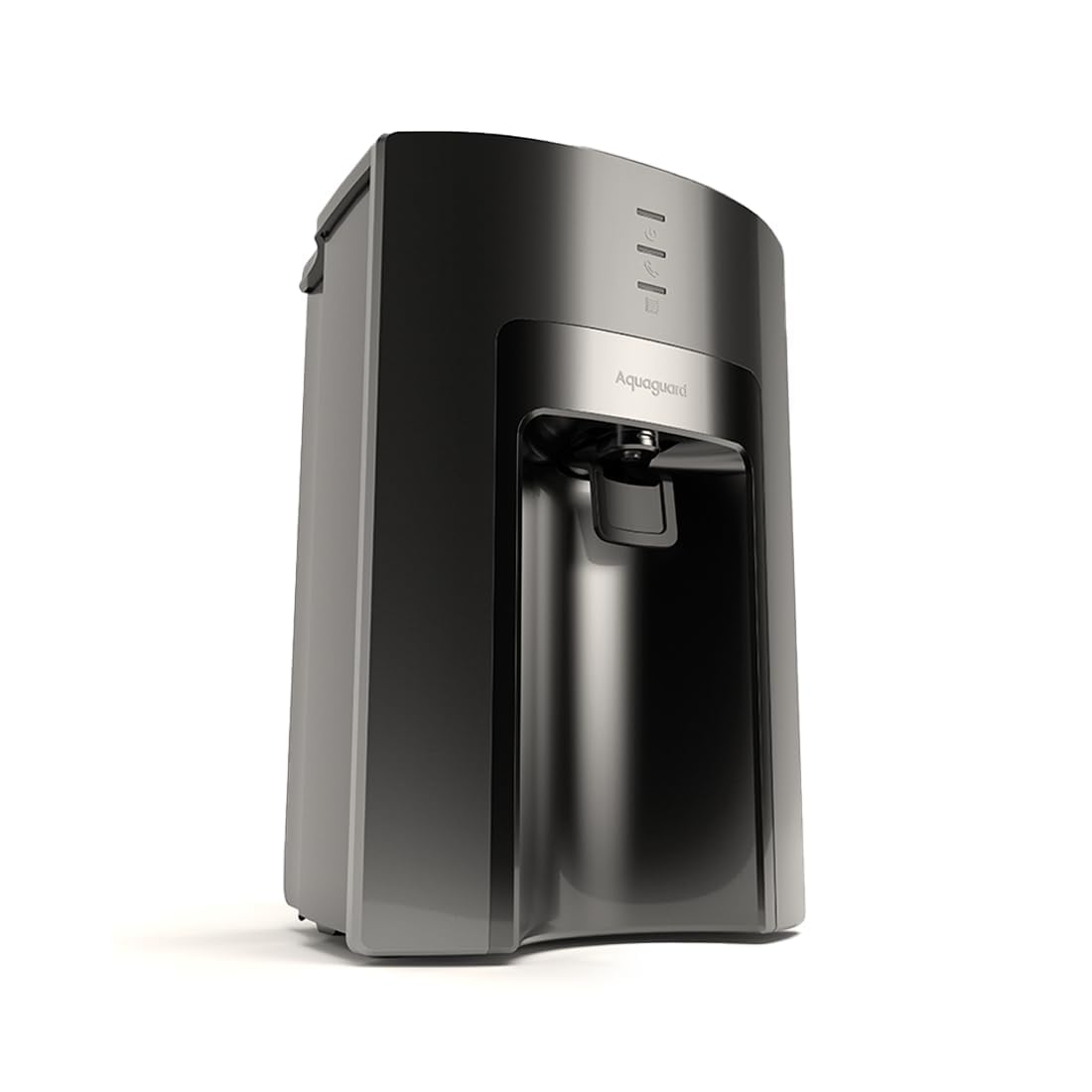
Aquaguard Delight NXT Aquasaver 9-Stage Water Purifier
Excellent choice for home use. Features RO+UV+UF technology with a 6.2 Liters capacity tank.
Not sure what to buy?
Get a free consultation and price quotes from local water purification experts.
Your data is secure and never shared.
Need expert help?
Stop guessing. Use our smart tools to calculate exact costs, check water quality, and find the perfect purifier for your home.
Next Steps: Free Water Tools & Guides
Continue your research with our interactive calculators, AI assessment, and expert buying guides.
Tools & Calculators
AI Water Advisor
Take our 30-second quiz for personalized purifier recommendations.
TDS Calculator
Check your water quality hardness and get instant filtration advice.
5-Year TCO Calculator
Compare long-term costs of Buying vs Renting vs Water Jars.
Maintenance Estimator
Avoid AMC traps and calculate your exact 5-year filter replacement costs.
Smart Purifier Catalog
Browse our full catalog of water purifiers with advanced filtering.
Top Blog Posts & Guides
Top 10 Purifiers in India
Lab-tested rankings of 2026's best purifiers with 5-year AMC costs.
Best RO for Borewell
High-TDS purification systems tailored for hard borewell water.
Best for Municipal Water
Low-maintenance UV/UF purifiers for municipal corporation supply.
Can You Use a UV/UF Purifier for Borewell Water? (Read Before Buying)
Thinking about buying a cheaper UV/UF purifier for your borewell water? Learn about the limitations of Ultrafiltration and Ultraviolet tech for high TDS groundwater.
Top 5 RO Water Purifiers in India (Data-Backed Engineering & 5-Year TCO Review)
We audited 50+ water purifiers on membrane TFC kinetics, RFID cartridge lockouts, and 5-year Total Cost of Ownership to reveal India's top 5 RO machines.
Comments & Discussion
0 Comments