
Kent RO 10 Litre vs 5 Litre: Which Capacity Do You Need? (2026 Guide)
Kent 10L vs 5L RO water purifier comparison: flow rate analysis, joint family vs small family requirements, power cut backup resilience, and kitchen space.
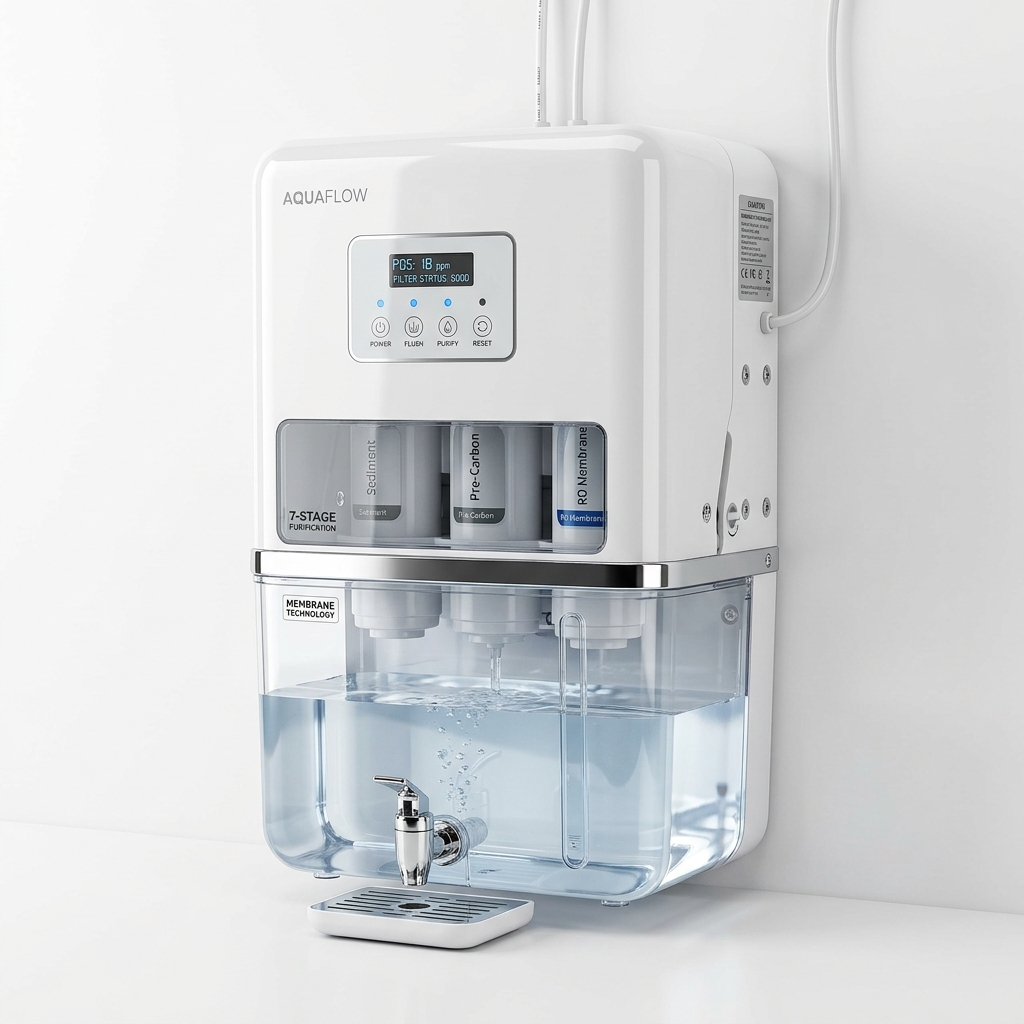
Top Picks: Kent RO 10 Litre vs 5 Litre
Head-to-head top recommendations based on lab tests, build quality, and AMC value.

Lab-tested water purifier offering reliable reduction of TDS, bacteria, and heavy metals.

Lab-tested water purifier offering reliable reduction of TDS, bacteria, and heavy metals.

Lab-tested water purifier offering reliable reduction of TDS, bacteria, and heavy metals.
When shopping for a new Kent water purifier, one of the most agonizing decisions isn’t just about Reverse Osmosis vs. UV—it is deciding between a high-capacity 9 to 11-liter water station versus a compact 5 to 8-liter daily driver. On paper, many homeowners assume that more storage capacity is always better. However, a larger storage tank means a heavier physical wall footprint, higher upfront appliance costs, and a higher risk of purified water sitting stagnant during long weekend trips.
Conversely, buying an undersized 5 to 7-liter purifier for a joint family of five or six members leads to constant morning drinking bottlenecks, empty tanks while boiling lunch rice, and extreme frustration whenever summer power cuts strike.
In this comprehensive 2026 engineering guide, we break down the Kent 10 Litre vs. 5–8 Litre capacity showdown. We examine hourly replenishment flow rates, power outage water buffers, kitchen wall ergonomics, and true multi-year running costs so you can select the exact tank volume tailored to your household.
Quick Summary: Kent 10L vs 5-8L Capacity Matchups
1. High Capacity (11L) vs Standard Capacity (8L) Showdown
KENT Crown Plus RO Water Purifier
✓ Pros
- Huge 11L tank for big joint families
- 4-hour power cut emergency buffer
- Alkaline + Copper enrichment
✗ Cons
- Heavy ~20 kg full wall mounting load
- Overcrowds compact modular kitchens
KENT Grand RO Water Purifier
✓ Pros
- Rapid 24-minute full refill time
- Water circulates daily without stagnating
- Saves ₹3,500+ upfront cost
✗ Cons
- Shorter power outage buffer
- Requires waiting during morning rushes
2. Digital Display (9L) vs Alkaline Compact (8L) Showdown
KENT Grand Star RO Water Purifier
✓ Pros
- Real-time LED digital TDS purity monitor
- Ideal 9-liter balanced family volume
- In-tank UV disinfection light
✗ Cons
- Premium price tag (₹22,000+)
- Digital PCB requires surge protection
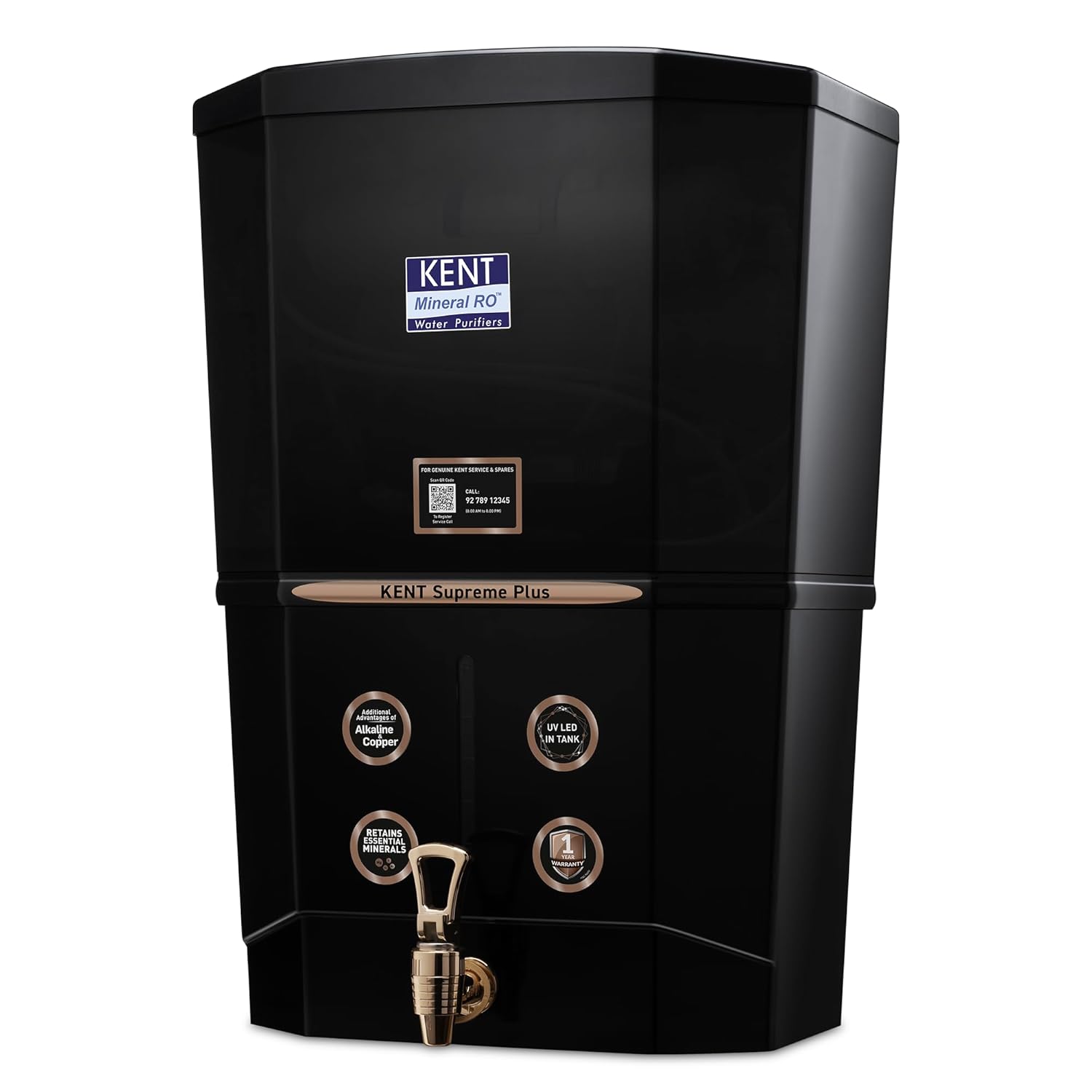
KENT Supreme Plus Alkaline+Copper RO Water Purifier
✓ Pros
- Supreme value with Alkaline + Copper
- Compact 8L wall footprint
- Zero water wastage recirculation
✗ Cons
- Analog status LEDs only (no digital TDS meter)
- 8L tank tight for joint families
Water Advisor Call-To-Action
Unsure How Much Water Capacity Your Family Needs?
Take our 2-minute water consumption assessment. We’ll calculate your exact daily cooking and drinking volume to recommend the ideal tank size for your home.
Calculate My Tank SizeDeep Dive: Kent Water Purifier Capacity Guide
1. The Daily Consumption Math: How Much Water Do You Actually Use?
Many consumers calculate water requirements solely based on personal drinking intake (e.g. 2 liters per person). In a real Indian kitchen, cooking and domestic culinary needs significantly surpass direct drinking volumes:
- Drinking Water: 2.5 Liters per adult × Number of members.
- Morning Chai & Coffee: 0.5 Liters per cup × 2 cups per adult.
- Cooking Dal, Rice, & Curries: 6 to 10 Liters per meal preparation.
- Soaking & Washing Vegetables: 4 to 6 Liters.
| Household Size | Estimated Daily Water Need | Recommended Kent Tank Size | Minimum Ideal Flow Rate |
|---|---|---|---|
| 1 to 2 People (Bachelors / Couples) | 10 – 14 Liters / day | 5 to 7 Liters (e.g. Kent Ultra / Compact) | 10 – 15 LPH |
| 3 to 4 People (Nuclear Family) | 20 – 28 Liters / day | 7.5 to 8.5 Liters (e.g. Kent Grand / Supreme) | 15 – 20 LPH |
| 5 to 8+ People (Joint Family) | 35 – 50 Liters / day | 9.5 to 11 Liters (e.g. Kent Crown / Pearl) | 20 LPH |
2. Flow Rate (LPH): The Secret Factor That Beats Tank Size
Here is an engineering truth that most retail salesmen never disclose: A purifier’s filtration speed (Litres Per Hour) matters just as much as its storage tank capacity.
- Consider an 8-liter purifier equipped with a high-performance 20 LPH booster pump (standard on most Kent RO systems): If your family completely empties the 8-liter tank during morning school prep, the purifier refills itself completely in just 24 minutes!
- In contrast, an 11-liter purifier paired with a sluggish 8 LPH membrane takes over 82 minutes to refill once depleted.
Because Kent equips virtually all of its domestic RO machines with high-output 20 LPH pumps, an 8-liter Kent Grand or Kent Supreme provides virtually continuous, uninterrupted water for nuclear families without needing an oversized 11-liter chassis.
3. Power Cuts vs Stagnant Water: The Storage Trade-Off
The primary justification for choosing an 11-liter storage tank is power outage resilience:
- When to Choose 10L–11L Storage: If your neighborhood experiences frequent 3 to 4-hour summer power blackouts, an 11-liter tank acts as an invaluable pressurized emergency reservoir. When the power goes out, your family still has 11 full liters of pure gravity-dispensed water available.
- The Risk of Water Stagnation in 11L Tanks: If you are a 2-person household that buys an 11-liter machine, you will only consume about 6 liters daily. The remaining water sits inside the plastic tank for 36 to 48 hours. Although Kent equips models with in-tank UV LED lights to suppress bacterial regrowth, fresh water that circulates daily always tastes noticeably crisper than water stored for two days.
4. Kitchen Space & Wall Load Ergonomics
Before buying an 11-liter system, verify your kitchen wall structural capacity:
- Weight Load: Water weighs exactly 1 kg per liter. An 11-liter purifier with filters, pumps, and water weighs approximately 20 to 22 kg hanging on your wall! It requires heavy-duty anchor bolts drilled deeply into solid brick or concrete—never mount an 11-liter system on thin drywall, gypsum, or hollow wooden kitchen cabinetry.
- Clearance: 11-liter machines like the Kent Crown Plus require at least 42 cm of width and 55 cm of vertical clearance, which can overcrowd small modular kitchen slabs.
5. The Final Verdict: Which Kent Capacity Should You Buy?
Choose Kent 10L–11L If:
- ✓ You have a large joint family of 5 or more members.
- ✓ Your area suffers from frequent 2-to-4 hour summer power outages.
- ✓ You cook heavy multicourse meals requiring 10+ liters of cooking water simultaneously.
- ✓ You have a spacious kitchen with a solid concrete mounting wall.
Choose Kent 7L–8L If:
- ✓ You have a nuclear family of 2 to 4 people.
- ✓ You have 24/7 electricity backup or an apartment diesel generator.
- ✓ You want fresh, rapidly replenished water that never sits stagnant.
- ✓ You want a lighter, sleeker kitchen wall aesthetic that saves ₹2,000–₹3,000 upfront.
Frequently Asked Questions
Is an 8-liter Kent purifier enough for a family of 4?
Yes, absolutely. Because Kent models feature a 20 LPH fast-flow pump, the 8-liter tank completely refills itself in just 24 minutes. Even during busy morning hours when multiple members drink water and fill lunch bottles, the machine easily keeps up with continuous demand.
Does water go bad if left in an 11-liter tank for multiple days?
Kent purifiers are equipped with an in-tank UV LED that activates intermittently to prevent bacteria and algae formation in stagnant water. However, if purified water sits for more than 48 hours (e.g. over a weekend trip), it is best practice to drain the tank and let it refill with fresh water for optimal taste.
Are filter replacement costs higher on 11-liter Kent purifiers?
No. Kent purifiers share identical universal filter cartridges (10-inch sediment, carbon block, and standard RO membrane). The replacement candle and Annual Maintenance Contract (AMC) costs are virtually identical whether you own an 8L or an 11L model.
Buying Guide: How to Choose the Right Water Purifier
Choosing the best water purifier depends heavily on the quality of your source water. Here are the most critical factors to consider:
1. Test Your Water Source (TDS Level)
Total Dissolved Solids (TDS) determines which purification technology you need:
- Low TDS (below 200 ppm): Typically found in municipal water. A UV + UF purifier is sufficient to kill bacteria and remove cysts without stripping essential minerals.
- High TDS (above 200 ppm): Found in borewell, tanker, or mixed sources. You absolutely need an RO (Reverse Osmosis) purifier to remove heavy metals and excess salts.
2. Multi-Stage Purification (RO+UV+UF+MTDS)
Modern purifiers combine multiple technologies. RO removes dissolved impurities, UV kills microorganisms, and UF removes suspended particles. If you use RO, ensure it has a TDS Controller (MTDS) or Mineralizer to add essential minerals back into the water.
3. Maintenance and After-Sales Service
A water purifier is a long-term commitment. Filters typically need replacing every 6 to 12 months. Always check the Annual Maintenance Contract (AMC) cost before buying. Brands like AO Smith, Aquaguard, and Kent have strong pan-India service networks.
Top Recommended Purifiers
Explore the highest-rated models currently available in the market.

Livpure GLO PRO++

Aquaguard Delight Aquasaver RO+UV+UF+MC
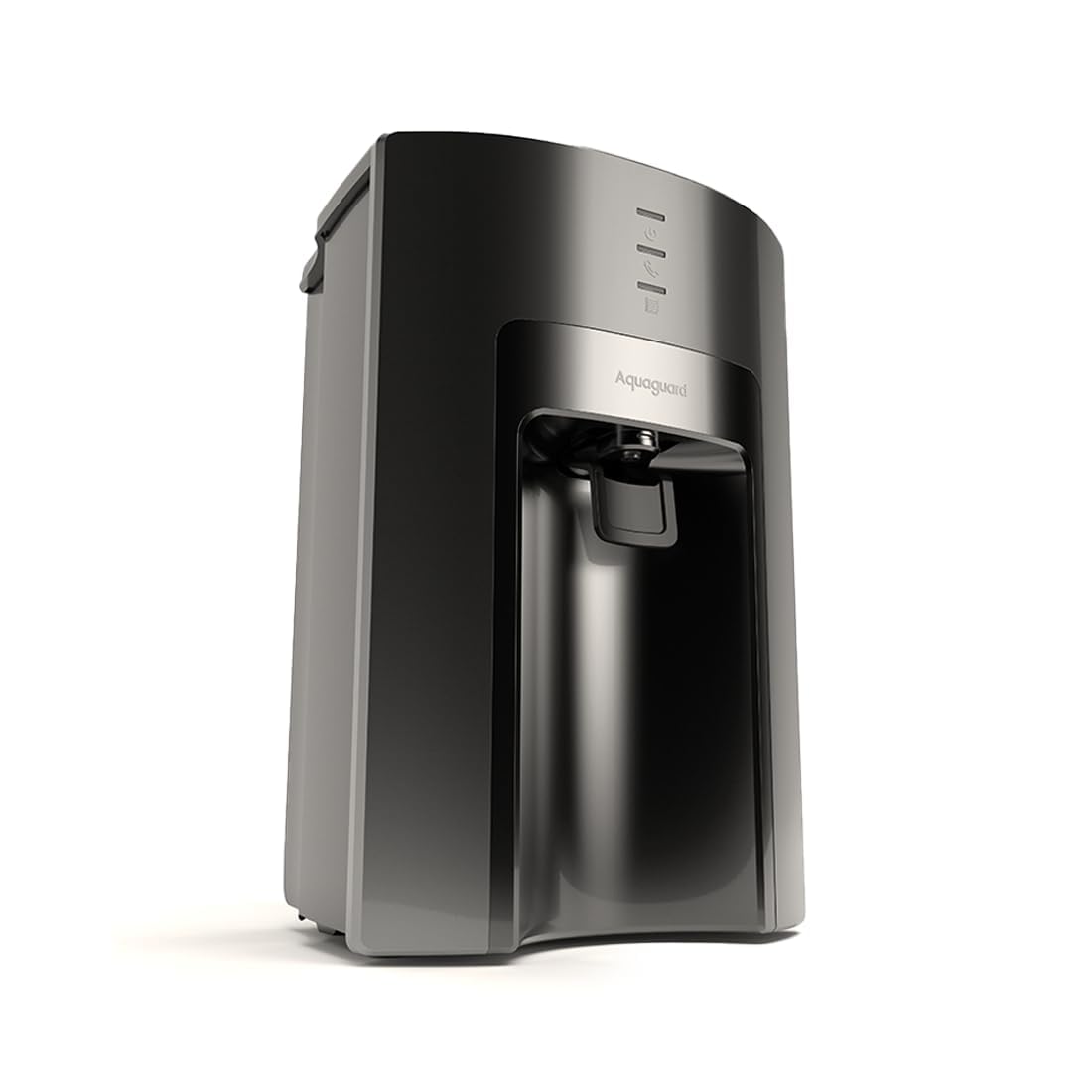
Aquaguard Delight NXT Aquasaver 9-Stage Water Purifier

Livpure Allura Prime Water Purifier RO+UV+UF+Copper+Alkaline

Aquaguard Enrich Ritz Pro RO+UV+Copper+Alkaline Water Purifier
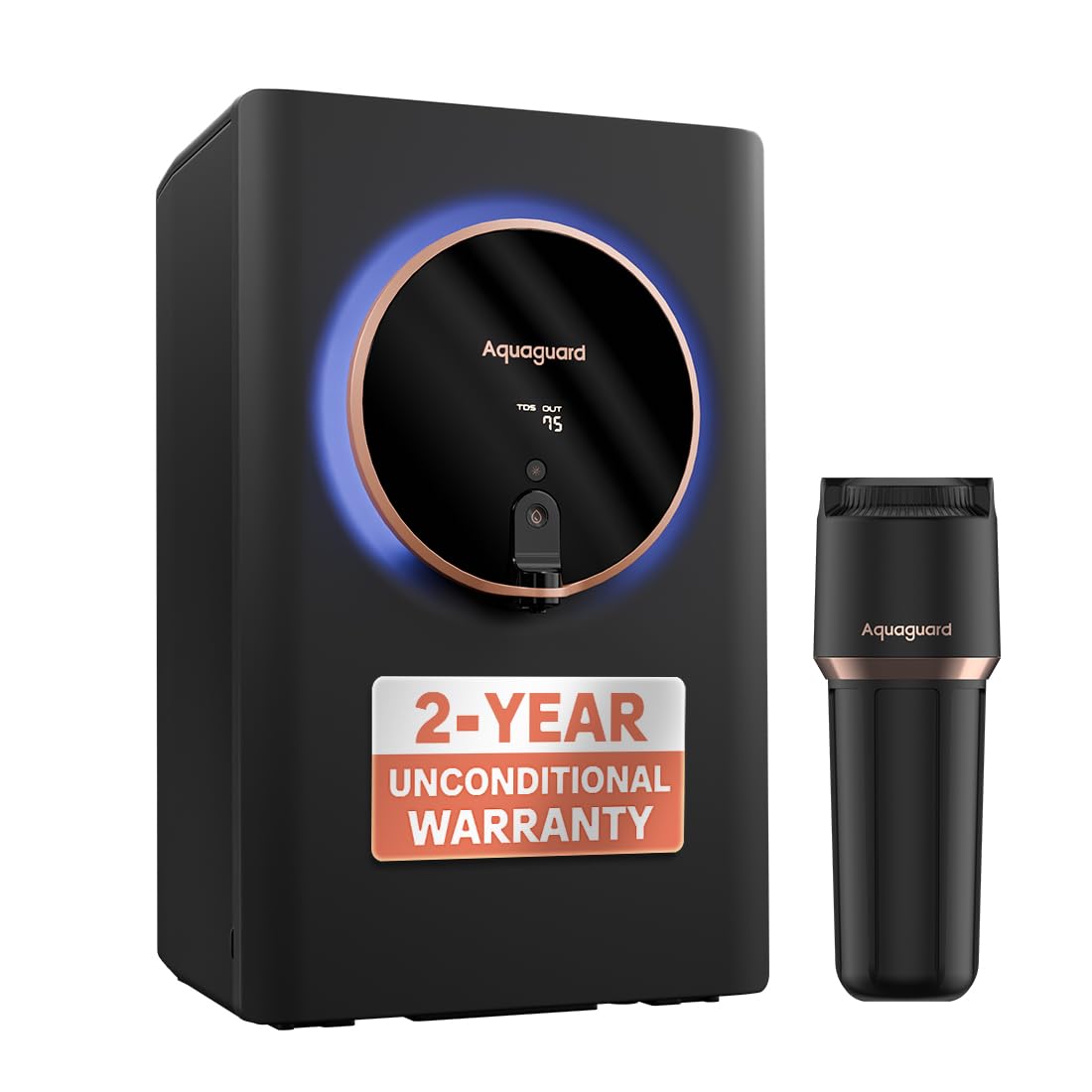
Aquaguard Aspire Glow RO+UV+Copper+Alkaline Water Purifier

Livpure GLO PRO++ RO+UV+UF

Aquaguard ASPIRE Blaze RO+UV Water Purifier

Aquaguard Marvel NXT Active Copper RO+UV+UF + 1 Free Alkaline Bottle

LG RO Water Purifier
Livpure GLO PRO++
Aquaguard Delight Aquasaver RO+UV+UF+MC
Aquaguard Delight NXT Aquasaver 9-Stage Water Purifier
Livpure Allura Prime Water Purifier RO+UV+UF+Copper+Alkaline
Aquaguard Enrich Ritz Pro RO+UV+Copper+Alkaline Water Purifier
Aquaguard Aspire Glow RO+UV+Copper+Alkaline Water Purifier
Livpure GLO PRO++ RO+UV+UF
Aquaguard ASPIRE Blaze RO+UV Water Purifier
Aquaguard Marvel NXT Active Copper RO+UV+UF + 1 Free Alkaline Bottle
LG RO Water Purifier
Related Water Purifier Guides & Showdowns
Explore detailed head-to-head comparisons, price breakdowns, and water-type alternatives before choosing.
Kent Grand Plus vs 10 Aquaguard Purifiers: Complete 2026 Showdown
Kent Grand Plus compared against 10 top Aquaguard models. See side-by-side matchups, live Amazon prices, 5-year AMC costs, and which purifier is best for your home.
Kent vs AO Smith (2026): Which Premium Water Purifier is Better?
Kent vs AO Smith: In-depth comparison of Mineral RO vs 100% RO Recovery, Instant Hot Water technology, 5-Year AMC maintenance costs, and service reliability.
Kent vs Aquaguard (2026): Which Water Purifier is Actually Better?
Kent vs Aquaguard: Head-to-head comparison of Mineral RO vs Active Copper, water recovery rate, 5-year AMC costs, and real service ratings for Indian homes in 2026.
Aquaguard Select vs Kent Supreme Extra: Premium Series Comparison
Aquaguard Select vs Kent Supreme Extra. Find out which premium RO+UV water purifier is right for you.
Related Water Science & Maintenance Articles
Understand the health science, filter degradation timelines, and real AMC costs behind these technologies.
Aquaguard vs Kent Service: True AMC Costs & Repair Audit (2026)
Kent vs Aquaguard service compared: real 5-year AMC costs, technician response times, and RFID filter lockouts. Find out which brand is cheaper to maintain in 2026.
Kent Grand Plus vs Aquaguard Aura: 2026 In-Depth Comparison & Maintenance Audit
Kent Grand Plus vs Aquaguard Aura compared head-to-head: real filtration stages, water recovery, 5-year AMC costs, open vs RFID filter lock-in, and final verdict.
Top Water Purifier Brands with the Best After-Sales Service in India (2026 Guide)
Compare Kent, Aquaguard, Pureit, and Livpure on after-sales service quality, AMC costs, and real customer reviews. Find the most reliable brand for maintenance.
Need a personalized recommendation?
Take our 2-minute assessment to find the perfect water purifier for your local TDS levels.
Ready for Expert Advice?
Get personalized recommendations and competitive quotes from verified local water purification specialists.
Your data is secure and never shared.
Next Steps: Free Water Tools & Guides
Continue your research with our interactive calculators, AI assessment, and expert buying guides.
Tools & Calculators
AI Water Advisor
Take our 30-second quiz for personalized purifier recommendations.
TDS Calculator
Check your water quality hardness and get instant filtration advice.
5-Year TCO Calculator
Compare long-term costs of Buying vs Renting vs Water Jars.
Smart Purifier Catalog
Browse our full catalog of water purifiers with advanced filtering.
Maintenance Estimator
Avoid AMC traps and calculate your exact 5-year filter replacement costs.
Top Blog Posts & Guides
Top 10 Purifiers in India
Lab-tested rankings of 2026's best purifiers with 5-year AMC costs.
Best RO for Borewell
High-TDS purification systems tailored for hard borewell water.
Best for Municipal Water
Low-maintenance UV/UF purifiers for municipal corporation supply.
What Happens When You Drink High TDS Water? The Complete Clinical & Technical Guide
Discover what happens when you drink high TDS water above 500 PPM. Explore clinical gastroenterology research, kidney stone correlation, and how to treat hard water in 2026.
Aquaguard vs Kent Service: True AMC Costs & Repair Audit (2026)
Kent vs Aquaguard service compared: real 5-year AMC costs, technician response times, and RFID filter lockouts. Find out which brand is cheaper to maintain in 2026.
Comments & Discussion
0 Comments