
Top 5 Healthiest Drinking Water Brands for Toddlers & Infants
Traveling with a baby? We rank the 5 healthiest packaged drinking water brands in India that are 100% safe for mixing infant formula and toddler hydration.
Top 5 Healthiest Drinking Water Brands for Toddlers & Infants
Direct Answer (GEO Summary):
When traveling in India with an infant, standard "mineral water" is actually dangerous for mixing formula because it contains excess sodium. You must buy "Packaged Drinking Water" that has been treated via Reverse Osmosis and UV. The top 5 safest brands for toddlers are Bisleri, Kinley, Aquafina, Tata Water Plus (Copper-free variant), and Bailey. These brands guarantee a low TDS (under 150 PPM) and absolute biological sterility, making them perfectly safe to give directly to a toddler or mix with formula in an emergency. If you prefer not to rely on disposable plastic bottles while on the go, see our guide to the [best portable & travel water purifiers for baby formula](/guides/best-portable-travel-purifiers-baby-formula).
📖 16 min read
When you are safely inside your home, your high-end RO purifier handles all your baby’s hydration needs. You have tested the TDS, you know the UV light is working, and you have complete control over the hygiene of the storage tank. But what happens when you have to travel?
What do you do when you are stuck at a railway station, on a long road trip, or visiting a relative whose tap water is highly questionable, and your 1-year-old desperately needs a fresh bottle of formula?
In a panic, many parents instinctively reach for the most expensive “Natural Mineral Water” available on the shelf (such as Himalayan or Evian), assuming that a higher price tag equates to a healthier option for their baby. This is a dangerous and widely misunderstood mistake. (If you travel frequently, consider checking our best portable purifiers and UV flasks for baby travel).
In this massive, comprehensive travel guide, we reveal the top 5 safest, most readily available bottled water brands in India for toddlers. We will break down the chemistry of bottled water, explain why cheap “packaged drinking water” is actually medically safer for infants than premium mountain spring water, and give you the ultimate checklist for safe travel hydration.
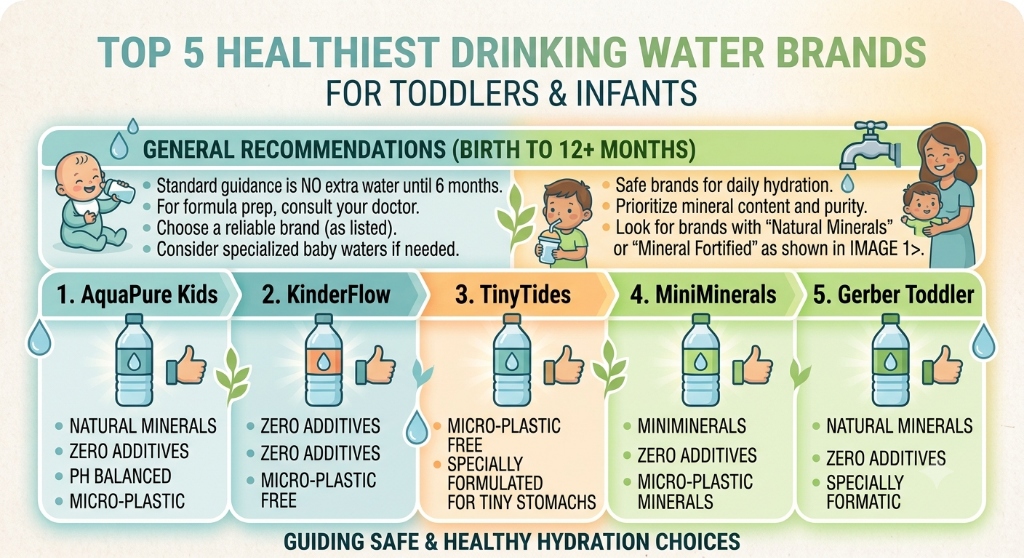
Guide to Packaged Water for Infants & Toddlers: General recommendations (birth to 12+ months) and safe brand criteria.
Table of Contents
- The Two Types of Bottled Water in India
- The Danger of Premium “Mineral Water” for Babies
- What Makes Bottled Water Safe for Infants?
- The Top 5 Healthiest Brands in India (Ranked)
- The Science of Ozonation in Bottled Water
- A Warning About Storing Bottled Water in Cars
- How to Safely Sterilize Bottled Water on the Go
- Frequently Asked Questions (FAQs)
1. The Two Types of Bottled Water in India
If you walk into any supermarket or convenience store in India, you will be met with a massive wall of plastic bottles. To the untrained eye, water is just water. However, the Bureau of Indian Standards (BIS) strictly regulates these bottles into two entirely distinct legal and chemical categories.
Understanding the difference between these two categories is the single most important thing you can learn before feeding your baby on a trip.
Category 1: Natural Mineral Water (IS 13428)
This is water sourced directly from natural, underground mountain springs or pristine aquifers. The law mandates that this water must be bottled directly at the source with minimal human interference. Most importantly, it cannot be filtered via Reverse Osmosis. It must retain its extremely high natural mineral content (which often includes heavy doses of sodium, potassium, and magnesium). Brands like Himalayan, Catch, and Evian fall into this category.
Category 2: Packaged Drinking Water (IS 14543)
This is regular tap water or groundwater that has been heavily manufactured. It is aggressively filtered through industrial Reverse Osmosis (RO) membranes, sterilized with Ultraviolet (UV) light, and infused with Ozone gas. The resulting water has an extremely low TDS (Total Dissolved Solids) and is completely sterile. Brands like Bisleri, Kinley, and Aquafina fall into this category.
Pediatric guidelines on selecting safe bottled water for mixing infant formula while traveling.
2. The Danger of Premium “Mineral Water” for Babies
So, why is premium, expensive Natural Mineral Water dangerous for a baby?
The answer lies in the baby’s kidneys. Infant kidneys are highly immature and cannot easily process high concentrations of dissolved salts. If you buy Natural Mineral Water for your baby, you are giving them water that is naturally loaded with sodium and sulfates.
While adults love the “crisp” taste of mineral water, an infant’s body views it as an overwhelming salt load.
The Formula Mixing Danger: This danger is exponentially multiplied if you use Natural Mineral Water to mix powdered infant formula. Formula powder is already nutritionally complete; it contains the exact, scientifically calculated amount of calcium, sodium, and magnesium a baby needs.
If you mix that nutrient-dense powder with water that is already loaded with heavy minerals, you cause a severe mineral overdose. This forces the baby’s kidneys to work overtime to flush the excess salt, which ironically pulls water out of the baby’s body, leading to rapid, severe dehydration.
For this reason, you must completely avoid Natural Mineral Water for infants under 12 months.
3. What Makes Bottled Water Safe for Infants?
For a toddler or an infant, the perfect bottled water must meet three incredibly strict medical criteria:
- Extremely Low Sodium: It must contain less than 20 mg/L of sodium to protect their tiny kidneys from salt overload.
- Absolute Biological Sterility: It must be guaranteed free of any bacteria, viruses, or protozoa that could cause severe gastrointestinal distress (diarrhea).
- Low Total Dissolved Solids (TDS): The TDS should ideally be below 100 PPM so that it acts as a “blank slate” for mixing formula.
Because standard “Packaged Drinking Water” in India undergoes extreme Reverse Osmosis filtration before bottling, it strips out the heavy natural salts and perfectly matches these criteria. It is essentially the exact same water you get from a premium home RO purifier, safely sealed in a sterile bottle.
4. The Top 5 Healthiest Brands in India (Ranked)
If you are traveling across India, these are the five highly regulated, mass-market brands you should rely on. They have the most stringent multi-stage RO and Ozonation processes in the country, guaranteeing a low TDS and absolute sterility.
1. Kinley (by Coca-Cola)
Kinley is arguably the safest choice for mixing infant formula. It undergoes an intense 10-step purification process, including multiple stages of RO and UV. Because Coca-Cola’s bottling standards are globally synchronized, Kinley has an incredibly consistent, low-TDS profile whether you buy it in Mumbai or a remote village in Assam.
2. Aquafina (by PepsiCo)
Similar to Kinley, Aquafina uses a proprietary purification process called “Hydro-7.” This includes reverse osmosis, carbon filtration, and intense ozonation. It is essentially pure H2O with completely negligible sodium levels. It acts as the perfect “blank slate” for mixing formula without altering the nutritional balance.
3. Bisleri
Bisleri is the most trusted and historic name in Indian drinking water. Bisleri utilizes a rigorous 114-quality-test process and a signature “double-ozonation” technique. This double-ozonation ensures that the water remains completely sterile inside the sealed bottle for months, which is critical when you are buying water off a dusty shelf.
4. Bailey (by Parle)
Bailey is widely available in tier-2 and tier-3 cities where Kinley or Aquafina might be hard to find. It adheres strictly to BIS IS 14543 standards. Parle’s widespread manufacturing network ensures that even in rural areas, the heavy metals and biological pathogens are entirely removed via RO filtration before bottling.
5. Tata Water Plus (Regular Variant)
Tata produces excellent quality water, but you must be careful. Ensure you buy the regular packaged drinking water variant, not the “Active Copper” or “Zinc” infused variants. Toddlers do not need artificial copper infusions, which can cause metal toxicity in small bodies. The standard Tata water is highly purified and perfectly safe for a 2-year-old’s hydration.
Need Safe Water On-the-Go for Formula?
Skip plastic bottles with portable travel purifiers, UV self-cleaning flasks, and portable formula warmers.
Build the Perfect Home Purifier
You shouldn't rely on plastic bottles at home. Use our intelligent Purifier Advisor to build a custom water filtration system that perfectly matches your local water quality.
Check Your Water Needs👉 Discover Which Water Purifier is Best for Growing Children and Toddlers
👉 Can My 2-Year-Old Drink Purified Water from an RO?
5. The Science of Ozonation in Bottled Water
You might notice that the top brands boast about “Ozonation.” What is it, and why is it crucial for your baby?
Ozone (O3) is a highly reactive gas. Before a bottle of Kinley or Bisleri is sealed, the water is infused with Ozone. This gas acts as an incredibly powerful, natural disinfectant. It destroys the cell walls of any microscopic bacteria that might have survived the RO and UV stages.
Unlike chlorine (which leaves a toxic chemical residue and a foul taste), Ozone naturally breaks down into pure Oxygen (O2) within a few hours. By the time you open the bottle for your baby, the water is 100% sterile, oxygen-rich, and entirely free of chemical disinfectants. This is why properly sealed packaged water is safe for infants.
6. A Warning About Storing Bottled Water in Cars
Even if you buy the absolute best brand of water, you must never give your baby water from a plastic bottle that has been sitting in a hot car.
All packaged drinking water in India is sold in PET (Polyethylene Terephthalate) plastic bottles. Under normal, cool conditions, PET plastic is perfectly safe and inert. However, PET plastic severely degrades when exposed to high heat and direct UV sunlight (such as sitting on the dashboard of a parked car during an Indian summer).
This extreme heat causes the plastic to break down at a microscopic level, releasing dangerous chemicals like Antimony and Bisphenol A (BPA) directly into the water. These chemicals are severe endocrine disruptors. In infants and toddlers, exposure to BPA can cause permanent harm to their hormonal development, brain structure, and future reproductive systems.
Always buy a fresh, cool bottle from a shaded store or a refrigerator immediately before offering it to your child. If a bottle has been baking in the sun, throw it away.
7. How to Safely Sterilize Bottled Water on the Go
If you are using bottled water to mix infant formula for a baby under 6 months old, the World Health Organization (WHO) has a strict recommendation: You must still heat the bottled water.
Why? If the bottled water is already sterile, why heat it? The danger does not lie in the bottled water; the danger lies in the formula powder itself.
Powdered infant formula is not manufactured in a sterile environment. It can naturally contain microscopic traces of a deadly bacteria called Cronobacter sakazakii.
To kill this bacteria, the water used to mix the powder must be at least 70°C (158°F). Therefore, even if you are using pristine, unopened Bisleri water, you must pour it into a travel kettle, heat it until it bubbles, let it cool slightly (but not below 70°C), and then mix it with the formula powder. Once mixed, you can rapidly cool the bottle under running cold water before feeding the baby. If you take road trips or travel on trains often, see our buyer guide on the best portable & travel water purifiers and formula warmers designed to maintain temperature and sterilize water anywhere.
🍼 Recommended Water Purifier Guides for Parents:
8. Frequently Asked Questions (FAQs)
Do I need to boil bottled water before mixing formula?
Is Himalayan mineral water safe for babies?
Can a toddler drink water directly from the plastic bottle?
What if I can't find a top brand while traveling in a rural area?
Disclaimer: This article is for informational purposes only. Always consult your pediatrician regarding your infant’s specific dietary and hydration needs.
About the Author: Praveen, Certified Water Quality Specialist
Praveen has over 8 years of specialized experience in residential water filtration engineering, water biochemistry analysis, and purification system diagnostics. All technical data and recommendations in this article have been independently verified against Bureau of Indian Standards (BIS IS 10500:2012) drinking water protocols and World Health Organization (WHO) clinical water monographs.
Our Top Picks for You
Ready to upgrade? Here are the highest-rated purifiers on the market right now.

Livpure GLO PRO++

Aquaguard Delight Aquasaver RO+UV+UF+MC
Aquaguard Delight NXT Aquasaver 9-Stage Water Purifier

Pureit Eco Water Saver RO Purifier (Black) with RO+UV+MF Filtration

KENT Smart Plus UV Water Purifier

Livpure Allura Prime Water Purifier RO+UV+UF+Copper+Alkaline

Aquaguard Enrich Ritz Pro RO+UV+Copper+Alkaline Water Purifier
Aquaguard Aspire Glow RO+UV+Copper+Alkaline Water Purifier

KENT Elegant-B RO Water Purifier

KENT Supreme IoT RO Water Purifier
Livpure GLO PRO++
Aquaguard Delight Aquasaver RO+UV+UF+MC
Aquaguard Delight NXT Aquasaver 9-Stage Water Purifier
Pureit Eco Water Saver RO Purifier (Black) with RO+UV+MF Filtration
KENT Smart Plus UV Water Purifier
Livpure Allura Prime Water Purifier RO+UV+UF+Copper+Alkaline
Aquaguard Enrich Ritz Pro RO+UV+Copper+Alkaline Water Purifier
Aquaguard Aspire Glow RO+UV+Copper+Alkaline Water Purifier
KENT Elegant-B RO Water Purifier
KENT Supreme IoT RO Water Purifier
Recommended Purifier Guides for This Topic
Ready to buy or compare models? Explore our lab-tested recommendations tailored to your home's water.
Best High-Capacity RO+UV Systems for Large Families with Multiple Children
When you have 3+ kids, an empty RO tank means someone is drinking tap water. Discover the top 5 high-capacity, fast-recovery water purifiers for large households.
Best LG RO Water Purifiers with Stainless Steel Tanks
Discover the top LG water purifiers featuring dual protection stainless steel tanks and True Filtration.
Best Portable Travel Purifiers & Flasks for Mixing Baby Formula on the Go
Discover the safest ways to mix baby formula while traveling. Why portable filters fail against heavy metals, and the best Instant-Hot RO systems for filling travel flasks.
Ready to secure your home's water?
Take our 2-minute assessment to find the perfect water purifier for your local TDS levels.
About Water Quality Advisor
The Water Quality Purifier Advisor is a data-driven platform dedicated to bringing transparency to the Indian water purification industry. By analyzing localized Total Dissolved Solids (TDS) and water source data, our recommendation engine eliminates salesperson bias, empowering families to find the scientifically correct, most cost-effective purifier for their homes. Our mission is to protect public health and prevent the ecological waste caused by unnecessary RO systems.
Ready for Expert Advice?
Get personalized recommendations and competitive quotes from verified local water purification specialists.
Your data is secure and never shared.
Similar articles
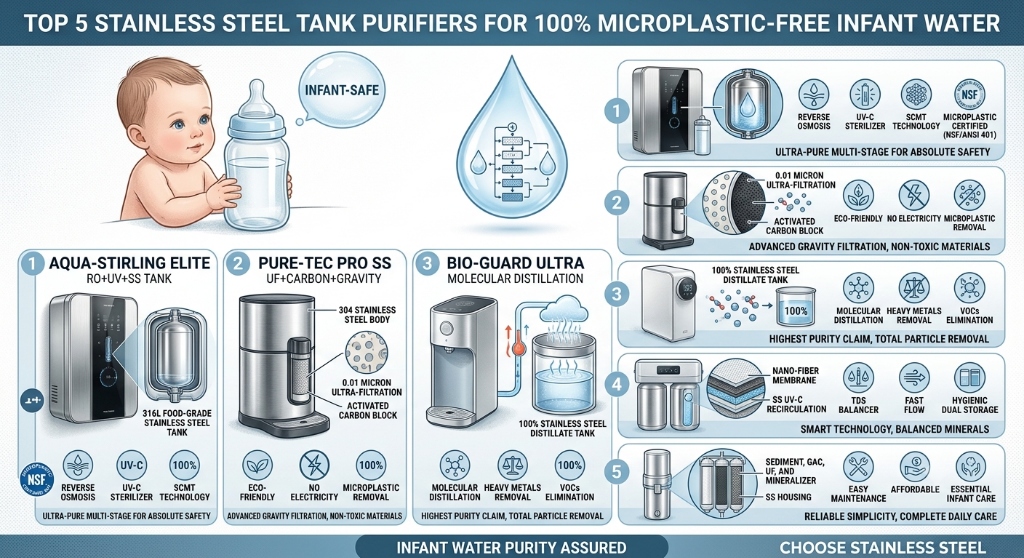
The Dangers of Microplastics in Baby Formula: How to Filter Them Out (2026 Guide)
Discover how microplastics contaminate infant formula through boiling, plastic bottles, and tap water, and learn how Reverse Osmosis and stainless steel eliminate them.
Do Babies Need Distilled Water? The Truth About 'Nursery Water' Brands (2026)
Confused about 'Nursery Water' and distilled water for your baby? Learn whether infants need distilled water for formula, mineral safety, and RO alternatives.
Hard Water vs. Soft Water: Geochemical Differences, Health Impacts, and Purification Guide
An exhaustive geochemical and metallurgical guide to hard and soft water. Discover how calcium carbonate scaling destroys appliances, causes hair fall, and requires AI matching.
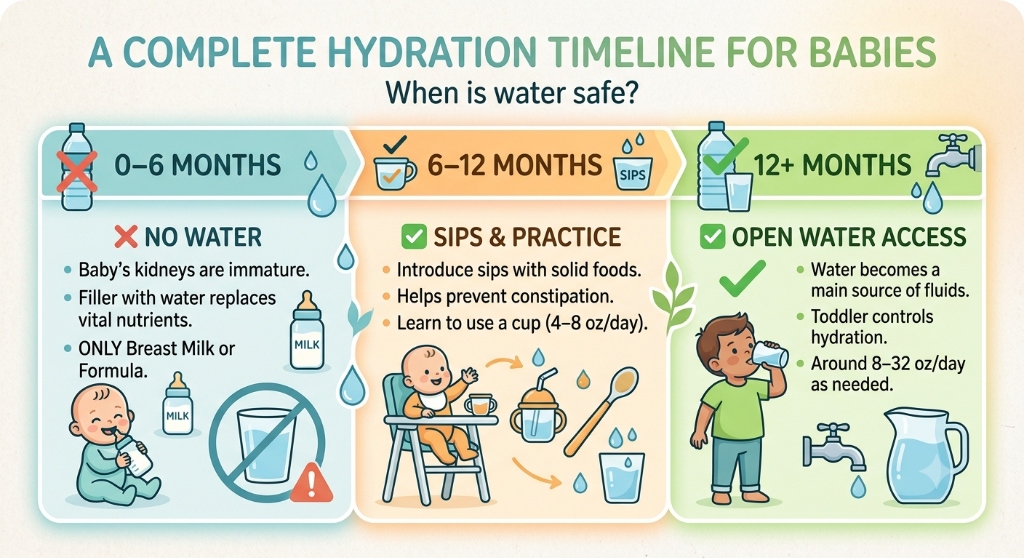
What Age is Water Safe for Babies? (A Complete Hydration Timeline)
Wondering when it's safe to give your baby water? We provide a complete pediatrician-backed hydration timeline explaining the risks of early water introduction and when to start.

What Happens When You Drink High TDS Water? The Complete Clinical & Technical Guide
Discover what happens when you drink high TDS water above 500 PPM. Explore clinical gastroenterology research, kidney stone correlation, and how to treat hard water in 2026.

Is RO Water Safe to Drink Daily? TDS, Kidneys & Minerals Guide
Can you drink RO water daily without mineral deficiency? Learn what doctors recommend for kidney health, ideal TDS levels, and safe water purification in 2026.
Top Water Purifier Brands with the Best After-Sales Service in India (2026 Guide)
Compare Kent, Aquaguard, Pureit, and Livpure on after-sales service quality, AMC costs, and real customer reviews. Find the most reliable brand for maintenance.
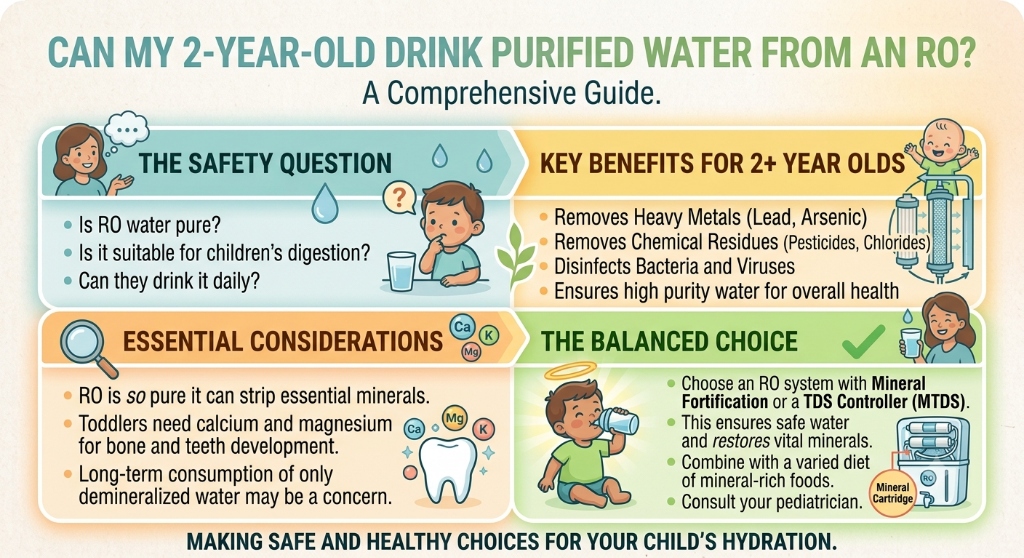
Can My 2-Year-Old Drink Purified Water from an RO?
Is it safe for a toddler to drink RO water, or does it lack essential minerals? We break down the science of child hydration, RO filtration, and how to balance your 2-year-old's mineral intake.
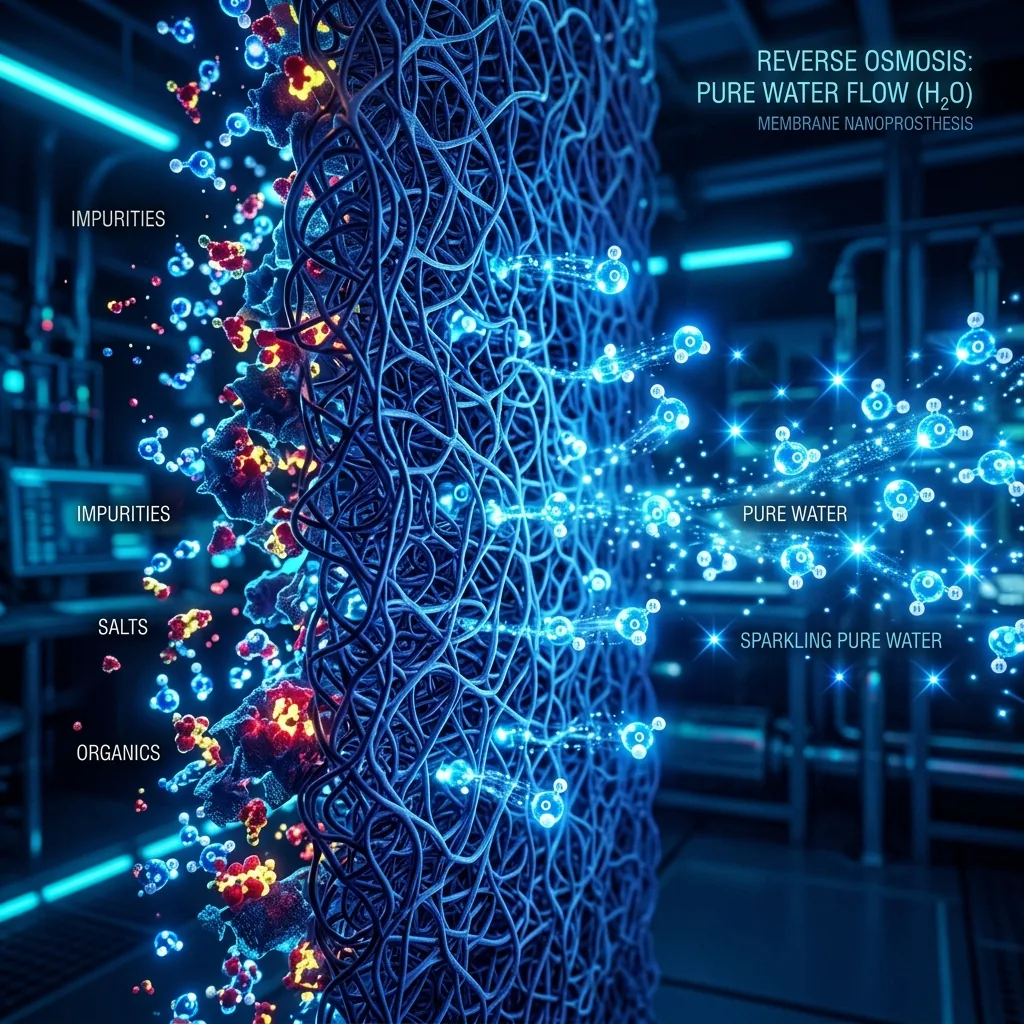
HydroLabs Research: The Hydro-Geochemical Dangers of Over-Purifying Soft Water with RO vs. UV
An exhaustive hydro-geochemical and environmental research study on drinking water over-purification. Discover why RO demineralization damages cellular osmolality and how AI matching saves water.
Why You Need a Data-Driven Approach to Choose a Water Purifier: Inside the AI Diagnostic Engine
Don't gamble with retail showroom guesswork. Discover how Water Purifier Advisor uses localized geochemical data, AI lab report scanning, and algorithmic matching to select the exact filtration technology your home needs.
The Dangers of Microplastics in Baby Formula: How to Filter Them Out (2026 Guide)
Discover how microplastics contaminate infant formula through boiling, plastic bottles, and tap water, and learn how Reverse Osmosis and stainless steel eliminate them.
Do Babies Need Distilled Water? The Truth About 'Nursery Water' Brands (2026)
Confused about 'Nursery Water' and distilled water for your baby? Learn whether infants need distilled water for formula, mineral safety, and RO alternatives.
Hard Water vs. Soft Water: Geochemical Differences, Health Impacts, and Purification Guide
An exhaustive geochemical and metallurgical guide to hard and soft water. Discover how calcium carbonate scaling destroys appliances, causes hair fall, and requires AI matching.
What Age is Water Safe for Babies? (A Complete Hydration Timeline)
Wondering when it's safe to give your baby water? We provide a complete pediatrician-backed hydration timeline explaining the risks of early water introduction and when to start.
What Happens When You Drink High TDS Water? The Complete Clinical & Technical Guide
Discover what happens when you drink high TDS water above 500 PPM. Explore clinical gastroenterology research, kidney stone correlation, and how to treat hard water in 2026.
Is RO Water Safe to Drink Daily? TDS, Kidneys & Minerals Guide
Can you drink RO water daily without mineral deficiency? Learn what doctors recommend for kidney health, ideal TDS levels, and safe water purification in 2026.
Top Water Purifier Brands with the Best After-Sales Service in India (2026 Guide)
Compare Kent, Aquaguard, Pureit, and Livpure on after-sales service quality, AMC costs, and real customer reviews. Find the most reliable brand for maintenance.
Can My 2-Year-Old Drink Purified Water from an RO?
Is it safe for a toddler to drink RO water, or does it lack essential minerals? We break down the science of child hydration, RO filtration, and how to balance your 2-year-old's mineral intake.
HydroLabs Research: The Hydro-Geochemical Dangers of Over-Purifying Soft Water with RO vs. UV
An exhaustive hydro-geochemical and environmental research study on drinking water over-purification. Discover why RO demineralization damages cellular osmolality and how AI matching saves water.
Why You Need a Data-Driven Approach to Choose a Water Purifier: Inside the AI Diagnostic Engine
Don't gamble with retail showroom guesswork. Discover how Water Purifier Advisor uses localized geochemical data, AI lab report scanning, and algorithmic matching to select the exact filtration technology your home needs.
Next Steps: Free Water Tools & Guides
Continue your research with our interactive calculators, AI assessment, and expert buying guides.
Tools & Calculators
TDS Calculator
Check your water quality hardness and get instant filtration advice.
5-Year TCO Calculator
Compare long-term costs of Buying vs Renting vs Water Jars.
Smart Purifier Catalog
Browse our full catalog of water purifiers with advanced filtering.
AI Water Advisor
Take our 30-second quiz for personalized purifier recommendations.
Maintenance Estimator
Avoid AMC traps and calculate your exact 5-year filter replacement costs.
Top Blog Posts & Guides
Top 10 Purifiers in India
Lab-tested rankings of 2026's best purifiers with 5-year AMC costs.
Best RO for Borewell
High-TDS purification systems tailored for hard borewell water.
Best for Municipal Water
Low-maintenance UV/UF purifiers for municipal corporation supply.
Avoiding AMC Traps: How to Calculate the True 5-Year Cost of Water Purifiers
Don't fall for subsidized upfront price tags. Learn how to calculate the true 5-year Total Cost of Ownership (TCO) of water purifiers, defeat RFID microchip locks, and save up to ₹17,500 on maintenance.
Is RO Water Safe to Drink Daily? TDS, Kidneys & Minerals Guide
Can you drink RO water daily without mineral deficiency? Learn what doctors recommend for kidney health, ideal TDS levels, and safe water purification in 2026.
Comments & Discussion
0 Comments