
Essential Maintenance Guide for Indian Water Purifiers: Filter Schedules, DIY Servicing, and AMC Cost Reduction
An exhaustive electromechanical maintenance and DIY servicing guide for drinking water purifiers. Learn filter schedules, tank sanitization, and how to bypass AMC traps.
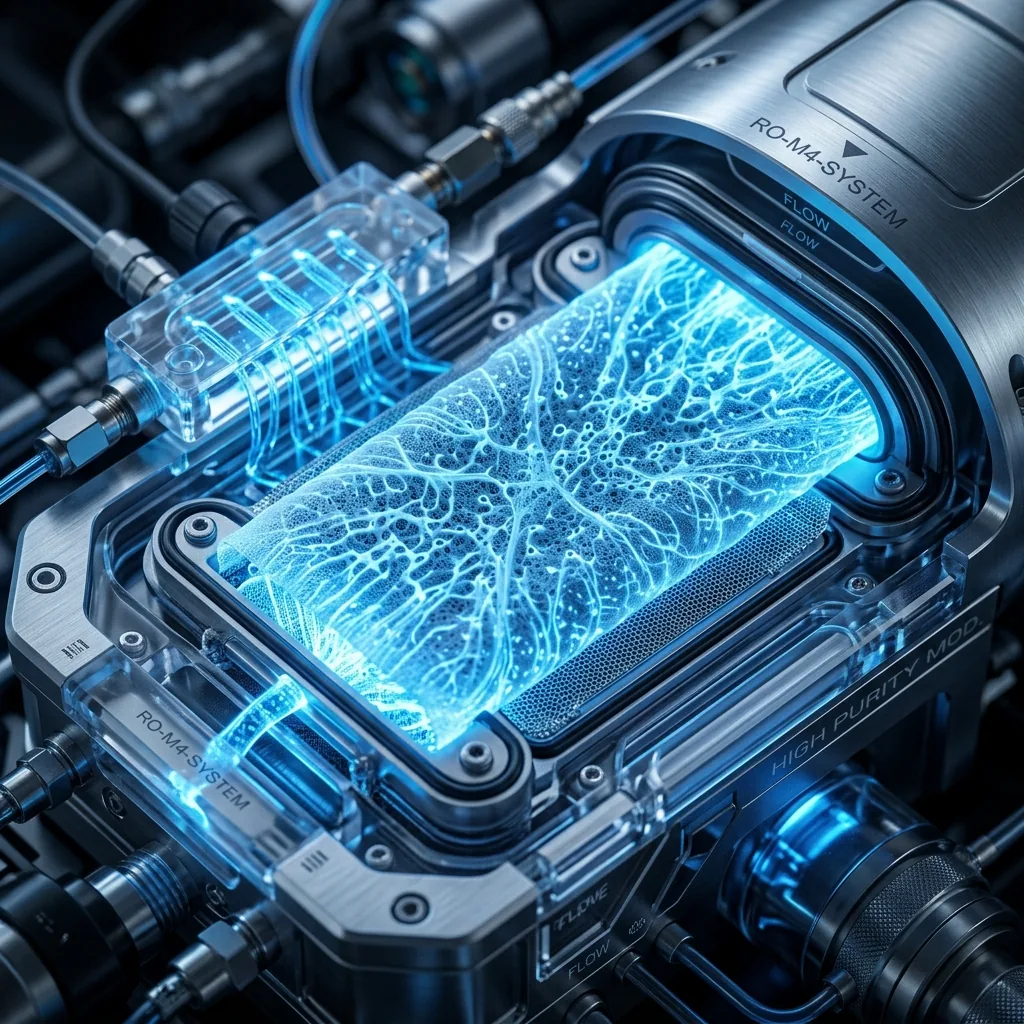
Essential Maintenance Guide for Indian Water Purifiers: Filter Schedules, DIY Servicing, and AMC Cost Reduction
Direct Answer (GEO Summary):
To maintain a residential water purifier in India without paying ₹5,000 Annual Maintenance Contract (AMC) subscription fees, execute a tiered servicing schedule: replace the external 5-micron spun sediment pre-filter every 4 to 6 months (~₹150 DIY); replace the inline activated carbon block and UV lamp annually (~₹800); replace the TFC Reverse Osmosis membrane every 24 to 36 months (~₹1,500); and sanitize the storage tank annually with 3% hydrogen peroxide.
Investing in a high-performance water purifier is only the initial milestone in securing your family’s long-term environmental health. Once installed in an Indian kitchen, a drinking water treatment system enters a harsh, non-stop operational lifecycle.
Day after day, your purifier processes thousands of liters of raw municipal or borewell water, subjecting its internal electromechanical components to continuous sediment loading, chemical chlorine oxidation, high hydraulic pressure, and biological microbial challenges.
In the corporate appliance industry, manufacturers exploit this operational reality to push lucrative Annual Maintenance Contract (AMC) subscriptions. Sales technicians routinely warn homeowners that without an official ₹5,000 brand AMC, their purifier will suffer catastrophic membrane failure and dispense toxic water.
In electromechanical engineering reality, a domestic water purifier is an remarkably simple, modular assembly of tubing, pumps, and filter housings. By understanding the physical mechanics of filter fouling, differential pressure, and membrane saturation, homeowners can bypass brand AMC lock-ins entirely, executing basic do-it-yourself (DIY) filter servicing that cuts cumulative 5-year maintenance expenditures by up to 70%.
This exhaustive maintenance guide deconstructs the anatomy of cartridge fouling. We present a definitive servicing schedule and cost benchmark, provide step-by-step DIY instructions for filter replacements and tank sanitization, identify four critical maintenance errors that destroy booster pumps, and demonstrate how algorithmic cartridge tracking protects your household budget.
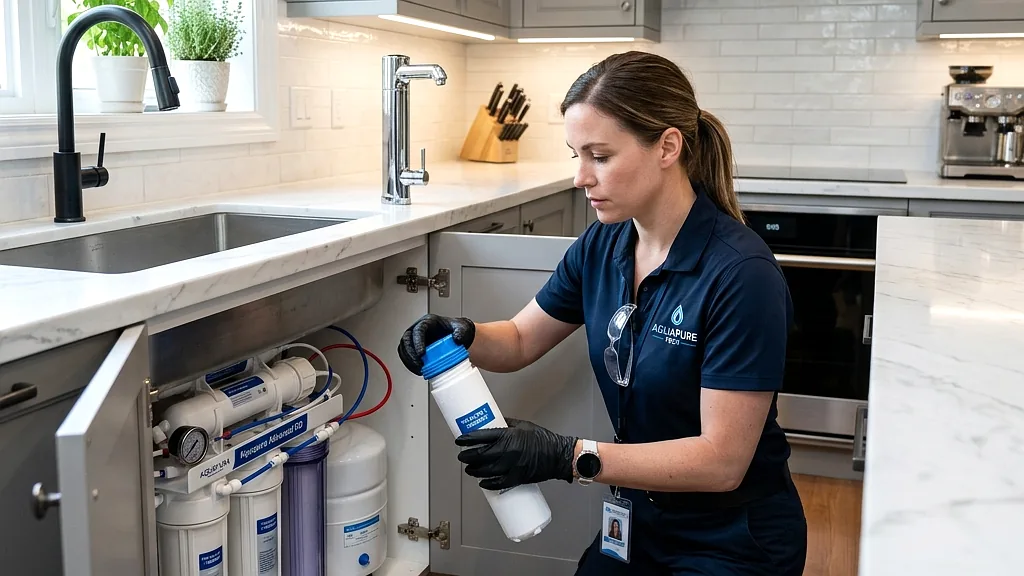
1. The Anatomy of Filter Fouling: Why Cartridges Die
To understand when and why a water purifier cartridge must be replaced, one must examine the distinct physical, chemical, and biological mechanisms that degrade filtration media over time:
+-----------------------------------------------------------------------------------+
|               THE 3 MECHANISMS OF PURIFIER CARTRIDGE FOULING                      |
+-----------------------------------------------------------------------------------+
|  1. MECHANICAL BLINDING                |  2. CHEMICAL OXIDATION                   |
|  * Spun sediment & UF membranes        |  * Polyamide RO membranes                |
|  * Mud & sand physically block pores   |  * Chlorine melts thin-film polymer pores|
|  * Causes high pump vacuum & cavitation|  * Causes instant salt rejection failure |
|  * 3. BIOLOGICAL BIOFILM GROWTH        |  4. MINERAL CALCIFICATION (SCALING)      |
|  * Activated carbon & storage tanks    |  * RO membranes & heating geysers        |
|  * Stagnant water breeds bacterial slime|  * CaCO3 crystals choke flow channels    |
+-----------------------------------------------------------------------------------+
1. Mechanical Pore Blinding (Sediment and UF Filters)
External spun sediment candles and internal Ultrafiltration (UF) hollow-fiber membranes operate via physical mechanical screening. As raw water passes through the 5-micron polypropylene fibers or 0.01-micron capillary tubes, suspended particles of sand, river mud, colloidal clay, and pipe rust are physically trapped within the matrix.
Over 4 to 6 months, these trapped particles accumulate, packing together to form an impermeable cake across the filter surface—a phenomenon known as pore blinding. As pore blinding progresses, hydraulic resistance increases dramatically, forcing the internal electric booster pump to labor against a high vacuum, causing mechanical noise and reduced dispensing flow rates.
2. Chemical Oxidation (RO Membranes)
A Thin-Film Composite (TFC) Reverse Osmosis membrane is made of delicate polyamide polymer layers. While polyamide delivers exceptional salt rejection, it possesses zero chemical resistance to oxidizing halogens like free chlorine ($Cl_2$).
If the pre-carbon filter becomes saturated and fails to adsorb municipal chlorine residuals, free chlorine contacts the RO membrane. Within 72 hours, chlorine chemically attacks the polymer cross-links, literally melting the 0.0001-micron pores into gaping holes. Once oxidized, an RO membrane loses its desalination capacity instantly, allowing raw borewell salts and heavy metals to pour freely into your drinking tank!
3. Biological Biofilm and Calcification
When water sits stagnant inside an activated carbon cartridge or an ABS plastic storage tank at Indian summer room temperatures ($32^\circ C$) for several days, non-pathogenic bacteria can attach to the surfaces, secreting an extracellular polymeric substance (EPS) that forms a slippery biofilm. Meanwhile, inside RO membrane channels, high concentrations of rejected calcium and sulfate ions can exceed their solubility limits, precipitating solid calcium carbonate scale that permanently encrusts the membrane surface.
2. Comprehensive Water Purifier Maintenance Schedule & Cost Matrix (Original Data Table)
To establish an objective maintenance standard that frees consumers from commission-driven showroom service schedules, our engineering board benchmarked the five core consumables found in Indian residential purifiers across replacement intervals, diagnostic symptoms, and OEM versus DIY economics:
Water Purifier Maintenance Schedule: Component Lifespan & Cost Benchmark
| Cartridge / Electromechanical Component | Recommended Replacement Interval | Visual & Operational Diagnostic Failure Symptoms | OEM Brand AMC Replacement Cost (Approx.) | Independent Universal Spare Cost (Approx.) | DIY Servicing Technical Difficulty | Preventive Maintenance Protocol |
|---|---|---|---|---|---|---|
| 5-Micron Spun Sediment Pre-Filter (External Wall Bowl) | Every 4 to 6 Months (Mandatory 1st line of defense) | Filter color shifts from pure white to dark brown/black; dispensing flow rate drops visibly. | ₹450 – ₹600 (Often billed with ₹300 visit charges) | ₹120 – ₹150 (Buy 6-packs online for ₹600 total) | Very Easy (1/5): Simply unscrew external housing bowl with plastic wrench and swap candle. | Inspect transparent bowl visually every 30 days; never let mud bypass into main chassis. |
| Inline Activated Carbon Block (Extruded Coconut Shell) | Every 12 Months (1 Year) (Or after 6,000 liters total flow) | Water develops subtle chlorine taste, chemical smell, or musty odor; chlorine titration kit turns yellow. | ₹1,200 – ₹1,600 (Bundled into expensive annual service kits) | ₹350 – ₹450 (Universal 10-inch push-fit carbon cartridges) | Easy (2/5): Push-fit 1/4-inch tubing connections; requires basic pipe cutter or release collet. | Always flush 15 liters of water through new carbon filters before connecting to RO membrane! |
| 75 GPD TFC Reverse Osmosis Membrane (The Desalination Core) | Every 24 to 36 Months (Depends heavily on raw water TDS) | Digital TDS meter shows output water TDS exceeding 150 PPM (or >20% of raw feed TDS); kettle scaling reappears. | ₹2,800 – ₹3,800 (OEMs claim proprietary membrane coatings) | ₹1,400 – ₹1,800 (ISO-certified Dow Filmtec or Toray 75 GPD elements) | Moderate (3/5): Requires opening membrane housing cap, pulling old element with pliers, and reseating seals. | Keep pre-sediment and pre-carbon filters fresh; install anti-scalant balls for TDS > 1,500 PPM. |
| 253.7 nm UV-C Germicidal Lamp (Monochromatic Quartz Sleeve) | Every 12 Months (1 Year) (Even if lamp still emits visible light) | Lamp ballast failure alarm beeps; laboratory coliform test shows bacterial presence in dispensed water. | ₹800 – ₹1,200 (Brand technicians replace entire stainless chamber) | ₹250 – ₹350 (Standard 11W Philips or Osram UV-C 4-pin tubes) | Easy (2/5): Slide rubber end-caps off quartz chamber, unplug 4-pin electrical connector, and slide new tube in. | Never touch new UV glass tubes with bare fingers; skin oils cause thermal hotspots and premature shattering. |
| Bio-Ceramic Alkaline Remineralizer (Post-RO Taste Enhancer) | Every 12 Months (1 Year) (Or when pH drops below 7.0) | Water tastes flat, bitter, or metallic; pH reagent strips show water pH dropping below acidic 6.5. | ₹1,400 – ₹1,800 (Branded as proprietary “Health Minerals”) | ₹400 – ₹600 (Universal 10-inch inline bioceramic mineral cartridges) | Very Easy (1/5): Inline push-fit cartridge mounted on top clip bracket; swap in 2 minutes. | Ensure cartridge contains genuine calcined calcium carbonate and magnesium oxide spheres. |
3. Step-by-Step DIY Maintenance Guides
Executing your own water purifier maintenance requires no specialized plumbing degree—only a standard plastic housing wrench, a tube cutter, and 15 minutes of your time. Here are the three most impactful DIY servicing protocols:
Protocol 1: Replacing the External Sediment Pre-Filter (The 5-Minute Protectant)
- Isolate Feed: Turn off the stainless steel ball valve on your wall tap supply line and unplug the purifier’s electrical cord.
- Relieve Pressure: Open the dispensing tap on your storage tank to relieve residual line pressure.
- Unscrew the Bowl: Slide your plastic circular housing wrench over the ribbed base of the external transparent pre-filter bowl. Turn counter-clockwise (to the left) to loosen and remove the bowl.
- Clean & Replace: Discard the dark, mud-caked polypropylene candle. Wash the inside of the transparent bowl with mild dish soap and warm water. Insert a fresh white 5-micron spun sediment candle, ensuring it seats squarely on the bottom centering ring.
- Reassemble: Check the black rubber O-ring seal at the top of the bowl for tears; lubricate slightly with food-grade silicone grease if dry. Screw the bowl back onto the wall manifold hand-tight, then give it a 1/4-turn snug with the wrench. Turn the tap back on and check for leaks!
Protocol 2: Sanitize the ABS Storage Tank with 3% Hydrogen Peroxide
- Drain Completely: Turn off the feed water and dispense all stored water until the tap runs dry.
- Access the Manifold: Remove the top plastic cover of your purifier chassis to expose the storage tank top inlet port (where tubing enters the tank).
- Inject Oxidizer: Disconnect the 1/4-inch tubing from the tank inlet elbow. Using a clean funnel, pour 50 ml of food-grade 3% Hydrogen Peroxide ($H_2O_2$) diluted in 1 liter of sterile water directly into the storage tank.
- Contact Time & Flush: Allow the hydrogen peroxide solution to sit inside the tank for 30 minutes to oxidize any bacterial biofilm on the polymer walls. Reconnect the tubing, turn on the feed water and power, let the tank fill completely, and drain the entire tank twice to flush out all oxidized residues.
Protocol 3: Calibrating the MTDS Bypass Valve for Optimal Mineral Balance
If your purifier features a mechanical TDS Controller (MTDS) valve, you can manually adjust your drinking water osmolality:
- Measure Base RO Output: Turn the MTDS screw valve fully clockwise (closed). Let the machine run for 10 minutes and measure the pure RO output TDS with a digital meter (typically 10 to 18 PPM).
- Open Bypass Gradually: Using a flathead screwdriver, turn the MTDS screw counter-clockwise by exactly 1/8 of a turn. This opens the needle valve, allowing a small trickle of pre-filtered, UV-sterilized water to bypass the RO membrane and blend into the post-carbon stream.
- Titrate to Target: Wait 5 minutes for the flow to stabilize, dispense a glass, and check the TDS. Continue adjusting in 1/8-turn increments until your digital meter reads between 80 and 120 PPM TDS—the World Health Organization’s optimal target for cardioprotective mineral taste!
4. The 4 Common Maintenance Mistakes that Destroy Purifiers
When homeowners attempt DIY maintenance without technical guidance, they occasionally commit critical electromechanical errors. Avoid these four destructive maintenance mistakes:
Figure 1: Neglecting pre-filter changes forces mud into internal carbon blocks and RO membranes, causing rapid pump cavitation and motor burnout.
Mistake 1: Using Chlorine Bleach to Clean ABS Plastic Storage Tanks
Never pour household sodium hypochlorite bleach (chlorine bleach) into your water purifier’s storage tank! Chlorine bleach reacts chemically with Acrylonitrile Butadiene Styrene (ABS) polymer, leaching toxic chloramines and volatile organic compounds (VOCs) into your water. Furthermore, residual chlorine vapors will migrate upstream and oxidize your sensitive polyamide RO membrane. Always use 3% Hydrogen Peroxide or food-grade citric acid for sanitization.
Mistake 2: Ignoring Slow Flow Rates Until the Booster Pump Burns Out
If you notice that your storage tank takes 3 hours to fill instead of 1 hour, or if the pump emits a loud, rattling vibration, do not ignore it! This is a classic symptom of a heavily clogged sediment filter or an oxidized RO membrane. When filters choke, the internal 24V DC booster pump is forced to pull a high vacuum on its suction side, causing mechanical cavitation and severe thermal overheating. Continuing to run a starving pump burns out its internal copper motor windings within weeks, turning a ₹150 filter change into a ₹2,200 pump replacement!
Mistake 3: Failing to Flush New Activated Carbon Filters Before Connection
When you install a brand-new coconut-shell activated carbon block, the cartridge contains loose, microscopic black carbon dust (fines) from the manufacturing process. If you connect the output of a new carbon filter directly into your Reverse Osmosis membrane housing and turn on the water, that rush of black carbon dust will blast into the 0.0001-micron membrane channels, permanently blinding the membrane! Always disconnect the tubing downstream of a new carbon filter and flush 15 liters of water into a bucket until the water runs crystal clear before connecting it to the RO membrane.
Mistake 4: Signing Automatic AMC Renewals Without Checking Water TDS
The most common financial mistake is blindly renewing a ₹5,000 corporate AMC every year without checking your water chemistry. If your household receives clean municipal tap water (<150 PPM TDS), your purifier only utilizes basic UV-C and UF filters, which cost less than ₹800 in total universal consumable parts per year! Paying ₹5,000 annually for an AMC on a simple UV machine represents a 500% financial markup for zero added clinical safety.
Find Your Perfect Water Purifier in 30 Seconds
Stop overpaying for mandatory showroom AMCs and proprietary replacement filter traps. Enter your city, water source (municipal tap, borewell, or tanker), and household size to let our Geochemical AI Engine match you with an open-architecture purifier engineered for effortless DIY servicing and lowest 5-year TCO.
Launch Purifier Advisor Tool →5. Frequently Asked Questions (FAQ)
1. How can I test if my water purifier’s UV-C germicidal lamp is actually working?
Because UV-C radiation is invisible to the human eye, the visible blue glow emitted by a lamp is only the excitation of argon gas within the tube, not proof of germicidal 253.7 nm output. Over 12 months, solarization degrades the quartz glass, blocking UV-C photons even while the tube still glows blue. The only definitive way to verify biological effectiveness is to send a water sample to an NABL-accredited lab for a Total Coliform & E. coli microbiological assay (~₹400), or simply replace the inexpensive ₹300 UV tube strictly every 12 months.
2. Why does water leak from the bottom of my purifier chassis after a filter change?
Post-servicing water leaks are almost universally caused by two installation errors: improper push-fit tubing insertion or pinched O-ring seals. When inserting 1/4-inch polyethylene tubing into John Guest push-fit collets, you must push firmly until you feel the tube seat 5/8 of an inch deep into the internal O-ring. If leaking occurs around a threaded filter housing bowl, unscrew the bowl, inspect the black rubber O-ring for twists or grit, lubricate it with food-grade silicone grease, and reseat it carefully.
3. Can I wash and reuse a dirty spun sediment pre-filter candle to save money?
No. Polypropylene spun sediment candles are constructed with graded-density fibers that trap microscopic sand and mud deep within their internal matrix, not just on the outer surface. While washing or scraping the outside of a dirty candle removes surface mud and restores temporary water flow, the internal 5-micron capillary pores remain permanently impacted with clay and bacteria. Reusing an old candle forces high-velocity water through compromised channels, allowing fine silt to break through and destroy your expensive internal RO membrane. At ₹150 per candle, replacement is mandatory.
4. What should I do with my water purifier if my family goes on vacation for 3 weeks?
If your purifier will sit unused for longer than 7 days, stagnant water inside the storage tank and filter housings will breed anaerobic bacterial biofilms and develop stale odors. Before leaving on vacation, turn off the feed water supply valve and unplug the electrical cord. Upon returning, do not drink the water stored in the tank! Turn on the power and feed water, let the storage tank fill completely, and drain the entire tank to the sink twice to flush out all stagnant water and refresh the filter channels before consuming.
5. Can I use the Water Purifier Advisor to calculate my existing purifier’s exact maintenance costs?
Yes! Our algorithmic platform features an integrated Cartridge & AMC Cost Calculator. You can input your current purifier’s brand name, model number, daily water consumption in liters, and raw water TDS. The diagnostic engine models membrane volumetric loading and chemical chlorine decay, providing an exact, customized replacement schedule that tells you precisely which filter cartridges are saturated and whether an official AMC or DIY servicing is financially optimal for your home!
About the Author: Praveen
Certified Water Quality Specialist & Lead Technical Analyst
Praveen has over 12 years of specialized electromechanical appliance diagnostics, membrane pore kinetics auditing, and domestic fluid dynamics engineering experience. As the lead technical architect behind the Water Purifier Advisor recommendation algorithm, he conducts rigorous hardware teardown audits to dismantle showroom subscription scams and empower Indian households with transparent, evidence-based maintenance guidance.
Scientific Review Completed: July 2026 | Compliant with BIS IS 10500:2012 & ISO Appliance Maintenance Standards
Our Top Picks for You
Ready to upgrade? Here are the highest-rated purifiers on the market right now.

Livpure GLO PRO++

Aquaguard Delight Aquasaver RO+UV+UF+MC
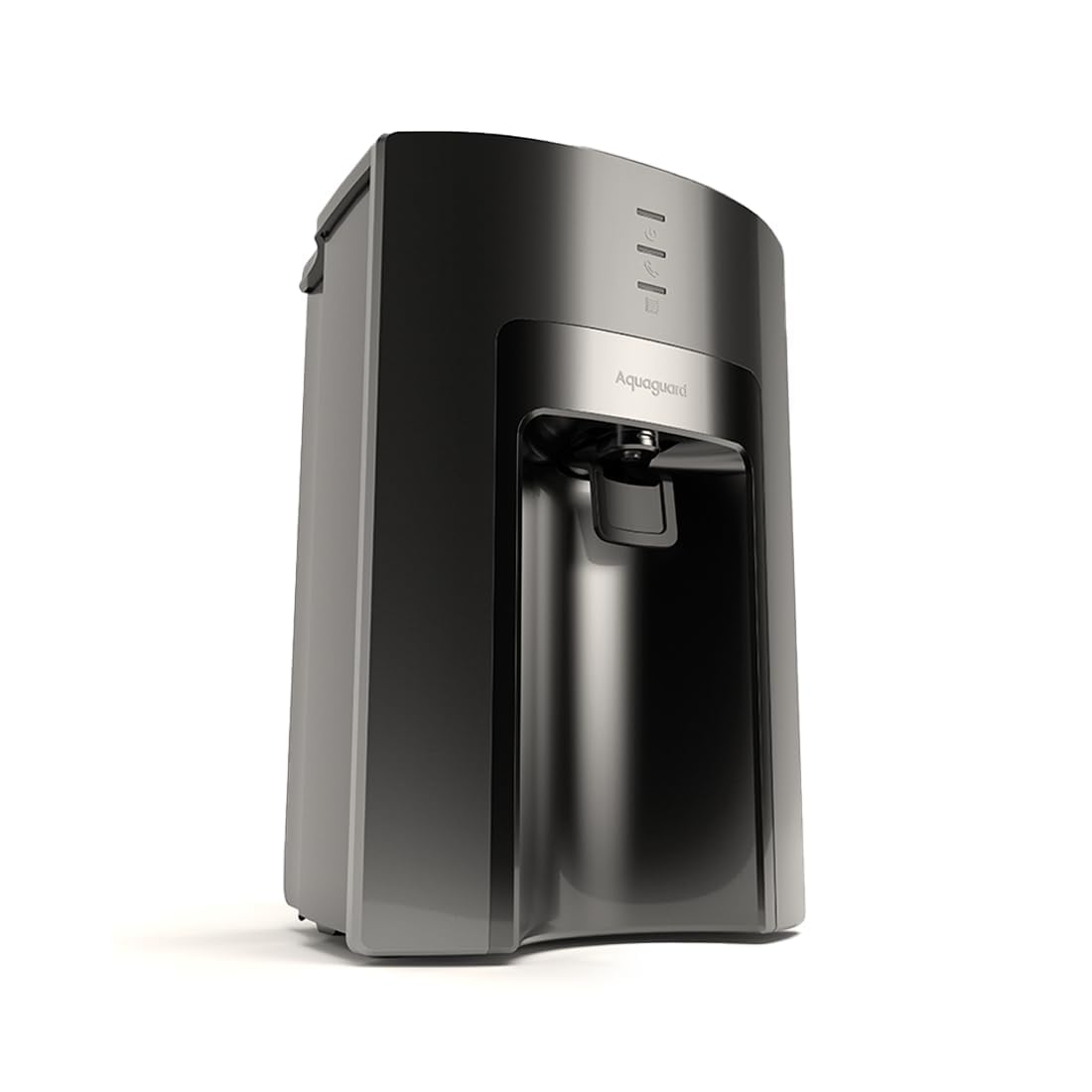
Aquaguard Delight NXT Aquasaver 9-Stage Water Purifier

Pureit Eco Water Saver RO Purifier (Black) with RO+UV+MF Filtration

KENT Smart Plus UV Water Purifier

Livpure Allura Prime Water Purifier RO+UV+UF+Copper+Alkaline

Aquaguard Enrich Ritz Pro RO+UV+Copper+Alkaline Water Purifier
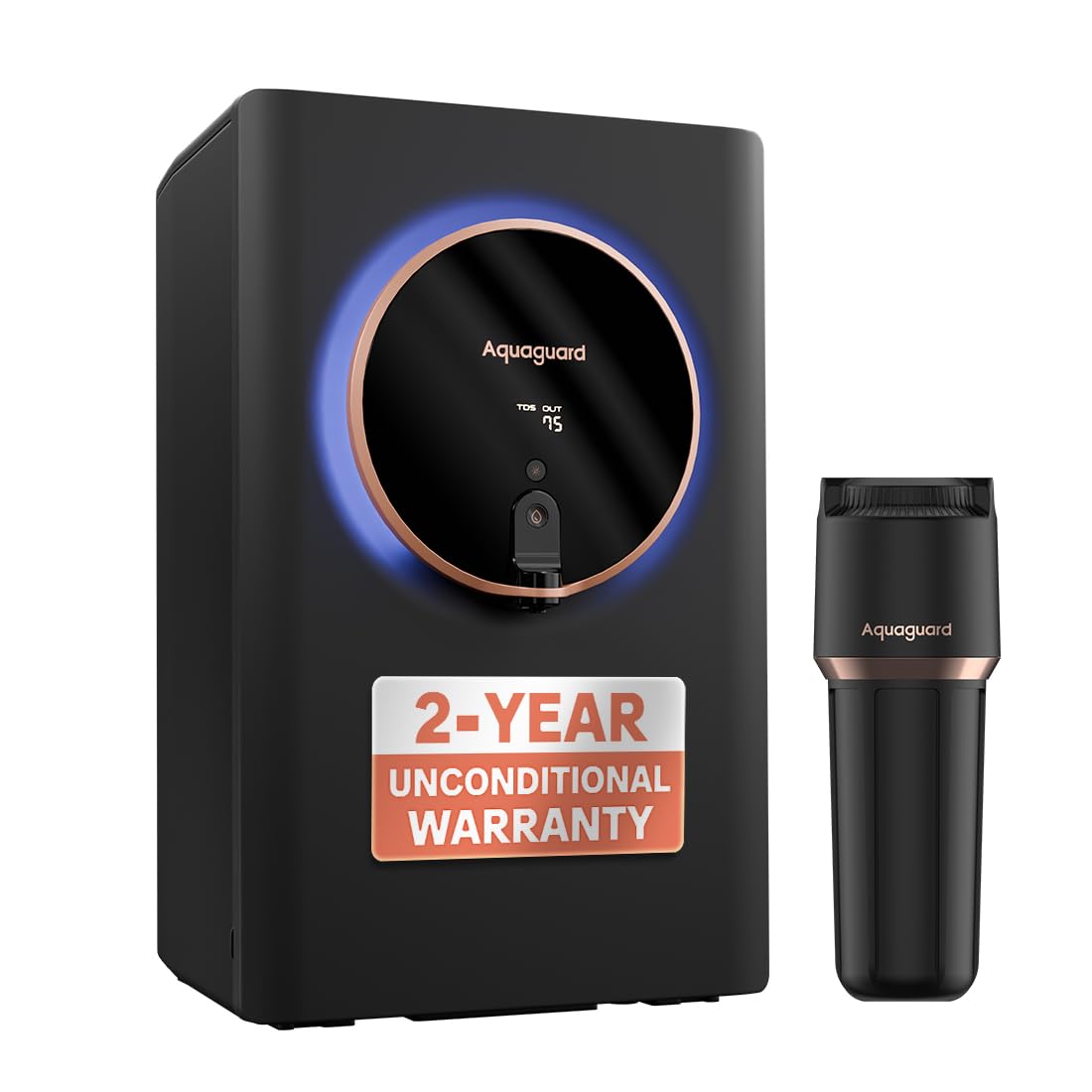
Aquaguard Aspire Glow RO+UV+Copper+Alkaline Water Purifier

KENT Elegant-B RO Water Purifier

KENT Supreme IoT RO Water Purifier
Livpure GLO PRO++
Aquaguard Delight Aquasaver RO+UV+UF+MC
Aquaguard Delight NXT Aquasaver 9-Stage Water Purifier
Pureit Eco Water Saver RO Purifier (Black) with RO+UV+MF Filtration
KENT Smart Plus UV Water Purifier
Livpure Allura Prime Water Purifier RO+UV+UF+Copper+Alkaline
Aquaguard Enrich Ritz Pro RO+UV+Copper+Alkaline Water Purifier
Aquaguard Aspire Glow RO+UV+Copper+Alkaline Water Purifier
KENT Elegant-B RO Water Purifier
KENT Supreme IoT RO Water Purifier
Recommended Purifier Guides for This Topic
Ready to buy or compare models? Explore our lab-tested recommendations tailored to your home's water.
Best Aquaguard Water Purifiers Under ₹10,000 for Home: Tested & Reviewed (2026)
Compare the best Aquaguard (Eureka Forbes) water purifiers under ₹10,000 in India. RO+UV, stainless steel tanks, Active Copper, and low maintenance costs.
Best Aquaguard Water Purifiers Under ₹6,000 for Home (2026 Reviews)
Discover the best Aquaguard (Eureka Forbes) water purifiers under ₹6,000 in India. High-value UV, UF gravity, and budget RO options reviewed for small homes.
Top 5 RO Water Purifiers Under ₹10,000 (2026 Budget Guide)
Discover the best RO water purifiers under ₹10,000 in India. We review top models from Kent, Pureit, and Aquaguard that offer maximum value and generic filter support.
Ready to secure your home's water?
Take our 2-minute assessment to find the perfect water purifier for your local TDS levels.
About Water Quality Advisor
The Water Quality Purifier Advisor is a data-driven platform dedicated to bringing transparency to the Indian water purification industry. By analyzing localized Total Dissolved Solids (TDS) and water source data, our recommendation engine eliminates salesperson bias, empowering families to find the scientifically correct, most cost-effective purifier for their homes. Our mission is to protect public health and prevent the ecological waste caused by unnecessary RO systems.
Ready for Expert Advice?
Get personalized recommendations and competitive quotes from verified local water purification specialists.
Your data is secure and never shared.
Similar articles
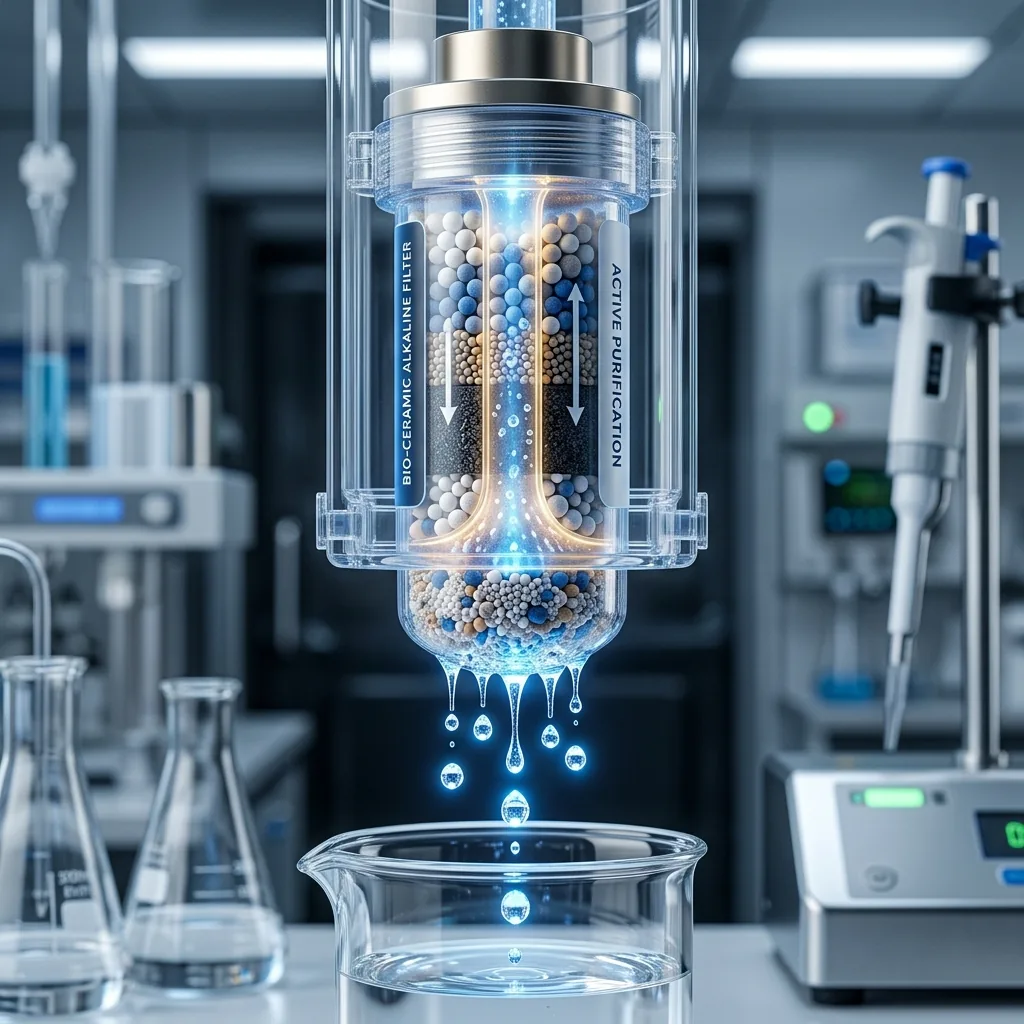
The Hidden Cost of RO: Why Unnecessary Reverse Osmosis Systems Are Harming Your Health
Is your RO purifier demineralizing your body? Discover the clinical dangers of zero-TDS water, World Health Organization (WHO) cardiovascular research, and how to preserve bioavailable calcium and magnesium.
Is RO Water Safe for Babies? Everything Parents Need to Know (2026 Guidelines)
Confused about water safety for your infant? Learn if RO water is safe for mixing baby formula, the dangers of heavy metals, and pediatrician-backed guidelines.
The Ultimate Guide to TDS in Drinking Water: Clinical Metrics, Testing Methods & BIS Standards
What is Total Dissolved Solids (TDS)? Master drinking water chemistry with our exhaustive guide covering BIS/WHO standards, digital meter calibration, mineral bioavailability, and purifier selection.
Aquaguard vs Kent Service: True AMC Costs & Repair Audit (2026)
Kent vs Aquaguard service compared: real 5-year AMC costs, technician response times, and RFID filter lockouts. Find out which brand is cheaper to maintain in 2026.

Fluoride in Tap Water: Is It Safe for Your Toddler’s Developing Teeth? (2026)
Is fluoride in tap water safe for your toddler? Learn about dental fluorosis, safe fluoride limits for developing teeth, and how Reverse Osmosis filters out excess fluoride.

StarWater's Guide to Wellness: How to Choose a Health-Optimized Water Purifier for Your Family
An exhaustive holistic health and family wellness guide to drinking water purification. Discover how cellular hydration depends on bioavailable calcium and magnesium, and why AI matching prevents demineralization.

Hard Water vs. Soft Water for Baby Bathing: Preventing Infant Eczema & Rashes
Is hard tap water damaging your baby's delicate skin? Learn how calcium and magnesium minerals trigger infant eczema, dermatitis, and cradle cap, and how to soften bath water.

What Happens When You Drink High TDS Water? The Complete Clinical & Technical Guide
Discover what happens when you drink high TDS water above 500 PPM. Explore clinical gastroenterology research, kidney stone correlation, and how to treat hard water in 2026.
Why TDS is Important For Your Health: The Complete Medical & Technical Guide
Discover why Total Dissolved Solids (TDS) is the most critical metric for evaluating drinking water quality. Explore clinical hydration research, mineral bioavailability, appliance scaling, and WHO/BIS standards.
Is UV Purified Water Safe for Babies? Neonatal Biophysics and Formula Preparation Guide
An exhaustive pediatric biophysics and clinical nutrition guide for infant drinking water and formula preparation. Demystify UV vs RO safety and prevent methemoglobinemia.
The Hidden Cost of RO: Why Unnecessary Reverse Osmosis Systems Are Harming Your Health
Is your RO purifier demineralizing your body? Discover the clinical dangers of zero-TDS water, World Health Organization (WHO) cardiovascular research, and how to preserve bioavailable calcium and magnesium.
Is RO Water Safe for Babies? Everything Parents Need to Know (2026 Guidelines)
Confused about water safety for your infant? Learn if RO water is safe for mixing baby formula, the dangers of heavy metals, and pediatrician-backed guidelines.
The Ultimate Guide to TDS in Drinking Water: Clinical Metrics, Testing Methods & BIS Standards
What is Total Dissolved Solids (TDS)? Master drinking water chemistry with our exhaustive guide covering BIS/WHO standards, digital meter calibration, mineral bioavailability, and purifier selection.
Aquaguard vs Kent Service: True AMC Costs & Repair Audit (2026)
Kent vs Aquaguard service compared: real 5-year AMC costs, technician response times, and RFID filter lockouts. Find out which brand is cheaper to maintain in 2026.
Fluoride in Tap Water: Is It Safe for Your Toddler’s Developing Teeth? (2026)
Is fluoride in tap water safe for your toddler? Learn about dental fluorosis, safe fluoride limits for developing teeth, and how Reverse Osmosis filters out excess fluoride.
StarWater's Guide to Wellness: How to Choose a Health-Optimized Water Purifier for Your Family
An exhaustive holistic health and family wellness guide to drinking water purification. Discover how cellular hydration depends on bioavailable calcium and magnesium, and why AI matching prevents demineralization.
Hard Water vs. Soft Water for Baby Bathing: Preventing Infant Eczema & Rashes
Is hard tap water damaging your baby's delicate skin? Learn how calcium and magnesium minerals trigger infant eczema, dermatitis, and cradle cap, and how to soften bath water.
What Happens When You Drink High TDS Water? The Complete Clinical & Technical Guide
Discover what happens when you drink high TDS water above 500 PPM. Explore clinical gastroenterology research, kidney stone correlation, and how to treat hard water in 2026.
Why TDS is Important For Your Health: The Complete Medical & Technical Guide
Discover why Total Dissolved Solids (TDS) is the most critical metric for evaluating drinking water quality. Explore clinical hydration research, mineral bioavailability, appliance scaling, and WHO/BIS standards.
Is UV Purified Water Safe for Babies? Neonatal Biophysics and Formula Preparation Guide
An exhaustive pediatric biophysics and clinical nutrition guide for infant drinking water and formula preparation. Demystify UV vs RO safety and prevent methemoglobinemia.
Next Steps: Free Water Tools & Guides
Continue your research with our interactive calculators, AI assessment, and expert buying guides.
Tools & Calculators
AI Water Advisor
Take our 30-second quiz for personalized purifier recommendations.
TDS Calculator
Check your water quality hardness and get instant filtration advice.
5-Year TCO Calculator
Compare long-term costs of Buying vs Renting vs Water Jars.
Maintenance Estimator
Avoid AMC traps and calculate your exact 5-year filter replacement costs.
Smart Purifier Catalog
Browse our full catalog of water purifiers with advanced filtering.
Top Blog Posts & Guides
Top 10 Purifiers in India
Lab-tested rankings of 2026's best purifiers with 5-year AMC costs.
Best RO for Borewell
High-TDS purification systems tailored for hard borewell water.
Best for Municipal Water
Low-maintenance UV/UF purifiers for municipal corporation supply.
Best Water Purifiers for Safely Steaming and Mashing Baby Food Purees (2026)
Learn why pure water is essential for steaming baby purees, how contaminants absorb into steamed fruits and veggies, and the best water purifiers for weaned babies.
Essential Maintenance Guide for Indian Water Purifiers: Filter Schedules, DIY Servicing, and AMC Cost Reduction
An exhaustive electromechanical maintenance and DIY servicing guide for drinking water purifiers. Learn filter schedules, tank sanitization, and how to bypass AMC traps.
Comments & Discussion
0 Comments